BETWEEN POLLS, PROTESTS & PLACES OF WORSHIP
Last week, a leftist Lula won a record fourth term in Brazil; a right-wing regime was decisively rejected in Serbia, and elections threw up a political stalemate in Israel. The United States is two days away from crucial midterm elections. You cannot generalise this Dance of Democracy across the Americas, Europe and Asia.
In Europe, Germany is the latest to see street protests by Gen Z, frustrated by the rising cost of living amid military spending and conscription.
Meanwhile, wonder why America’s “model minority”, once embraced, is being targeted……
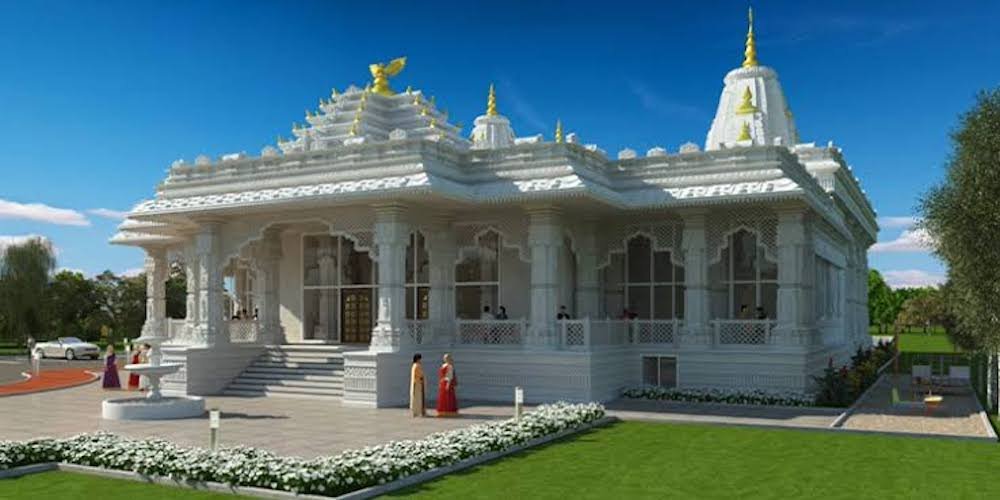
Indians, the diasporas and many among 5.4 million Indian Americans are shocked by reports that a Hindu temple in suburban Chicago was targeted in an apparent mass shooting attempt. A devastating tragedy was averted on the first day of the Navaratri festival last month only because the gunman’s weapon reportedly jammed.
Retired Indian diplomat Ashok Sajjanhar asks: “Since when have the Americans turned anti-India and anti-Hindu?”
“It serves as a stark reminder that economic prosperity does not automatically guarantee social immunity from bigotry. The “model minority” moniker can no longer be used as a shield to ignore the vulnerabilities facing students, working-class families, and religious institutions,” Sajjanhar warns.
Although the US ranks fifth in the world, the growth of Hindu places of worship is unprecedented for a Western nation. The Pluralism Project at Harvard University notes that the count has grown from roughly 435 temples two decades ago to more than 1,000 active temples and community shrines today. This expansion matches the growth of the US Hindu population, which has doubled over the past 15 years to nearly 2.6 million.
The story begins with Swami Vivekananda addressing the World Parliament of Religions in Chicago in 1893, igniting America’s interest in Hinduism.
Kalpana Jain, once a prominent writer in The Times of India, lives in the US and studies religion. To mark the US’s 250th anniversary of Independence, she interviewed many Hinduism scholars, members of the Indian diaspora, and Americans in their 80s who helped build the Hare Krishna movement.
Swami Trigunatitananda of the Vedanta Society of San Francisco designed what is known as the first Hindu temple in the entire Western world. He wanted it to be authentically Hindu and visibly American. Dedicated on January 7, 1906, in San Francisco, it combined American and Hindu traditions.
The architecture incorporated American symbols into its design: Red, white and blue neon outlined the doorway. An American eagle featured in the architecture, beneath which American flags were painted.
Jain quotes Vasudha Narayanan, a leading scholar on Hinduism in America and the role of Hindu immigrants: “The colours reflected Hindu religious traditions: Red is associated with Brahma, white with Shiva, and blue with Lord Vishnu. They also correspond to the three gunas, or qualities, in Indian philosophy: red represents rajas, or passion; white represents sattva, or purity; and blue represents tamas, or ignorance.
The American eagle on the temple was interpreted as Garuda, Vishnu’s eagle mount. In that sense, the temple was less a replication of a traditional Hindu temple than an early example of the “Americanization of Hindu practice.”
Narayanan notes that “rivers near temples were occasionally treated as ritual equivalents of Indian sacred rivers such as Ganga, Yamuna, or Kaveri. At large temple complexes and festivals, priests performed consecration rituals in which waters brought from multiple Indian rivers were mixed with local water. Waters from the Mississippi and Suwannee were blended in some temple consecrations.

Through these acts, Narayanan argues, the immigrant communities effectively ‘extended’ India’s sacred geography to their new homeland. They also praised their new homeland in devotional songs. These temples also functioned as cultural institutions. They were places where immigrant families could teach language, music, dance and religious traditions to their children growing up in America.
Jain says: “I came to understand how Hindu temples are more than religious sites: For Indians who arrived after the 1965 Immigration and Nationality Act reshaped US immigration, these temples offered a sense of belonging and a place where they could start a deeper integration with their new homeland.
“What is also not widely known is that young Americans from the 1960s counterculture played a key role in establishing some of the first visible Hindu worship. Many gave up drug use and found a spiritual home in the Hare Krishna temples and movement. (One may recall Dev Anand’s film “Hare Rama, Hare Krishna.”).
By the 1960s, a blend of American and Hindu traditions was emerging on the American landscape. A Nov. 2, 1967, New York Times article described a small “Hindu chapel” on East 94th Street in New York City, where a white marble bust of Ramakrishna, the 19th-century mystic, stood alongside an image of the Virgin Mary holding the Christ child.
There were no dedicated Hindu temples. Things began to change when A.C. Bhaktivedanta Swami Prabhupada, a 69-year-old spiritual teacher from India, arrived in New York in 1965 with a few books and a mission to spread “Krishna Consciousness”. Young people from the counterculture were eager to learn from him.
In 1966, with the help of a few early followers, he founded the International Society for Krishna Consciousness (ISKCON), also known as the Hare Krishna movement.
In his three-part memoir, “Chasing Rhinos with the Swami,” Mukunda Goswami and Shyamasundar Das, who later became Prabhupada’s personal secretary, recall preparing the first temple on Frederick Street in San Francisco in January 1967, a space he described as a “windowless concrete basement.”
Shyamasundar recalls, “We mounted speakers on a flatbed truck. A generator powered the amplifier. The deities were placed on the truck platform. We began moving slowly toward the ocean. Devotees walked beside the vehicle chanting while others danced in front. Passersby stared — then smiled — then joined.”
Jain records that Many temples, including those of ISKCON, were established in former church buildings. “They became spaces where the larger immigrant community could come together. Theological tensions between different sects and religious groups in India were sometimes set aside. Multi-tradition temples incorporated different Hindu traditions, bringing together North and South Indian Hindus and sometimes Jains.”
The temples were financed largely through donations from immigrant professionals and community fundraising efforts. Families organised cultural programs and sponsored festivals to raise money. Narayanan has worked on oral histories of families travelling across New York, New Jersey and Westchester County, staging music and dance performances to raise funds. Many women now in their late 60s and 70s recalled performing in these shows as teenagers.
Jain writes: “While working on a piece for Under Gods, published by Indiana University’s journal American Religion, I came to understand a rich history that does not belong to one community alone. The presence of Hindu temples across the United States tells a story of acceptance, welcome, belonging and the immigrant communities’ efforts to make the United States part of their larger sacred world.”
Pushpita Prasad, a spokesperson for the Coalition of Hindus of North America, told Jain: “Attacks against Hindus and Indians have escalated in recent years. Bricks hurled at a temple in Richmond Heights, Ohio, on October 3 shattered windows while devotees were praying inside. In June 2025, bullets were fired into the Shri Radha Krishna Temple in Spanish Fork, Utah. In Sugar Land, Texas, a 90-foot statue of the deity Hanuman continues to draw bigoted comments.
Jain laments: “As I read hateful comments online and reports of violence, it’s hard to reconcile them with the American story that I’m aware of and what these temples represent.”