Growing Nutrient-Rich Coloured Potatoes
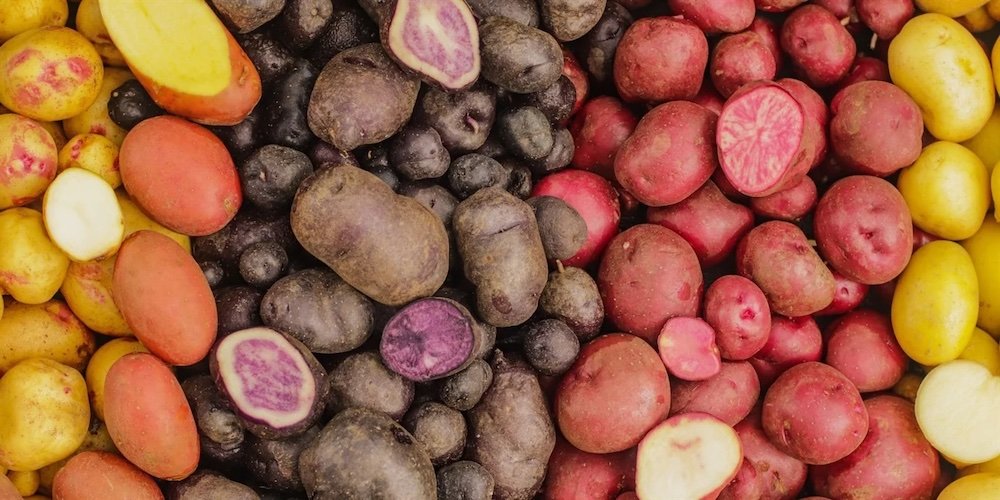
Hidden hunger remains a major nutritional challenge despite adequate calorie intake in many populations. Biofortified crops are being developed to improve the intake of essential vitamins and minerals through daily food consumption. In this context, ICAR-CPRI (Indian Council of Agricultural Research- Central Potato Research Institute) developed nutrient-rich coloured potato varieties, including Kufri neelkanth, Kufri manik, and Kufri jamunia. These varieties contain important antioxidants and micronutrients, such as anthocyanins, iron, and zinc. Among them, Kufri jamunia represents a major advancement due to its higher levels of Vitamin C, anthocyanins, and carotenoids. Its improved nutritional profile, attractive purple flesh, and strong consumer appeal make it an important variety for addressing hidden hunger and improving nutritional security
The humble potato has long been a foundational staple of global food security, valued for its high caloric yield, culinary versatility, and ease of cultivation. In India, where it is a central ingredient in daily diets across diverse socioeconomic groups, its role is traditionally viewed through the lens of satisfying basic energy requirements.
However, as modern agricultural science shifts its focus from mere food security to comprehensive nutritional security, the potato is undergoing a colorful and scientific transformation. Leading this paradigm shift is the Indian Council of Agricultural Research-Central Potato Research Institute, or ICAR-CPRI, based in Shimla.
By tapping into the potential of biofortification and genetic diversity, ICAR-CPRI has developed a groundbreaking series of nutrient-rich, coloured potato varieties. Prominent among these are Kufri Neelkanth, Kufri Manik, and the recently unveiled Kufri Jamunia. These innovations are reshaping the agricultural landscape, transforming the common tuber into a potent tool against hidden hunger and micronutrient malnutrition.
To understand the significance of these coloured potato varieties, it is essential to contextualise the systemic health challenge known as hidden hunger. This condition occurs when individuals consume sufficient calories to stave off hunger but lack critical micronutrients, vitamins, and minerals necessary for healthy biological development.
In India, widespread deficiencies in iron, zinc, and crucial vitamins remain a major public health issue, contributing to chronic conditions like anemia and stunted growth. Traditional interventions often rely on artificial supplement distribution or factory-level industrial fortification, both of which face severe distribution and compliance hurdles. Biofortification offers a highly sustainable and localised alternative.
By embedding essential nutrients directly into the genetic matrix of crops through targeted plant breeding, scientists can deliver superior nutrition via everyday food items without forcing any change in deep-seated consumer eating habits. Because potatoes are consumed universally across India, they represent an ideal vehicle for this biofortification strategy.
The journey into indigenous coloured potato development achieved its first major milestone in 2018 with the release of Kufri Neelkanth. This cultivar holds distinction as the first purple-skinned specialty potato variety developed by ICAR-CPRI.
Engineered primarily for the fertile North Indian plains, Kufri Neelkanth has proven highly suitable for cultivation in agrarian states like Punjab, Haryana, Uttar Pradesh, Uttarakhand, Bihar, Madhya Pradesh, and Chhattisgarh. Visually striking, the tubers feature a dark purple-black skin covering a rich, cream-colored flesh. Beyond its novelty value, Kufri Neelkanth is a powerhouse of natural antioxidants. It contains significant amounts of anthocyanins and carotenoids, compounds that actively neutralise free radicals in the human body, thereby lowering the risks of chronic diseases and oxidative stress.

Agronomically, it is a medium-maturing variety that exhibits impressive fertiliser responsiveness and yields up to thirty-five to thirty-eight tonnes per hectare under optimal farming conditions. It is also favored for its good storability, pleasant flavor, mealy texture, and resistance to discoloration after cooking.
Building upon the success of this purple-skinned breakthrough, ICAR-CPRI expanded its colorful portfolio in 2021 with the introduction of Kufri Manik. This variety shifted the aesthetic spectrum toward an attractive, deep red skin, while maintaining a round shape with medium eyes and high-quality yellow flesh.
Kufri Manik was bred with a specific, heightened focus on micronutrient enrichment. It is exceptionally rich in anthocyanins, which provide its distinctive pigmentation and antioxidant properties, but its true value lies in its enhanced levels of iron and zinc. These two minerals are vital for immune function, cognitive development, and metabolic health. By offering a red-skinned potato that mirrors the appearance of traditional varieties popular in eastern and northern India, Kufri Manik achieved easy market acceptance while quietly delivering a substantially higher nutritional payload to vulnerable populations.
The peak of ICAR-CPRI’s coloured potato research arrived in 2024 with the official release of Kufri Jamunia. Representing a massive evolutionary leap forward, Kufri Jamunia is recognised as India’s first fully biofortified purple potato variety that features both deep purple skin and uniform purple flesh. Named after the vibrant jamun fruit, its deep pigmentation is a direct visual indicator of its extraordinary health properties. Kufri Jamunia contains vastly superior levels of ascorbic acid, or Vitamin C, anthocyanins, and carotenoids compared to both conventional white potatoes and its predecessors, Kufri Neelkanth and Kufri Manik. Additionally, its iron and zinc concentrations are significantly amplified, offering multiple milligrams of these essential minerals per hundred grams of fresh weight.
Beyond its stellar nutritional profile, Kufri Jamunia is a highly viable commercial option for farmers. It is a medium-maturing table variety characterized by a semi-compact canopy and robust yield stability. Under standard cultivation practices in the North Indian plains, it consistently produces thirty-two to thirty-five tonnes per hectare, with station trials reaching up to forty-nine tonnes per hectare over a ninety-day cycle.
Crucially for smallholder farmers, nearly ninety percent of its yield is highly marketable due to the uniform oblong shape and shallow eyes of the tubers. The variety also boasts an excellent six-to-eight-week natural dormancy period, ensuring minimal rottage and weight loss during storage. In the kitchen, its mealy texture and striking purple color make it a versatile culinary ingredient. It retains its color beautifully across traditional preparations like parathas, puris, and curries, and holds incredible promise for the food processing sector in making antioxidant-rich potato flour and healthy snacks.
In conclusion, the development of coloured potato varieties by ICAR-CPRI represents a monumental achievement in Indian agricultural biotechnology. By transforming a simple, calorie-dense staple into a vibrant, nutrient-dense superfood, these purple and red potatoes offer a practical solution to the nation’s ongoing battle with hidden hunger. Varieties like Kufri Neelkanth, Kufri Manik, and Kufri Jamunia demonstrate that science can successfully blend high agricultural yields with enhanced nutritional security.
As seed distribution networks expand and consumer awareness grows, these vivid purple potatoes will undoubtedly move from agricultural novelty to mainstream dietary essentials, safeguarding the health of millions of consumers while boosting the economic fortunes of Indian farmers.