TRUMP, POST-US MIDTERMS, IN A TROUBLED WORLD
Saturday, October 24, 2026, marked the 81st anniversary of the United Nations Charter entering into force in 1945. Sadly, the event underscored how far the world is from its core focus areas: international peace and security, human rights protection, and sustainable development
Who is in charge of a world that is on the cusp of repeating the two mistakes it made in the past century?
Powerful nations are finding it increasingly difficult to convert power into control. This is evident in the military domain, where inexpensive drones and AI-assisted weapons, breaching borders without crossing, have changed traditional hierarchies and devastated people and destroyed nature’s bounty.
Militarily, the US, with its vast military arsenal, is unable to force Iran to bend the knee; Russia’s failed attempt at subjugating Ukraine shows that a much more powerful state is not getting its way.
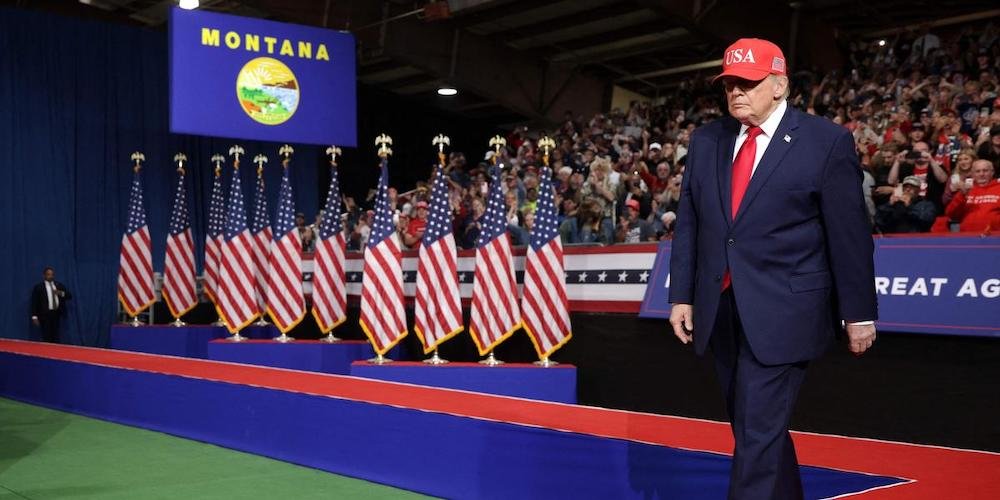
These conflicts and much else depend on the outcome of America’s mid-term polls scheduled for November 3. The global community is already watching closely for the likely impact on the American people and outside, if President Donald Trump, whose popularity is rated between 31 and 39%, loses control of either Congress or the House of Representatives, or both.
The impact will be certain. All 435 House of Representatives seats and 35 Senate seats will be up for election. Analysts see rival Democrats leading the national congressional ballot and remain favoured to win the House, but several competitive Senate races could determine control of Congress.
If this happens, Trump’s final two years in office will shift dramatically from a unified legislative government to a gridlocked and heavily scrutinised administration.
A Republican defeat would hit Trump’s legislative agenda, restricting scope for tax cuts and relief. Trump would likely rely heavily on his presidential veto to block bills passed by a Democratic-led Congress, leading to policy standoffs on government spending, the economy, and foreign policy.
With his ability to pass laws crippled, Trump would likely lean more heavily on unilateral executive orders, regulatory actions, and administrative measures to push his priorities on immigration, trade, and energy.
Increased Democratic power could revive talk of aggressive oversight or institutional clashes, echoing pressures seen in past divided governments.
His midterm defeat could polarise America, deepening internal tensions among Republicans, as some lawmakers distance themselves from Trump’s leadership while the MAGA movement navigates its post-Trump future.
This does not necessarily make 2026 an exceptional election. Historically, the President’s party tends to lose congressional seats in midterm elections. Since 1938, the President’s party has lost House ground in 20 of 22 midterm elections. In midterms in 2018, Trump-led Republicans lost 41 seats in the House.
For brevity’s sake, let us focus on foreign policy for a prolonged, turbulent phase through Trump’s remaining tenure until the autumn of 2028. A politically weakened president at home may be unable to leverage America’s economic and military might to influence the ongoing conflicts in which it is a player, directly or indirectly. That phase is already underway in the multiple Gulf conflicts and the Russia-Ukraine war.
In the last 21 months he has been in office, Trump has disrupted every arena of diplomacy involving America directly or remotely. He has spoken and acted numerous times on issues that have dismayed his allies. Trump has heavily used executive authority for tariffs and trade disputes.

Even with a Democratic House, Trump has wielded wide-ranging discretionary powers that the American executive enjoys, and whether he wins or loses, this will continue.
Frustrated by domestic pushback, investigations, and congressional grilling over foreign entanglements (like the Iran standoff or energy/diesel/tariff policies), Trump is likely to double down on rhetorical attacks against traditional allies (European leaders, Canada) and demand burden-sharing or unilateral concessions.
Having already shown a pattern of prematurely declaring ceasefires or pushing unilateral deals, a weakened domestic standing may accelerate his desire for quick, high-profile “wins” abroad to change the news cycle.
Bluntly put, will Trump get bloody-minded if he loses the midterm polls? Iranians are credited with this thought as they negotiate peace: conflict amidst talks. With rumblings of another round of attacks, they must be preparing for the worst.
For the record, he has said he does not contemplate military action till after the vote. Mercifully, he has said that he “would not use” nuclear weapons against Iran, adding he did not see “putting US troops on the ground” there.
While a dictatorship in Venezuela, a military rule in Myanmar and Iran’s pursuit of nuclear weapons remain red herrings as part of his Psyops (Psychological Operations), control of oil and rare minerals has actually characterised all of Trump’s actions. The next two years will show their pursuit and their impact on those countries.
As for India, it has taken the punch on the chin with all the grace it can muster under adverse circumstances. China has displayed a strongman’s silence. But clashes have persisted with Canada and other trade partners.
Since last year, the US accused, and the European nations dutifully echoed, that by buying Russian oil, India was ‘financing’ Russia’s military campaign in Ukraine. Only some weeks ago, the US passed a law to levy heavy tariffs on anyone buying Russian oil. The principal target was India.
Thanks to rising diesel prices, it has now turned the whole thing, and by direct implication, the campaign to shield Ukraine, on its head by declaring an “energy ceasefire” and by purchasing millions of tonnes of diesel from Russia.
India can and has surmounted this canard. It is even readying to produce more diesel for the US, from refined Venezuelan oil. Will that help get a better trade deal?
But what about Ukraine and its President Zelenskyy? He is the real “Bali ka bakra”, the sacrificial goat?
Now, the delicate part of the story. Trump has forever refused to accept any defeat. Hordes of his supporters raided the White House when he was declared defeated in his bid to get re-elected in 2020.
The November 3 polls are even more crucial. If he loses, will he again try to “take the issue to the people”?
Lauric Henneton, who specialises in American studies, writes in the French daily Le Monde: “The US president will likely not be able to ‘steal’ the November 3 midterm elections. However, he is expected to revive the narrative of electoral illegitimacy to make the 2028 presidential election a contest for revenge.”
His conclusion: “Trump has many levers to disrupt the midterms, but far fewer means to turn defeat into victory.”