NEED TO PREVENT MISHAPS DURING POOJA FESTIVALS
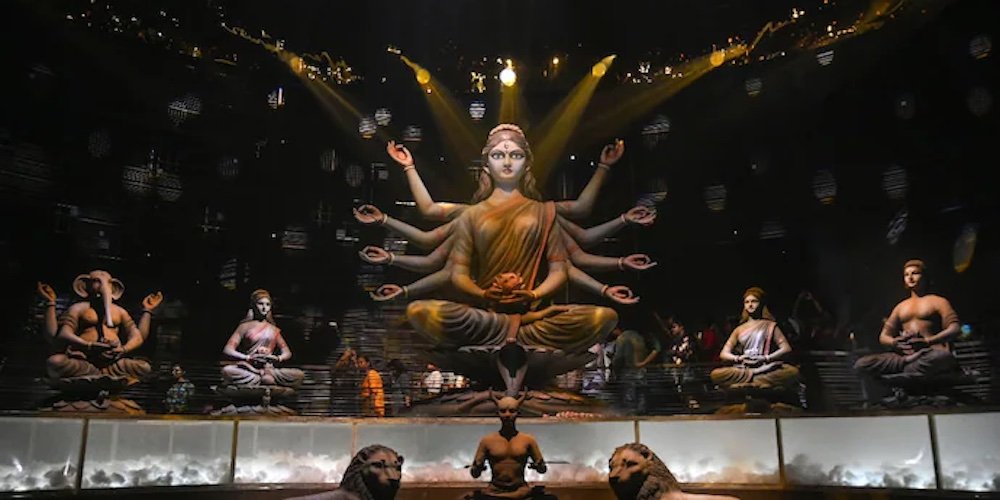
Durga Puja is not only longest festival of India but because of its gigantic size, myraid rituals and high element of devotion, it has also become famous as a world event.Capitals of major countries have begun hosting it together with Diwali.
Although it is over 550 year old, only in December 2021 the puja celebrations of Kolkata got entry into coveted list of “Intangible Cultural Heritage” of UNESCO. It has boosted tourism, to say the least.
As per Bhagwat Puran, Lord Ram is supposed to have performed a worship of Maa Durga prior to his departure for forest sojourn for gaining strength and confidence.
PRECURSORS
The first Puja for public viewing is supposed to have been organised in1576 by Raja Kansh Narayan in Tahirpur, an area of undivided Bengal.It was supposedly for the well being of his subjects. The Puja seems to have taken an extended shape, later at a Calcutta village in 1610. Gradually, the pious religious activity is reported to have picked up momentum.
In the then Calcutta, a beginning was made in Bhavanipore in 1910. It was perhaps the first community level celebration. No wonder, many puja committees of West Bengal are one century old.
CHANTING & METHODS
Chanting of Devi Bhagwat Puran and Durga Saptaswati have become the characteristic features of the ten day event. There is no single method to worship the Goddess. Four of them are used all over country :
Kalika Puran, Vrihatnandikeshwar Puran, Devi Puran and Matasya Puran.
TAKE OFF WITH MAHALYA
As is well known, celebrations begin early in the morning on the first day with elaborate chanting or listening to Mahalya.It marks the end of Pitri Paksh and heralding of Devi Paksh. On this day, Maa Durga is believed to have descended to earth.
Idols of Goddesses Durga, Laxmi & Saraswati and of Gods Ganesh and Kartikeya are carried with respect and installed in the evening of the 6th day. These are taken out after elaborate daily worships, on the 10th day for Immersion (Visarjan).
The main Puja, however, ritually ends on the ninth day with offering of ‘Havan’.

CHANGING TIMES & CHALLENGES
With the passage of time, rise in population, technological advances etc, size and shape of puja pandals too have undergone a change.
Pandals, out of sheer feeling of competition are displaying a variety of art, artifacts, attributes of culture, song, music and what not ? To attract the crowd, contemporary events too get depicted on walls, decor and approach.People get glued and mesmerized by these rather than by the image proper.
Commercial displays too distract.
RUSH & CRUSH
Rush of devotees may not take place on the 6th day and part of 7th day but thereafter it becomes mind boggling. At times people begin falling over each other and traffic jam is also caused near popular pandals with, out landish themes. Many a time, exteriors have no relationship with local culture, custom and tradition. Source of finance for such pandals can be very well understood.
Resultantly, the volunteers get out numbered at peak hours and Police & Home Guard personnel too, on getting amazed and confused, express their helplessness. To make matters worse, at times, natural calamities, such as, fire, heat and rain enter the scene.
Wide approach, separate entry and exit, all are necessary together with drinking water and fire fighting arrangements.There can not be any compromise on these.
POSSIBLE CAUSES OF CHORBAGAN TRAGEDY
In respect of Chorbagan Sarbojanin Puja Samity of Kolkata, narrow lane, single exit, sudden rainfall and unfortunate announcement that the pandal could collapse, led to stampede that killed 18 persons and injury to over 25 persons. Some injured persons were reported to be in serious condition.In addition, a few private security guards proved ineffective and no one knew if any ambulance was on stand by.
TO SUM UP
Loss and injury figures have sent shock waves all over Kolkata. It has affected the morale of the devotees and puja organisers in general. People associated with cultural activities elsewhere, may also like to learn lessons.
Arrest of seven persons may not send requisite message. Inquiry into such tragedies, hardly helps. Tougher precautionary measures have to be taken to prevent surge of crowd. Also Ex- gratia of Rs.Two lakhs for the dead and Rs. Fifty thousand for the injured are meagre, in view of rising cost of diagnosis related tests and further treatment. It may give required strength and courage to affected families.
Let us hope and pray that loop holes are identified soon, so as to avoid recurrence of such episodes in future.

(The author is former Chief Secretary, Sikkim. Views are strictly personal)