Houthies of Yemen & Saudi Arabia Locked In Another Proxy War
Terrorism is a means or tendendency to use violent methods against non-combatants with a view to achieve political and ideological objectives. It is an act of intentional violence by which fundamentalism and criminality get aggravated. A state of extreme fear, anxiety and insecurity is created by the vested elements among the masses.With the collapse of law and order, social order begins cracking and thus gound becomes ripe for terrorists to exploit new situation by projecting themselves as a better alternative.
Over the years through facilities, such as, Net, Lap Top, Cell phone, WhatsApp, Social Media sites etc. terrorists have succeeded in networking and developing bases in all corners of world.
STATE TERROR OUTFITS
When it comes to State agencies spreading terror, I.S.I. of Pakistan and Mossad of Israel would be on top.State terrorism is practised by a state against another State. Through it, it is aimed to facilitate one’s foreign policy and put pressure by violent means not by conventional warfare but a sort of surrogate warfare. While these go on, diplomatic and economic relations generally carry on between the “enemy states”. India is bearing the brunt of I.S.I.for a long time and Mossad too assumes dangerous shape, time and again.
NON-STATE OUTFITS
There are Non-state agencies also, such as, Hamas, Hezbollah and Houthies, having bases in Palestine, Lebanon and Yemen respectively.
Of these, Hezbollah, a Shia Islamist group based in Lebanon, has a private army of twenty thousand fighters, large number of rockets, light infantry and anti-armour units, mostly funded by Iran and Syria.
HOUTHIS OF YEMEN
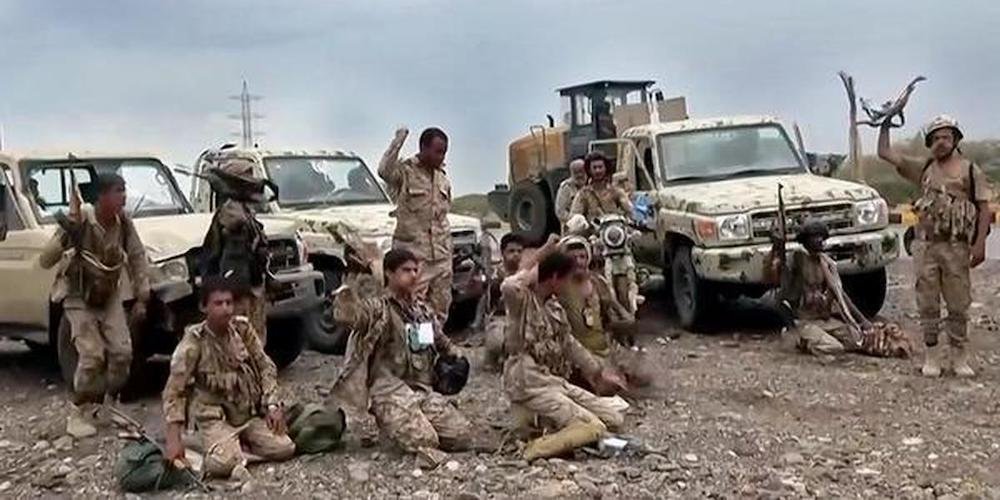
Houthis of Yemen would come next. Houthi movement has evolved into a heavily armed and de facto regional military power that may rival a modern nation state in its capacity to challenge and disrupt global trade and militaries. It has roughly 200,000 to 350,000 active fighters.They possess sophisticated ballistic and cruise missiles, anti-ship weaponry and variety of self assembled drones. They can be called relentless fighters.
MARCH 2015, A TURNING POINT
Houthis and Saudi Arabia are at loggerheads since March 2015 when Houthis seized control of Capital Sanaa. Saudi Arabia led a multi nation coalition to support internationally recognised government of Yemen. As Saudi Arabia continues to give support and financial assistance to them, it is disliked by the Houthis. Houthis at present control large parts of Yemen. But Saudi Arabia continues to support the official government.
Houthis want total political and economic control over Yemen.They donot want any Saudi role.They also demand access to Yemeni oil and gas revenues and proceeds from coastal ports.
SUPPORT OF IRAN
Iran’s rising support to Houthis is considered by Saudi Arabia, a direct national security threat and an expansion of Iran’s influence in the region.It has been learnt that Saudi Arabia aims at regional stability rather than prolonged conflicts to maintain its religious and political leadership of Middle East.Iran apparently, is a stumbling block in this regard.
IMMEDIATE CAUSE OF TUSSLE
Attack for over a fortnight on southern parts of Saudi Arabia, close to Red Sea and Bab el Mander Strait (BeMS) by the Iran backed Houthis has opened a new front in the Middle East war.
When Houthis have advanced rapidly, capturing prime location of Perim island at the mouth of Red Sea, Saudi Arabia reportedly asked for U.S. help which latter declined.Other allies- France, Britain, Egypt and Pakistan too have been asked to deploy air defence teams to defend against missiles and drones. Saudi’s stock of interceptors has been reportedly depleted owing to ongoing war between U.S. and Iran.

LATE U.S. AID
After having given limited intelligence, in a recent development, the U.S.Department of State has approved the potential sale of Lockheed Martin’s F-35 Lightening II fighter Jets to Saudi Arabia.The estimated 24.3 billion USD sale would include 48 military aircrafts and 49 Pratt & Whitney engines. But will Saudi Arabia use these ?
MOCHA PORT
A Red Sea port of Mocha is already in possession of Houthis.In such a situation, missiles and drones from Houthis have targetted many towns, aircraft hangars, radar systems, runways and ammunition depots of Saudi Arabia.In a big blow, a crucial East-West pipeline of Saudi Arabia, linked to Gulf oil exports has been also hit.
Saudi Arabia and Houthis have accused each other of launching attacks at their territories, with reports of deaths on both sides. Saudi Arabia, in the meanwhile is issuing regular emergency alerts in the several cities on their Western coast, including Jedda, Mecca and Taif. Saudi backed Yemen government, however, have confessed that Houthis are exercising control over almost the entire western coast of the country along the Red Sea.
ATTACK ON MECCA
Saudi Arabia on September 16 has accused Houthi rebels of trying to attack Mecca, Islam’s holiest city.
Houthis have denied firing drones towards Mecca. But Saudis claimed to have intercepted and destroyed a Houthi drone before it entered the airspace over the holy shrine.
While Pakistan and Turkiye have condemned the attempt on Mecca, Houthis have claimed to have shot down an F-15 fighter Jet operated by the Saudi led coalition over Yemen’s Central Province of Marib.
Hundreds of people have rallied in North Yemen in support of Houthis and to show opposition to Saudi Arabia’s accusation that the Houthis had targetted Islam’s holiest site at Mecca.They carried the Yemeni, Iranian, Lebanese and Palestinian flags.
S.ARABIA’s MEETING WITH EGYPT
Meeting between Saudi Arabian Crown Prince and the President of Egypt in Cairo on September 15 assumes significance as both of them stressed the need to ensure freedom and security of navigation in the BeMS and Red Sea area. In addition, the Organisation of Islamic Co-operation representing over 57 Muslim states and many Middle East nations have condemned attack on Saudi territory.
U.S. officials too are reported to have met representatives of Houthis in Oman at the U.S. embassy in Muscat. It was to ensure smooth passage of American ships throgh Red Sea, rather than to resolve the dispute between Saudi Arabia and Houthis.Top U.S. officials have reportedly indicated a lack of desire to get involved in conflict.
According to a migration estimate, 82,000 Yemenese have already fled fighting since the beginning of September.So implication from humanitarian angle can be very well understood.
TO SUM UP
If efforts are not made to re convene planned talks among Gulf Arab States, West Asia conflict may escalate further and threaten global oil supplies. Afterall 12 per cent of global trade of crude oil passing through Red Sea and BeMS is under threat.While Houthis have threatened the waterway for long, occupation of Perim island and Mocha port by them gives them a decisive edge. Saudi Arabia has curtailed its crude oil production from 10 billions per day to 6.2 bpd already. Needy nations cannot afford to lose on two fronts with perpetual uncertainty over Strait of Hormuz.

(The author is former Chief Secretary, Sikkim. Views are strictly personal)