The Soaring Eagle of Make in India
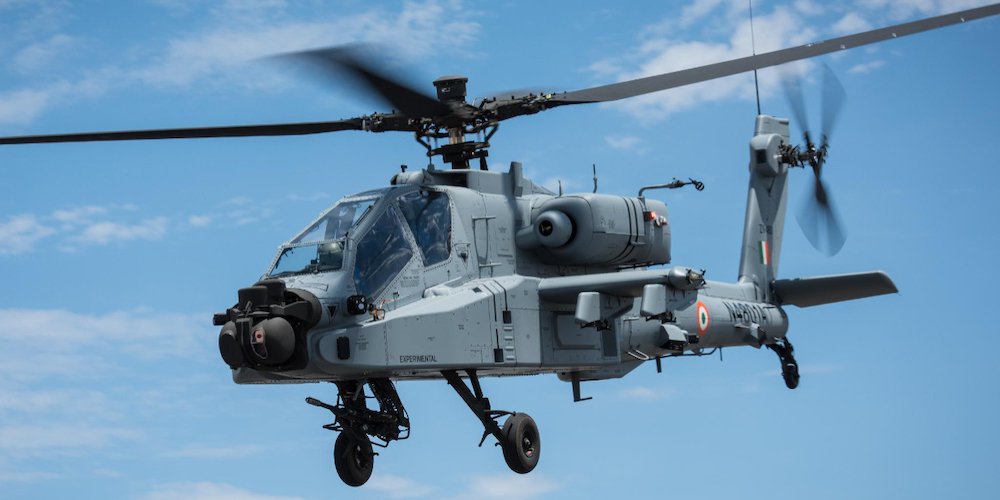
On September 7, 2026, Tata Boeing Aerospace Limited (TBAL) announced the successful rollout of its 400th AH-64E Apache fuselage from its state-of-the-art facility in Hyderabad. This milestone is not merely a celebration of corporate synergy between an American aviation titan and an iconic Indian conglomerate; it represents a watershed moment for India’s defence manufacturing sector.
What began as a joint venture in 2016 between Boeing and Tata Advanced Systems Limited (TASL) has matured into a cornerstone of the global aerospace supply chain.
By producing the core structural architecture for the world’s most advanced attack helicopter, TBAL serves as a definitive validation of the government’s “Make in India” vision, proving that the nation can meet the rigid requirements of global defence aviation.
A Masterclass in Technological Integration
The scale and technological sophistication of TBAL’s operations in Hyderabad are a testament to the rapid maturation of India’s industrial capabilities. Spanning a massive 52,000 square metres, the facility is a hub of advanced engineering that blends human skill with cutting-edge industry standards. The production of the AH-64E Apache fuselage — the central body that houses the aircraft’s crew, avionics, and weapon systems — demands flawless precision.
To achieve this, the facility employs more than 750 highly skilled engineers and technicians. This workforce leverages advanced robotics, complex automation, and precision aerospace manufacturing technologies to craft aerostructures that can withstand severe combat environments.
The transition from basic component manufacturing to handling complex, integrated aerostructures demonstrates that India possesses the talent and infrastructure necessary to sustain a world-class aerospace ecosystem.
Anchoring the Global Defence Supply Chain
The implications of the 400th fuselage extend far beyond local manufacturing statistics. TBAL is not just supplying components for domestic consumption; it is deeply integrated into the global market. Every fuselage rolled out from the Hyderabad facility is shipped to international assembly lines to be completed and delivered to global defence forces.
Currently, approximately 1,300 Apache aircraft are operational across 19 countries. Every single new AH-64E Apache taking to the skies worldwide carries a core structure built in India. This reality repositions the country from a historically major importer of military hardware to a critical node in global defence logistics. By consistently delivering high-quality aerostructures to international standards, TBAL has demonstrated that Indian manufacturing can successfully mitigate supply chain vulnerabilities for global defence primes.

Strengthening India’s Frontline Capabilities
While the global footprint of the programme is significant, its impact on India’s national security is equally profound. The joint venture directly supports the modernisation of the Indian Armed Forces.
The Indian Air Force (IAF) already operates a frontline fleet of 22 AH-64E Apaches, which provide unmatched tank-killing capability, heavy firepower, and reconnaissance across diverse terrains.
Furthermore, the domestic pipeline came full circle when six Apaches were delivered to the Indian Army in 2025. Having these advanced platforms built on a foundation manufactured within the country ensures greater strategic self-reliance. It creates a local repository of technical expertise, making the long-term maintenance, repair, and overhaul (MRO) of these sophisticated rotorcraft faster and more cost-effective, ensuring high operational readiness along India’s borders.
The Blueprint for Future Strategic Alliances
The success of TBAL serves as an ideal blueprint for public-private and international collaborations in strategic sectors.
Aerospace joint ventures often face hurdles due to strict technology transfer regulations, quality compliance, and bureaucratic delays. However, the decade-long evolution of the Tata-Boeing partnership shows how corporate agility, matched with government policy alignment, can overcome these bottlenecks.
By fostering a collaborative environment, India has shown global original equipment manufacturers (OEMs) that partnering with domestic firms yields tangible, high-volume results. This milestone will likely encourage further foreign direct investment (FDI) and inspire similar joint ventures in engine manufacturing, unmanned aerial vehicles (UAVs), and next-generation fighter aircraft.
Conclusion
The rollout of the 400th Apache fuselage is a clear indicator of India’s upward trajectory in high-tech manufacturing. Through the marriage of Tata’s industrial integrity and Boeing’s aerospace heritage, TBAL has built a world-class facility that commands global respect. As the “Make in India” initiative evolves into “Make for the World,” milestones like this confirm that Indian engineering is no longer just participating in the global aerospace landscape — it is helping build its backbone.