RIGHT ANGLE – Dealing with Moral Accountability
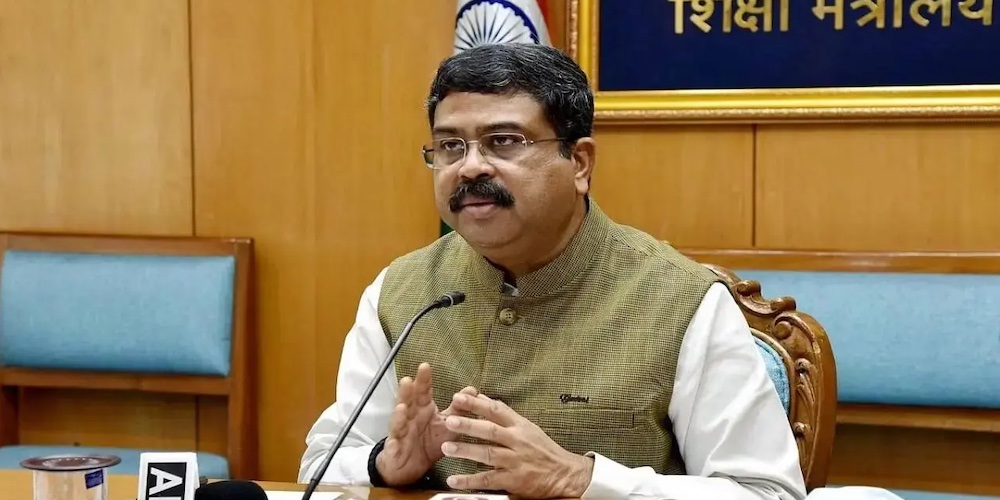
Resignation of Dharmendra Pradhan, the Union Education Minister, is now being cited as the precondition for the restoration of normalcy in the parliament. The foreign-sponsored Cockroach Party is demanding the same.
Here the rationale is that in a democracy, a minister is a trustee of public faith. The principle of “moral responsibility” says a minister should resign for failures in his ministry, even without personal guilt, to uphold the dignity of office. India borrowed this from the Westminster model, according to which, individual ministerial responsibility implies that a minister must answer for all lapses, malpractices, and administrative breakdowns occurring in his department.
But has this practice been followed in India? Not exactly , even if there are instances of some resignations. But the fact remains that these resignations by the ministers were only temporary.
Let us see the examples :
Lal Bahadur Shastri, 1956
As Railway Minister he resigned after the Ariyalur train accident that killed 144 people. He owned responsibility despite no direct fault. In fact, he insisted on leaving ;nobody had asked him to do so. The then Prime Minister Jawaharlal Nehru accepted it but made it clear that Shastri was completely blameless for the actual accident.
However, Shastri’s absence from the union cabinet was brief. He returned to the Union Cabinet following the 1957 general elections — less than a year later — taking over the Transport and Communications portfolio. Later he became the Home Minister and then Prime Minister.
P V Narasimha Rao, 1983
As Home Minister he resigned after law and order issues in Nagaland.
But he did not leave the cabinet. He was given other portfolios like Defence, Education (then known as HRD) and later became the Prime Minister.
Nitish Kumar, 1989
He resigned as Railway Minister following the Gaisal train disaster in August 1999, which claimed over 280 lives. He stated at the time that his conscience did not allow him to continue.
In all these cases, resignation was accepted as a moral act, but re-entry was allowed and not seen as wrong. In fact, Shastri and Rao returned to higher offices. And Nitish went back to Bihar as the Chief Minister.
There are two more points that need to be noted.
One, in a parliamentary democracy like ours, there is something called “collective responsibility” of the total cabinet. One minister’s fault or moral lapse is that of the total cabinet headed by the Prime Minister, in the strictest sense of the term. If that is the case, can the whole government be asked to go for a single incident?
Will that not create political instability in the country, particularly when in the highly competitive politics of India, charges of scams and corruptions are frequent and the opposition parties and the social media do not wait for going deep into know the veracity of these charges and the judicial verdict?
Two, unlike in the United Kingdom, there is no “Ministerial code” in India. Under the British system, a minister is governed by a formal, written code that is updated by each Prime Minister, who acts as the ultimate arbiter, often advised by an Independent Adviser on Ministers’ Interests. However, in India, we do not have any such thing and a minister’s tenure is at the sole political discretion of the Prime Minister or Chief Minister.
Against this background, let us see the ongoing protests over the paper leaks in the last 10 years as these have become one of the biggest triggers for “resign on moral grounds” demands.
NEET-UG 2026 was cancelled after paper leak allegations affecting 23 lakh aspirants. Questions were reportedly available on phones 2 days before the exam. Nationwide protests demanded Education Minister Dharmendra Pradhan’s resignation. The government said that not only 13 accused were arrested but also it did a re-test in which 20 lakh students sat for the examination, out of which about 12 lakhs passed and are seeking admissions in various medical colleges with the government-approved fees.

The Congress party alleges that 90 question paper leaks have happened in the last 10 years of Modi govt, affecting millions of students.
At the state levels, such leaks have taken place in 10 states ruled by the BJP, Congress, and a regional party.
But the fact remains that no minister has quit anywhere. Officials have been suspended and punished and in a case in Uttar Pradesh, the CBI is investigating a case. The only recorded resignation linked directly to a paper leak was Asit Vora, GSSSB President in Gujarat, 2021.
The Double Standard Problem
Analyzing these cases reveals the strategic and systemic rules governing moral accountability in Indian politics:
• A Circuit Breaker for the Government: The theory is that a minister’s resignation acts as a lightning rod. It absorbs public anger and shields the Prime Minister and the ruling party from systemic criticism. Once the immediate crisis defuses, the political cost of bringing the leader back drops significantly.
• Vindication via Elections: Going by the practice, we saw that in both instances of Shastri and Notish Kumar, democratic renewal (the 1957 and 1999 general elections) acted as a clean slate. The political logic dictates that if the public votes the party back into power, the minister’s “moral debt” is effectively paid.
• Separation of Policy and Competence: Because moral accountability explicitly separates the disaster from the minister’s personal competence or corruption, it implies that the individual remains a highly capable administrator who can successfully run a different department.
Therefore, the solution should be something different.
Way Forward: How to Fix Accountability for Paper Leaks and Ministerial Responsibility
(A) Legal + Institutional Safeguards
1. Implement Public Examinations Act, 2024 strictly. This law makes paper leaks a cognizable, non-bailable offense with 3-10 years jail and up to Rs 1 crore fine. Set up fast-track courts. The deterrence must be real.
2. There needs to be National Testing Authority reforms: One independent body with tech safeguards for NEET, JEE, SSC, etc. No outsourcing printing to private vendors without audit.
3. Here should be an Examination Commissions on lines of Election Commission with features of fixed tenure, security protocols, and direct accountability to legislature.
(B) Fix Responsibility Chain
1. Ministerial Responsibility Code like the UK’s Ministerial Code. If a major systemic failure happens — paper leak, accident, scam — the concerned minister must either resign or make a statement in the legislature owning responsibility within 7 days.
2. No scapegoating only officers: Suspend officials, but also fix political accountability. Else bureaucracy takes the fall every time.
3. Automatic re-exam + compensation: Students should not pay fees again, and states should pay compensation for wasted year/coaching, like done in some state re-exams.
(C) Technology + Transparency
1. End-to-end encryption + QR coded papers are the need of the hour, something UPSC now does. There should be GPS-tracked paper movement, CCTV at printing presses and strongrooms.
2. There should be digital exam options that reduce leak risk.
3. There has to be “Whistleblower protection” for students/officials who report leaks.
(D) Political Culture Change
1. “One standard for all parties: Whether Congress, BJP, or regional parties.
2. Resignation – Exit: Like Shastri and Rao, normalise that resigning for moral reasons is honourable and does not end career. That removes the fear of resigning.
3. Student representation: Have student bodies in exam oversight committees. The people who suffer most should have a voice.