India’s Leap into Space
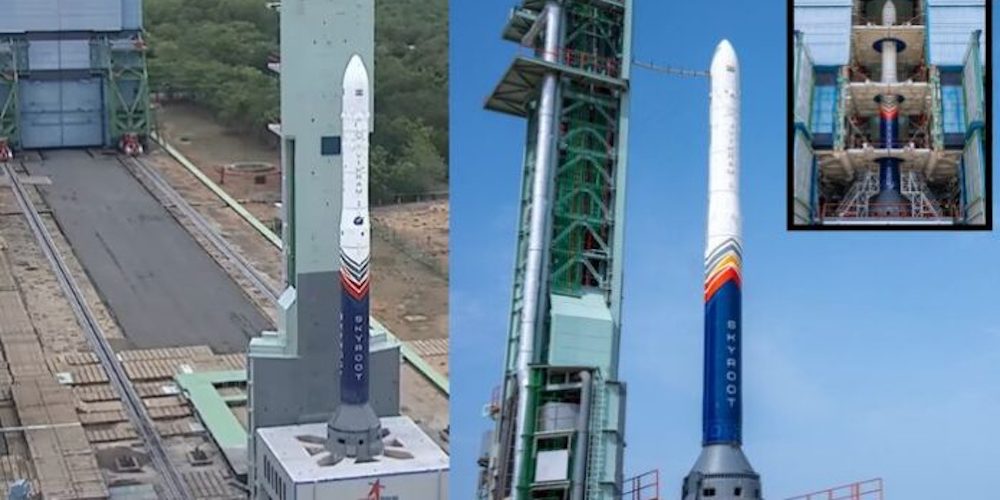
On July 18, 2026, the Hyderabad-based startup Skyroot Aerospace successfully executed Mission Aagaman. It created a new landmark in India’s Space-journey
India’s remarkable leap into space has evolved from humble beginnings on bicycle-transported rocket parts into a global aerospace powerhouse. Key milestones include the historic launch of Aryabhata in 1975, cost-effective interplanetary feats like Chandrayaan-1 and Mangalyaan, and recent commercial milestones like Skyroot Aerospace’s Vikram-1 orbital launch.
From Bicycle Parts to Commercial Frontiers
India’s space journey stands as one of the most remarkable stories of technological triumph in modern history. Over six decades, the nation has transformed an underfunded, agrarian-era research group into a global aerospace superpower.
Driven by the Indian Space Research Organisation (ISRO), this trajectory highlights how strategic state vision, innovative frugality, and structural market liberalisation can propel a developing economy to the cutting edge of cosmic exploration.
The Genesis: Scientific Temper and Frugal Beginnings
The foundational roots of India’s space ambitions were planted in the 1960s by Dr. Vikram Sarabhai, widely revered as the father of the Indian space programme. Operating under the vision of Prime Minister Jawaharlal Nehru, who prioritized a “scientific temper” for the newly independent nation, the early programme focused strictly on social development rather than geopolitical dominance.
The early infrastructure was famously modest:
The First Launch: In 1963, India launched a US-made Nike-Apache sounding rocket from Thumba, Kerala. The components were transported to the launch pad using bicycles and bullock carts.
Aryabhata (1975): India designed and built its first indigenous satellite, Aryabhata, which was launched via a Soviet vehicle. This proved that the nation possessed the mathematical and engineering acumen to manage orbital assets.
Launcher Autonomy: Recognising the vulnerability of relying on foreign launch vehicles, ISRO spent the 1980s and 1990s mastering solid and liquid propulsion. This culminated in the creation of the Polar Satellite Launch Vehicle (PSLV) and the Geosynchronous Satellite Launch Vehicle (GSLV). The PSLV became a global workhorse, celebrated for its pinpoint accuracy and low operational costs.
Interplanetary Frugality and Lunar Historic Triumphs
As India secured its launch capabilities, its scientific objectives shifted from basic Earth observation to deep-space exploration. These deep-space missions became globally famous for their highly efficient, low-cost engineering models:
Chandrayaan-1 (2008): India’s first lunar orbiter successfully detected water molecules on the Moon, rewriting textbooks and reshaping global lunar exploration strategies.
Mars Orbiter Mission / Mangalyaan (2013): India became the first Asian nation to successfully reach Martian orbit, achieving this milestone on its very first attempt. The entire mission cost roughly $74 million, a fraction of the budget spent on similar Western missions.
Chandrayaan-3 (2023): Following a partial software failure during the Chandrayaan-2 landing attempt, ISRO achieved a historic breakthrough by making India the first country to soft-land a spacecraft near the lunar south pole. This area is highly valued for its deep deposits of water ice.

Structural Liberalisation and the Commercial Boom
The contemporary era marks a profound structural shift from a state-monopolized program to a decentralized, market-driven ecosystem. Guided by the Indian Space Policy 2023, the Indian government completely opened the space value chain to Non-Government Entities (NGEs).
This structural reform successfully unburdened ISRO from routine satellite manufacturing, allowing it to focus strictly on deep space exploration. It also established IN-SPACe as an autonomous, single-window regulator to grant private firms seamless access to state infrastructure.
Furthermore, the government liberalized its Foreign Direct Investment (FDI) policies, permitting up to 100% FDI in key areas like satellite component manufacturing. As a result, the national space startup footprint expanded dramatically, growing from just one company in 2014 to over 400 private space startups.
The Private Orbital Era: Mission Aagaman
This sweeping regulatory overhaul yielded a monumental victory for the domestic private sector. On July 18, 2026, the Hyderabad-based startup Skyroot Aerospace successfully executed Mission Aagaman.
The launch featured several key breakthroughs:
The Vehicle: The Vikram-1 rocket, a 22-meter-tall orbital-class vehicle built with an innovative all-carbon composite structure and 3D-printed liquid engines, successfully reached low Earth orbit.
Global Milestone: This launch made India only the third nation in the world (after the United States and China) where a private enterprise successfully developed and launched an independent orbital rocket.
The Payloads: The flight successfully deployed multiple customer payloads, including localized technology demonstrators and a robotic space-debris removal arm.
At the same time, companies like Agnikul Cosmos demonstrated 3D-printed semi-cryogenic engines, while satellite builders like Pixxel established public-private partnerships to build advanced Earth observation constellations.
Economic Vision and the Path Forward
India’s space programme has evolved from a purely scientific endeavor into a cornerstone of its macroeconomic growth strategy. Currently, the national space economy is valued at roughly $8.4 billion to $9 billion, representing about 2% of the global space market share. Backed by competitive private launch capabilities and state-backed initiatives — such as IN-SPACe’s ₹1,000 crore Venture Capital Fund — the Indian government aims to scale this economy to $44–45 billion by 2033, capturing up to 8% of the global market.
While India continues to navigate challenges like domestic engineering brain drain and capital access barriers, its broader roadmap remains clear and highly ambitious. The nation is actively advancing its flagship Gaganyaan human spaceflight program, establishing its own independent space station, and preparing for the NISAR joint Earth-observation mission with NASA.
In sum, by merging its historical legacy of cost-efficient engineering with modern, private sector innovation, India has successfully cemented its status as an elite, indispensable pillar of global space exploration.