
Jaganath Mandir Mismanagement: When Faith Meets Chaos
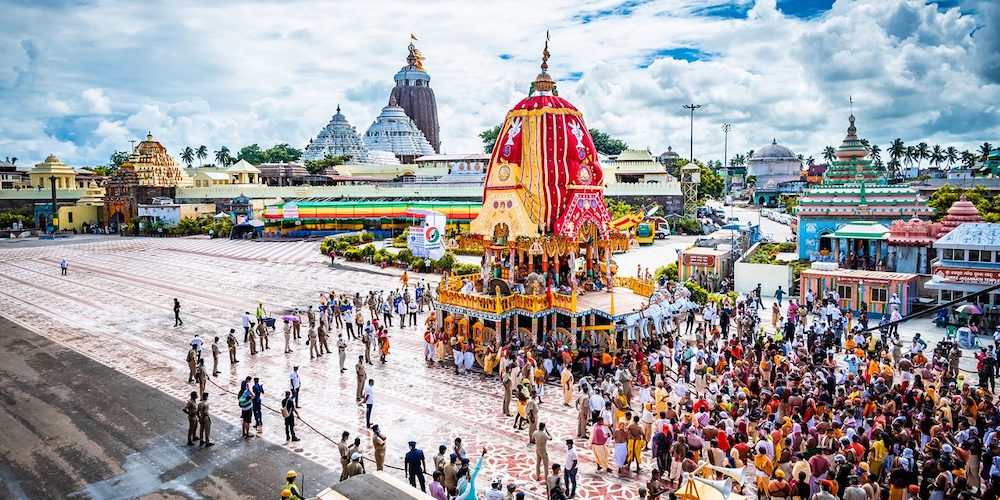
The Jagannath Temple in Puri is not just a shrine. It’s one of the Char Dhams, a living symbol of Odisha’s culture, and the center of millions of devotees’ faith. Yet every Rath Yatra and every regular darshan day exposes the same problem: mismanagement at the gates.
1.Queue Management and VIP Darshan: Two Lines, Two Gods
Any devotee visiting Puri knows there are two darshans happening at once. One is for the common pilgrim, standing for 4-6 hours in crowded, poorly managed queues with little water, shade, or information. The other is for the “VIP”, who walks in through a different gate, often bypassing the line entirely.
This isn’t occasional. The VIP system has become institutionalized. The result is a visible divide: if you have connections or money, you get close to Mahaprabhu. If you don’t, you wait, get pushed, and often miss darshan. That contradicts the very spirit of Jagannath, where the Lord is called _Darubrahma_ and is believed to be accessible to all.
2. The Role of Pandas and Touts
The issue is compounded by middlemen.
Pandas and unauthorized touts openly negotiate “darshan packages” with devotees. Pay more, get faster access, skip the line. This turns a sacred experience into a transaction.
The fact that this continues year after year raises a simple question: why hasn’t the temple administration enforced strict entry rules and penalized agents? In Tirupati, despite its scale, electronic queue systems, biometric entry, and strict action against touts have reduced this problem. Puri still relies on manual control, which creates room for discretion and corruption.

3. Why Not Rules Like Tirupati?
Tirupati’s Tirumala Tirupati Devasthanams [TTD] implemented time-slot darshan, online booking, CCTV monitoring, and strict action against unauthorized agents. It’s not perfect, but the system works better than what we see in Puri.
The question is why Jagannath Mandir, with centuries of tradition and a dedicated Shree Jagannath Temple Administration [SJTA], has not adopted a similar framework. Technology exists. The Supreme Court and temple reform committees have made recommendations before. Implementation is what’s missing.
4. The Risk of Repeating Ayodhya’s Mistakes
When large temples lack transparent management, the result is loss of public trust. Ayodhya’s Ram Mandir construction saw controversies around crowd control and VIP access in its early phases. If Puri doesn’t act now, it risks the same narrative: a temple managed for influence rather than for devotees.
Allowing paid VIP darshan through pandas is not just unfair. It signals that the administration is either unable or unwilling to stop it. That is the definition of institutional tolerance for corruption. Once that precedent is set, it’s hard to reverse.
5. The Expectation from the Government
People voted for change because they were tired of the old system where temple administration was reactive and opaque. If the current government follows the same path — turning a blind eye touts, not digitizing queues, not punishing violations — then it’s repeating the cycle. Worse, it’s worsening it by normalizing what should be unacceptable.
Faith cannot be managed through WhatsApp groups and last-minute announcements. It requires a system: clear rules, enforced penalties, transparent booking, and accountability for SJTA officials.
Jagannath belongs to everyone. If the temple cannot ensure equal access, then the institution fails its core purpose. The government, SJTA, and local administration need to act before public frustration turns into a larger crisis of faith.
Jai Jagannath.


Very well written ! Being born in a Brahmin family, having roots with the staunch and orthodox Brahmin family, I somehow find myself more connected to Sikhism. One of the primary reason is the preferential treatment given to VIPs in Shree Jagannath Temple. I have been witnessing this from my childhood during my yearly visit to the temple. From the teachings, all are equal before the Lord, but some have Priority Pass akin to the airport lounges. This system was in place much before the lounge access in the airports. Then how are we equal as individuals??? I realised the depth of this question when i happened to visit Shree Harmandir Sahib ( Golden Temple) after I joined the Armed Forces. Visiting the Golden temple gave me peace and calmness in the real sense. There was no rush, no separate line for VIPs and no touts akin to Puri Panda forcing to pay and offer in order to prove your devotion. Though I happen to visit the Shree Jagannath Temple, but my heart and mind is at Golden Temple always ! As such the motto of Sikhs suits my warrior mentality..Raj karega Khalsa saki Rahe na koi !!
Definitely a pain point that needs to be corrected!