Strengthening Dams
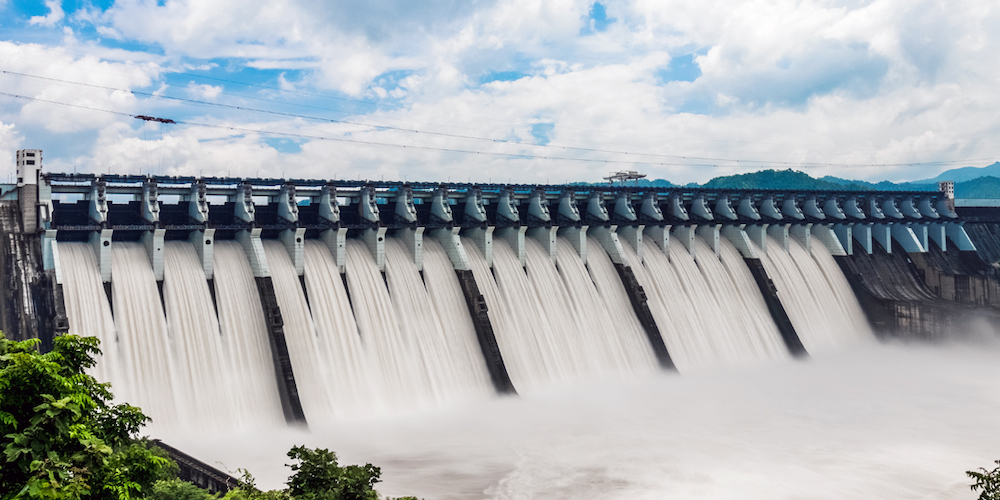
India manages the world’s third-largest dam network, with 6,628 specified dams providing essential water, irrigation, and power security. Maintaining this massive infrastructure is a critical national challenge because over 26% of India’s dams are more than 50 years old and 291 have crossed the 100-year mark, making them highly vulnerable to structural deterioration and extreme weather. To counter these risks, India has transitioned from a fragmented, paper-based advisory framework to a legally binding, digitally-driven safety ecosystem
India’s dams play a critical role in irrigation, hydropower generation, flood moderation, drinking water supply and overall water security. Over the decades, dams have contributed significantly to agricultural growth, industrial development and socio-economic progress across the country.
As a large number of dams age and climatic variability increases, the issues of their rehabilitation, operational safety, and long-term resilience become increasingly important. The Government of India addresses this through a comprehensive approach combining structural rehabilitation, institutional reforms, digital monitoring systems and risk-based safety management.
India today manages one of the largest dam portfolios globally. It ranks third in the world, with 6628 specified dams, of which 6,545 are operational, and 83 are under construction. The gross water storage capacity of these dams is about 330 billion cubic metres. They are critical for ensuring national food, energy, and water security.
About 26% (1,681 dams) of these dams are more than 50 years old. This includes 291 that are more than 100 years old. About 42% fall within the 25–50 years age bracket. India’s oldest, the Kallanai (Grand Anicut) in Tamil Nadu, has functioned for nearly 2,000 years — showcasing enduring engineering and maintenance.
Around 98.5% of these dams, which comes to 6,448, are owned by State Governments. Central Public Sector Undertakings have 49 dams (0.7%); private entities own 36 dams (0.6%); and the Central Government owns 12 dams (0.2%). Maharashtra has the highest number of specified dams, followed by Madhya Pradesh, Gujarat, Chhattisgarh, Rajasthan, Karnataka and Odisha.
Ageing infrastructure, sedimentation, changing hydrological patterns and increasing climate variability have highlighted the need for systematic rehabilitation and safety management. Analysis of 439 reservoirs in India (CWC data) shows an average 19% loss of gross storage capacity with an average reservoir age of 42 years. The average annual loss of storage is estimated at 0.74%, equivalent to about 1.81 MCM per reservoir per year.
The Statutory Framework: Dam Safety Act, 2021
The Dam Safety Act, 2021 established a mandatory legal framework for the surveillance, inspection, operation, and maintenance of all specified dams (dams over 15 metres high, or 10–15 metres high meeting specific technical rules). It created a strict four-tier governance model:
• National Committee on Dam Safety (NCDS): Formulates national safety policies and standards.
• National Dam Safety Authority (NDSA): Regulates and enforces compliance across states.
• State Committees on Dam Safety (SCDS): Oversees state-level safety implementation.
• State Dam Safety Organisations (SDSOs): Established across all 31 dam-owning states to handle monitoring and compliance.

Core Legal Obligations for Dam Owners
Under the law, primary safety and maintenance accountability rests with the dam owners (state governments, public sector undertakings, or private entities). Owners are legally required to fulfill several operational duties:
• Dedicated Safety Units: Establish an on-site dam safety unit for routine asset upkeep.
• Mandatory Inspections: Conduct strict pre-monsoon and post-monsoon inspections.
• Emergency Preparedness: Formulate comprehensive Emergency Action Plans (EAPs) and install Early Warning Systems (EWS).
• Expert Evaluations: Commission independent panels of experts to complete a Comprehensive Dam Safety Evaluation. The NDSA has set a mandatory nationwide compliance deadline for these evaluations.
• Penalties for Negligence: Failure to comply or obstructing safety functions carries a penalty of up to one year of imprisonment, extending to two years if negligence leads to a loss of lives.
Flagship Programme: DRIP (Phases II & III)
The Dam Rehabilitation and Improvement Project (DRIP) is the flagship initiative driving physical infrastructure upgrades. Co-financed by the World Bank and the Asian Infrastructure Investment Bank (AIIB), Phases II and III run with a financial outlay of ₹10,211 crore.
Coverage: This phase targets structural repairs, spillway modernisation, and desiltation for 736 dams across 19 states.
• Major Dams Covered: Key reservoirs under rehabilitation include major structures like Bhakra Dam, Nagarjuna Sagar Dam, and Gandhi Sagar Dam.
• Focus Areas: The project focuses on physical re-engineering to restore storage capacities lost to heavy sedimentation and establishing revenue-generation streams to fund long-term operations.
Digital Transformation and Risk Monitoring
India has modernised its oversight through real-time data integration, shifting from legacy reporting to predictive risk management.
DHARMA Platform: The Dam Health and Rehabilitation Monitoring Application serves as a centralized, web-based single source of truth. All 6,628 specified dams are registered on this platform to digitally log asset details, instrument readings, and safety data.
Digitisation has enabled over 13,000 recorded dam inspections annually, compared to just 1,200 annual paper inspections in the past.
Authorities have completed rapid risk screenings for 5,553 dams, categorising infrastructure based on urgency. Dams with critical structural flags are designated as Category-I to receive immediate, priority interventions.
To sum up, India’s extensive dam network, built over decades, continues to underpin critical sectors of the economy. As these assets age and operate under increasingly variable climatic conditions, the focus has shifted from expansion to safety, resilience, and lifecycle management. The convergence of large-scale programmes such as the DRIP, statutory oversight under the Dam Safety Act, 2021, and the use of digital tools such as the DHARMA reflects a maturing dam safety ecosystem in India. Together, these initiatives strengthen dam safety, improve the performance of ageing infrastructure, and enhance resilience to emerging risks.