TO TALK, OR NOT TO TALK, TO PAKISTAN?
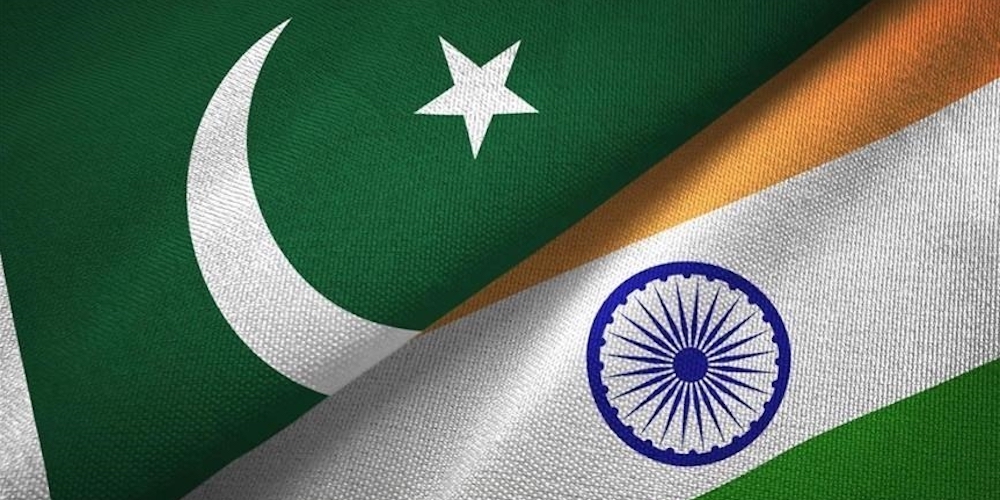
Whispers are getting louder, but the voice is still muffled. Are India and Pakistan talking peace and cooperation, and are they ready to usher in a new era in bilateral ties? The answer is difficult, but it is essential to explore.
The only ‘visible’ source of information is former Jammu and Kashmir Chief Minister Mehbooba Mufti. She has claimed that retired army generals and diplomats from both sides have held discreet talks in the last two months. Whether one agrees with her politics or not is not the issue here. The ground reality is that the Kashmiris suffer whenever India and Pakistan clash.
But a major newspaper chain has confirmed, quoting unnamed government officials. Neither has identified those who met, at least twice, in Dubai and Doha. Yet, the timing is significant. It has been one year since India and Pakistan clashed briefly after the terror attack at Pahalgam, for which India blamed Pakistan and launched “Operation Sindoor”.
The “Track-2” talks, as they are called, are a no-no affair for the media and are ‘leaked’ only when the time is ripe. They are an excruciatingly slow process and can be thwarted by the bureaucracy or the intelligence agencies. Records say circumstances or fresh events can overtake them.
In Pakistan’s case, its army chief, promoted to field marshal in the aftermath of last year’s conflict and made chief of the defence forces, would appear to be the predominant, if not the sole, decision-maker. In India, only a handful of people at the top would know.
At the outset, one needs to stress that talking is better than shooting. Not talking and only competing in world forums for attention and support has a life of its own. Also, that cannot be a permanent state of a relationship. Geopolitics is not static. Presumably, the talks aim at exploring how it should change. Like war, a no-war-no-peace situation can also cause fatigue.
The bigger issue is to explore whether the time is ripe. As of now, it is not. The way they observed the first anniversary, both sides are still in a triumphal mood. India continues to insist that terror and talk do not go together. Its political and military leadership have been strident in their recent statements.
Both sides are claiming victory. What is ” Operation Sindoor’ which is ‘paused’ not ended by India is “Marka-e-Haq” to Pakistan. At the ceremony to mark the anniversary, Field Marshal Munir said that ‘marka’ (battle) was and remains “a battle of two ideologies”. He repeated what he had said a week before the Pahalgam attack, invoking the “two-nation” theory that led to the creation of ‘Muslim’ Pakistan from “Hindu India.”

Post the four-day conflict, the issue of how it ended remains contentious. India has insisted that it was a bilateral act with Pakistan. Indeed, US Vice President D J Vance and Secretary of State Marco Rubio were directly involved in consultations. But President Donald Trump has repeatedly claimed credit, in keeping with his characteristic flair, and the Nobel Prize for it. Pakistan endorsed both and has gained considerable leverage in Washington, getting close to Trump, and concluding a business deal with his son-in-law. India lost the game of perception, despite dispatching its lawmakers to different countries. The old playbook in conducting diplomacy proved inadequate.
The informal talks may be the outcome of the realisation that India needs to counter the leverage Pakistan has gained. Trump, already blowing hot and cold on trade tariffs, will be in office for over three years. He may again favour Islamabad in the event of another Pakistan-sponsored terror attack, reserving stern warnings in public to both, and pressuring both sides to end any conflict. His co-opting of Pakistan as the mediator in the ongoing Gulf War has also influenced India’s emerging stance.
Records show that the US role, whether or not India acknowledges it in the context of Sindoor, is part of a pattern. After India’s Balakot airstrike on a terrorist camp deep inside Pakistan in 2019 triggered Pakistani reprisals, the world again first learned of an India-Pakistan de-escalation not from New Delhi, but from Trump during his first term.
Go back to the 1999 Kargil conflict. President Bill Clinton exerted intense diplomatic pressure on Pakistan to withdraw its troops, preventing a wider conventional or nuclear war. His July 4, 1999, meeting with then-Pakistani PM Nawaz Sharif was crucial, where he demanded a complete withdrawal to the LoC.
Significantly, Clinton’s administration broke from past neutrality by identifying Pakistan as the aggressor and threatened to block a $100-million loan and isolated Pakistan internationally, demanding they withdraw. Can India expect Trump-2 to do that?
Taking note of the current scenario, Commodore (retd) Uday Bhaskar, Director of India’s Society for Policy Studies, says: “Both sides ought to invest in Plan B diplomacy and quiet channels to control the escalation.” He warns: “When it occurs, it will be very rapid.”
Quoting him, Al Jazeera, the Doha-based media outlet, says: “Bhaskar’s warning cuts across both capitals.”
Pakistani security analyst Muhammad Amir Rana echoes this: “Although the space for a broad-based peace process between the two countries has shrunk, optimism is the only way forward for peace-loving citizens in both nations. Keeping that optimism alive, however, requires consistent effort. The seeds of hope still exist in the form of limited informal diplomatic contacts and weak but surviving civil society channels between the two sides.”
As of now, there seems to be no support for peace talks, either among the two governments or the public fed on rival narratives of last year’s conflict and its aftermath. Are they prepared for another round – and for the inevitable pressures from the international community?