Repairing Ties
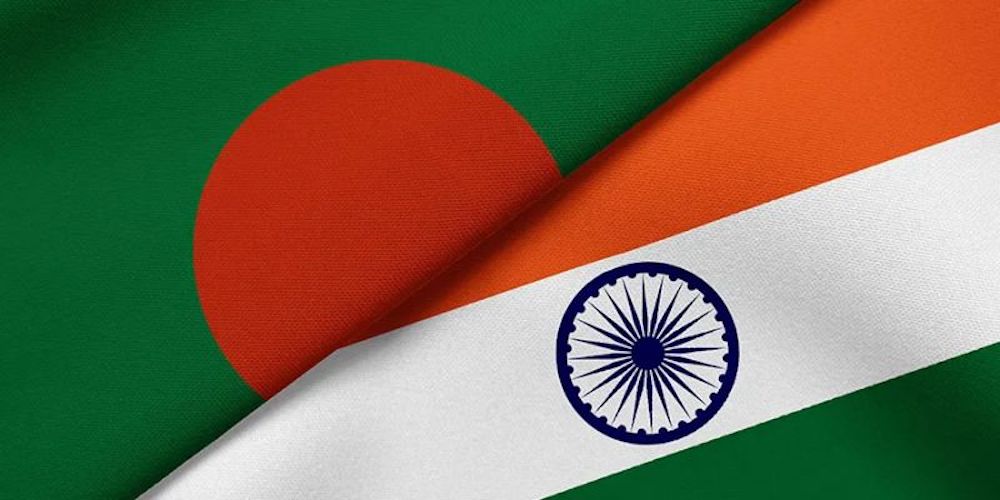
India wants to adopt a new strategy in Bangladesh to repair relations with what was, till recently, its ‘friendliest’ neighbour.
With the likely appointment of Dinesh Trivedi, a Kolkata Gujarati, as India’s high commissioner to Bangladesh, the Narendra Modi Government is attempting a new strategy to repair relations with the eastern neighbour, disturbed after Sheikh Hasina was deposed in 2024 and a hostile interim government led by Prof Mohammed Yunus took power.
New Delhi has sent Trivedi’s name to Dhaka for ‘agrément’ under the rules governing top diplomatic appointees. A formal announcement by the government will follow after Bangladesh conveys its approval.
Appointing Trivedi to the sensitive post has come after the new Bangladesh Foreign Minister, Khalilur Rahman, following his discussions in New Delhi, stated that bilateral ties were moving “slowly, but surely”. It is a long way, both sides privately admit. One Sof the thorny issues is Dhaka’s insistence that Hasina, who is exiled in India, must be returned to face Bangladeshi law.
The first signal came when Tariq Rahman won the February elections. Although both his parents, who ruled Bangladesh in the last century, were critical of India, a pragmatic Tariq has shown willingness to sort out the numerous issues that affect the two neighbours.
As it became clear that Tariq would win the elections, India began courting him. External Affairs Minister S. Jaishankar attended the funeral of his mother and former prime minister Khaleda Zia. Lok Sabha Speaker Om Birla and Foreign Secretary Vikram Misri attended the swearing-in ceremony of the new government. Prime Minister Narendra Modi also sent a letter to Rahman inviting him to visit New Delhi.
Trivedi’s is a political appointment, first after almost 50 years. Subimal Dutt and Samar Sen, sent by the Indira Gandhi Government, were, only technically speaking, ‘political’ in that they were retired Indian Civil Service (ICS) officers. Both hailed from that part of Bengal and were highly respected. Heading one of the largest Indian missions abroad, High Commissioners to Bangladesh have since been career diplomats.
Trivedi, 75, is a former Union railway minister who served in the Manmohan Singh government as a member of the Trinamool Congress. He presented the 2012 railway budget, which proposed a passenger fare increase, a move that led to his resignation following opposition from his party leadership. Trivedi soon resigned from the Trinamool Congress and later joined the Bharatiya Janata Party.

Trivedi did not figure in the West Bengal elections now underway. Modi appears to have placed his trust in Trivedi for a diplomatic task. In politics and parliament for many years, Trivedi, also a former union minister, has no background in diplomacy. That makes his appointment an experiment. Such appointments have mainly been to the US, the UK and Russia. In West Bengal’s political context, Trivedi will be the only other holder of a key diplomatic office after former West Bengal Chief Minister Siddharth Shankar Ray, who was ambassador to the USA.
Trivedi has lived in Kolkata, married a Gujarati lady, also from Kolkata, speaks fluent Bengali and knows West Bengal, at least, well. With his political connections in Bengal, analysts say, he could acquire a better grasp of issues in the India-Bangladesh region and would likely focus on regional stability and security.
Trivedi’s parents moved from Karachi after the Partition and lived in many cities. Born in New Delhi, he had an elite education before taking a loan of Rs. 20,000 to complete an MBA at the University of Texas in the US. He held high-paid jobs with multinational corporations before returning to Kolkata. He also trained to be a pilot. Going by his bio-data, he is a trained sitar player.
His task as the high commissioner would include working to renew the 1996 Ganga Water Treaty, which ends this year, dealing with ticklish issues ranging from illegal trade and deaths along the 4,300-kilometre border, the largest India has with any neighbour, to the supply of “Hilsa” fish and trade and commerce issues. India has already relaxed visa rules, particularly for those needing medical treatment.
Much of this had been disrupted under Yunus, who identified himself with the Islamists. Trivedi will have to keep a watch on the treatment of minorities in Bangladesh since the Islamist parties won an unprecedented vote in the National Assembly and are the main opposition.
A Kolkata-based, Bengali-speaking, erudite politician with national exposure and administrative experience and a winner of the “Best Parliamentarian” Award, having served in both houses of India’s Parliament, should be a new experience for Dhaka as well. It has also posted career diplomats to New Delhi after the first high commissioner, renowned poet Shamsur Rahman, in the early years of heady India-Bangladesh warmth and romance.
Trivedi has a difficult task, but will hopefully serve as the bridge between Delhi and Dhaka and help promote India’s reach to Southeast Asia under the “Act-East” Policy.