Pragmetic Order
Maintenance Should Not Be Unreasonably High Or Encourage Idleness: Gujarat HC
While displaying pragmatism of the highest order and striking a notable balance, the Gujarat High Court at Ahmedabad in a most remarkable, robust, rational and recent oral judgment titled Mayurbhai Badvantbhai Dave vs State of Gujarat & Ors in R/Criminal Revision Application (For Maintenance) No. 181 of 2025 With Criminal Misc. Application (For Stay) No. 1 of 2025 and cited in Neutral Citation No.: 2026:GUJHC:16305 that was pronounced just recently on 03.03.2026 has underscored unequivocally that courts must balance the needs of the wife and child with the husband’s real financial capacity. It must be borne in mind that the Gujarat High Court while reducing the enhanced maintenance noted that it should not become excessive or encourage idleness. It merits just no reiteration that this laudable judgment on matrimonial case of maintenance of wife has made it indubitably clear that while allowance is necessary for the support of the wife and child, it must remain reasonable and should not place an unrealistic financial burden on the husband who had the additional responsibility of supporting his 76-year-old ailing mother leaving him with very little money to manage his own expenses.
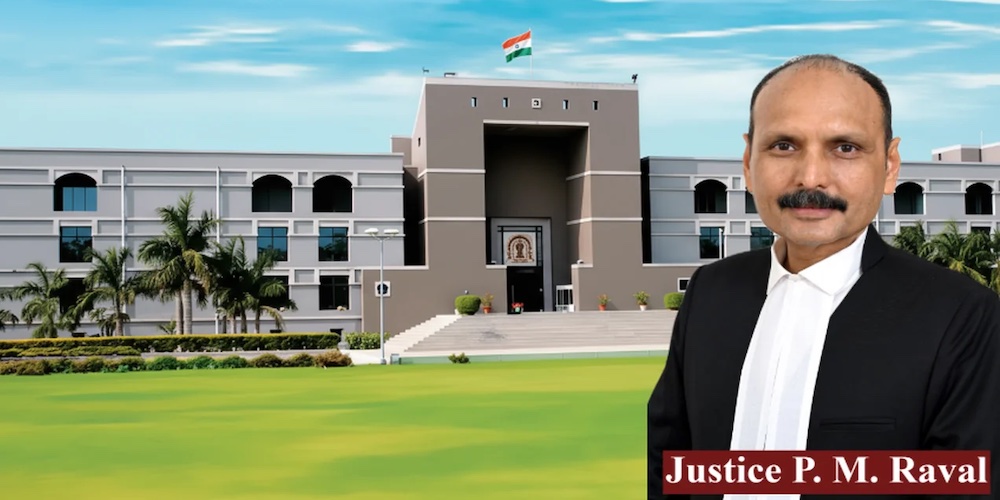
At the very outset, this learned, laudable, landmark, logical and latest oral judgment authored by the Single Judge Bench comprising of Hon’ble Mr Justice PM Raval of the High Court of Gujarat at Ahmedabad sets the ball in motion by first and foremost putting forth in para 1 that, “By this application, the applicant – original respondent –husband seeks to challenge the judgment and order dated 25.09.2024 passed in Criminal Misc. Application No. 205 of 2022 by the learned Principal Judge, Family Court, Surendranagar, whereby, the learned Judge partly allowed the said application and enhanced the maintenance amount to the applicants therein – respondent Nos. 2 and 3 herein from Rs.2,500/- to Rs.4,500/- per month to the respondent No. 2 and from Rs.4,000/- to Rs.7,000/- per month to the respondent No. 3 herein and thereby, enhancing the total maintenance amount from Rs.6,500/- to Rs.14,000/- per month to the respondent Nos. 2 and 3 herein.”Needless to say, the Bench then states in para 3 that, “Considering the controversy involved in the matter, with the consent of the learned advocates for the respective parties, the matter is heard finally today.”To put things in perspective, the Bench envisages in para 4 while elaborating on the facts of the case stating that, “Heard, the learned advocates for the respective parties.
4.1 The learned advocate for the applicant – husband would submit that the applicant – husband has responsibility of his ailing mother also, who is aged about 76 years. It is further submitted that even as per the Income Tax Returns, the income of the applicant – husband is assessed at Rs.25,900/- per month, and on account of such an enhancement of maintenance, more than 50% of the monthly earnings goes towards paying maintenance only. It is submitted that the learned Judge has enhanced the amount merely on the count that five years have elapsed after the maintenance order was passed and considering the rate of inflation, he enhanced the maintenance amount, as aforesaid, which is quite exorbitant and accordingly, it is prayed that this application may be allowed by setting aside the impugned order herein.”
Most significantly, most remarkably and so also most forthrightly, the Bench encapsulates in para 6 what constitutes the cornerstone of this notable judgment postulating precisely that, “Heard, the learned advocates for the respective parties and perused the material available on record.
6.1 At the outset, it is required to be noted that the scope of revision is very limited and cannot be exercised in routine manner. The Apex Court in the case of Amit Kapoor v. Ramesh Chander and Anr., reported in (2012) 9 SCC 460, has held that it is only with a view to correct the manifest error, such jurisdiction should be invoked. Revisional Jurisdiction can be invoked where the decisions under challenge are grossly erroneous, there is no compliance with the provisions of law, the finding recorded is based on no evidence, material evidence is ignored or judicial discretion is exercised arbitrarily or perversely.
6.2 On the touchstone of the aforesaid principles, if the case on hand is tested, earlier, by the judgment and order dated 05.07.2019 passed in Criminal Misc. Application No. 418 of 2018 filed under Section 125 of the Criminal Procedure Code, 1973 (the Code) by the learned Principal Judge, Family Court, Surendranagar, the learned Judge granted maintenance to the tune of Rs.2,500/- per month to respondent No. 2 and Rs.4,000/- per month to the respondent No. 3 herein, totalling to Rs.6,500/- per month. Thereafter, the respondent Nos. 2 and 3 herein preferred an application under Section 127 of the Code for enhancement of maintenance, which came to be partly allowed vide the order impugned in this revision application enhancing maintenance to the respondent Nos. 2 and 3 herein from Rs.6,500/- to Rs.14,000/- and thereby, an enhancement of Rs.7,500/- per month in the earlier maintenance order was made. However, if the impugned order is perused, while recording the reasons, the learned Judge has observed that the income of the husband i.e. the present applicant is approximately Rs.25,900/- per month, which was earlier believed to be Rs.20,000/- per month while passing the order dated 05.07.2019. Further, earlier, while passing the maintenance order, income of the wife was considered, however, as observed in the impugned order, the respondent No. 1 is not earning now and though an assertion is made by the present applicant that the respondent No. 1 is earning Rs.6,000/- per month but he failed to prove the income of the respondent No. 1 and she has stated on affidavit that she is not earning now and she is jobless.

6.3 Be that as it may, the fact remains that the wife has studied upto M.Com. and the same can be one of the aspects while fixing the amount of maintenance though she is not earning. In Smt. Jasbir Kaur Sehgal v. District Judge, Dehradun and Others, reported in AIR 1997 SC 3397, the Apex Court held that, “the Court has to consider the status of the parties, their respective needs, the capacity of the husband to pay having regard to his reasonable expenses for his own maintenance and of those he is obliged under the law and statutory but involuntary payments or deductions. The amount of maintenance fixed for the wife should be such as she can live in reasonable comfort considering her status and the mode of life she was used to when she lived with her husband and also that she does not feel handicapped in the prosecution of her case. At the same time, the amount so fixed cannot be excessive or extortionate”. The social objective behind the provision for grant of maintenance, if considered on the admitted facts as discussed in this case, it would go to disclose the wife’s need and requirement to be balanced not only with the income and liability of the husband but also has to be considered on the backdrop of the education and prospect of the wife to earn, therefore, maintenance should allow the wife to maintain a reasonable standard of living but should not be excessive or encourage idleness. The amount of permanent alimony awarded to the wife must be befitting the status of the parties and the capacity of spouse to pay maintenance. Maintenance is always dependent on the factual situation of the case and the Court would be justified in moulding the claim for maintenance passed on various factors. In the case on hand, the wife is M. Com. Further, though income of the husband is increased from Rs.20,000/- per month to Rs.25,900/- (r/o. Rs.26,000/-) per month, however, if the enhanced amount of maintenance is seen, the same is more than double from what was earlier granted to the respondent Nos. 2 and 3 herein. It is true that considering the rate of inflation, the amount ought to have been enhanced, but merely considering the fact that now wife is not earning and that the inflation rate has gone up and that, five years have elapsed after the earlier maintenance order, the trial Court has doubled the amount of maintenance, however, without giving any palpable reasons therefor and/or without giving any justification for coming to such a conclusion and doubling the amount of maintenance.
6.4 Considering the responsibility of the applicant husband, more particularly, he has also to maintain his ailing mother as well as considering his income as believed by the Family Court as also considering the fact that the respondent No. 2 has responsibility of respondent No. 3 also, who is now aged about 13-14 years and changing needs with the time and when, it has not come on record, more particularly, at the instance of the respondent Nos. 2 and 3 that the applicant herein earning handsome and/or he is enjoying a luxury life and spending extravagant on himself, and in the income so believed of the husband, it would also be difficult to survive by the husband by paying such an enhanced more than double maintenance amount, and last but not least, considering the scope of revisional jurisdiction, to strike a balance in view of the admitted facts of the case, the Court considers it apposite to reduce the quantum of maintenance awarded by the Family Court.”
As a corollary, the Bench then directs and holds in para 7 that, “For the forgoing reasons, this application succeeds and is accordingly, allowed in part. The impugned order, as referred to herein above, is hereby modified and the enhanced amount of total maintenance granted to the respondent No. 2 herein is reduced to Rs.5,500/- from Rs.6,500/- per month and to respondent No. 3 herein, from Rs.7,500/- to Rs.6,500/- per month, thereby, granting total amount of maintenance to the respondent Nos. 2 and 3 herein of Rs.12,000/- per month. The reduced amount of maintenance shall be paid from the date of application.”
Finally and resultantly, the Bench then concludes by directing and holding in para 8 that, “Rule is made absolute to the aforesaid extent.
8.1 In view of main revision application is disposed of aforesaid, Criminal Misc. Application No. 1 of 2025 for Stay, does not survive and the same stands disposed of.”
In a nutshell, we thus see that the Single Judge Bench comprising of Hon’ble Mr Justice PM Raval of the High Court of Gujarat at Ahmedabad while reducing the amount of maintenance to wife awarded by the Family Court has made it indubitably clear that maintenance should not be unreasonably high or encourage idleness. It was also underscored by the Bench that courts must balance the needs of the wife and child with the husband’s real financial capacity. It was also made crystal clear by the Court while citing the relevant ruling of the top court as mentioned hereinabove that the amount fixed for wife cannot be excessive or extortionate.