HOW “BOMBAY BAWAS” LOOK AT IRAN
It is difficult to say how far and how long Iran will resist attacks and carry out its own, in West Asia’s worst conflict, when most nations have caved in and become camp-followers. Everyone is struggling to manage its impact, especially on the energy front. US Secretary of State Marco Rubio has talked of ‘weeks’ for it to end. Even he has no clear answer, now that Houthis in Yemen have entered the war, firing missiles at Israel twice over the weekend.
The conflict is spreading, causing concerns of more violence and destruction. Beyond humans, both sides are destroying the nature-blessed energy resources, which are bound to trigger the collapse of many economies worldwide. Those who started it do not seem to know how to end it.
At the centre is the Gulf of Hormuz. Iran is calling the shots on who can use this, one of the world’s most important energy waterways. It is the only sea passage from the Persian Gulf to the open ocean. Donald Trump has proposed “joint control” as a way to end the conflict he started. Whether Iran is ready to discuss, and whether Israel will agree, is being seriously disputed.
Now, although related, a bit of light talk over the weekend.
As a Bollywood buff, I must endorse the ‘invitation’ Boman Irani has sent out to Donald Trump to talk to the ‘Iranis’: Aruna Irani, Smriti Irani and himself. Of course, he doesn’t want a junket to Washington or elsewhere. Let Trump’s team come to Mumbai’s Dadar Parsi Colony. To be treated to Dhansak and custard, two popular Parsi dishes. Provided the team brings an LPG cylinder to help with their cooking.
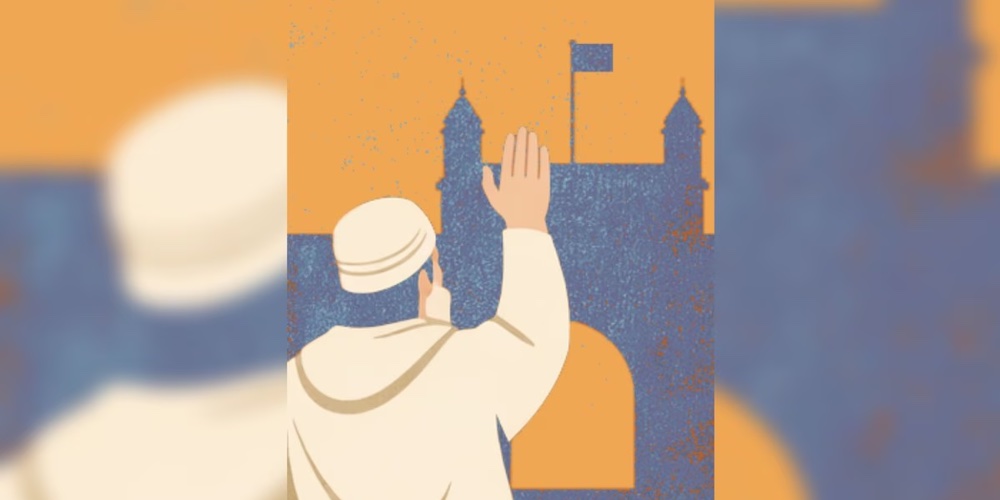
A cartoon on social media, a ‘Bawa’, in ‘sadra’ and ‘topi’ declares: “The Gulf of Hormuz belongs to Bombay Parsi Panchayat”.
You can depend upon the community, becoming precious because of its dwindling numbers, to laugh over the most serious conflict in and around the land their forebears came centuries back.
Educated at a Zoroastrian institution in Mumbai, this writer has a natural affinity for Parsis and, by extension, curiosity about Iran, though never having visited. At the school, we performed episodes from the Persian epic Shahnameh, written by poet Ferdowsi, roughly 1000 years ago. It is essential to stress Iran’s ancient civilisation, which co-existed with Judaism and preceded Christianity and Islam.
In the prevailing grim situation, it was a relief to read about Navruz, the New Year celebrations, although muted, taking place in Iran, and this coincided with Eid al-Fitr, celebrated across the Muslim world.
The Zoroastrians, it is well-known, left Iran in waves after the eighth century and made India their home, “mixing with Indians like sugar mixes with milk,” says a legend. The largest population is in India.
The community’s contribution is millions of times more than its dwindling numbers. I grew up on this, and it once helped me to ‘enlighten’ a visiting Iranian dignitary. Dr Ali Akbar Velayati, then Iran’s longest-serving Foreign Minister, was being hosted by his Indian counterpart, Eduardo Faleiro. It was an informal lunch at New Delhi’s Hyderabad, and I was the only “non-official” guest.
“Excellency, please meet one of our senior journalists,” Faleiro introduced me. A little later, he was called to the Prime Minister’s Office, and he excused himself.

To my chagrin, the foreign office mandarins left us alone. Left seated with the visitor, I grew nervous. I had no clue why he was visiting, the talks’ agenda and, as a newsman, what question to ask.
He made it easy by inquiring about me. On this welcome cue, I began by telling him of my Parsi-run school and then the community’s contribution. Besides some statistics, I reeled out several names ….. Homi Bhabha, the Tatas, the Wadias, the Godrejs and then, Admiral Cursetji, Field Marshal Manekshaw… how Ardeshir Irani pioneered Iranian cinema… and so on.
I was, indeed, filibustering, fully conscious that he would be aware of all that I was saying. Very gracefully, he kept nodding in appreciation. A few minutes passed. For him, for me or perhaps for both of us, the relief came when the senior-most official announced: “The lunch is ready, Sir.”
This was three decades back. In the present times, it needs to be recalled that the Gulf leaders, both Arabs and the Iranians, consulted, formally or otherwise, Prime Ministers, including P V Narasimha Rao and Manmohan Singh. No effort was made to publicise them.
President Mohammed Khatami’s visit was restricted to official talks. He resided at Rashtrapati Bhavan to remain in informal contact with President Kalam. The two had long chats, exchanging ideas and books.
Velayati remains active in public life. Says a report about him: “With 38 positions in the government, Velayati is known as the man with the most official posts and responsibilities. He is known as one of the key figures of the “Mafia” who governs Iran’s foreign ministry from inside the Office of the Supreme Leader and makes the most important decisions.”
Mercifully, Velayati’s name does not figure in the list of top Iranian leaders taken out. At 85, he seems physically away from the current crisis. But another Iranian I met and interviewed for The Times of India in 2005 was killed last week.
Ali Larijani was the head of the National Security Council. Reports say that till his very end, he was heading Iran’s fight back. Otherwise a known moderate, he had adopted a hard line and favoured hitting any American and Israeli target anywhere, including the US military bases across the Gulf region.
During the interview, I recall his somewhat halting English, spoken at the end of a long day that was tiring for me at least. Noticing from my face the difficulty he thought I may be facing in comprehending him, he readily agreed to “speak slowly”. Somewhat embarrassed, I thanked him and perked up to complete the interview.
He was visiting New Delhi to sign a major LNG gas supply deal. Another context was the United States offering India a civil nuclear deal, despite serious reservations then being expressed in the US, among the Europeans, by the IAEA, and by India’s Left parties.
“If India needs and gets it, we are happy. Your welfare is of paramount concern to Iran,” said the man who called America ‘satan’.
A pragmatic man, he favoured talks on Iran’s nuclear programme. Personally, his profile says he was a romantic man who enjoyed music, cooking for the family, and routinely did domestic work.
Only after his killing, the world came to know that on the precious day, he had walked Tehran’s streets to arouse the public under missile attack. We may never know the details of how he died.