Resilience of Metro Rail
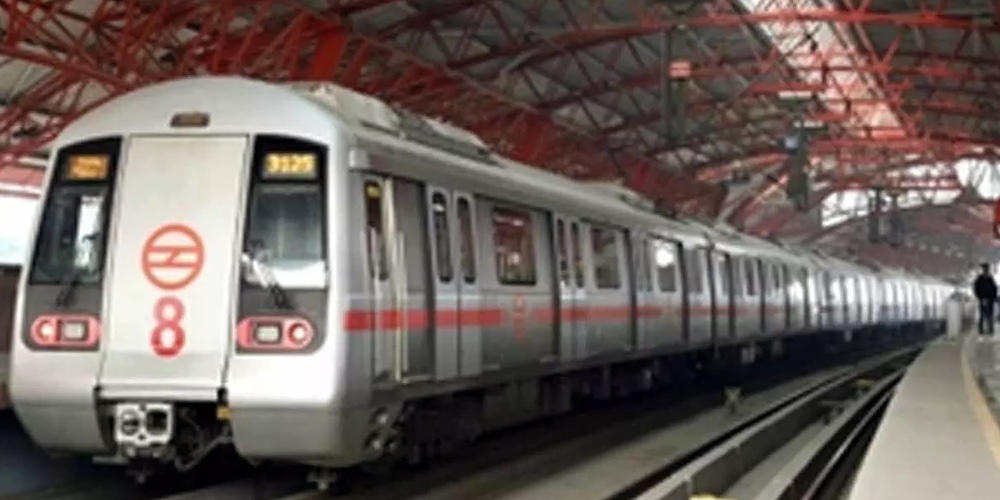
India’s Metro Rail systems have transitioned from luxury transit experiments to the backbone of modern urban identity. As cities face the dual pressures of explosive population growth and climate change, the metro serves as a critical lever for sustainable development, balancing environmental goals with economic necessity
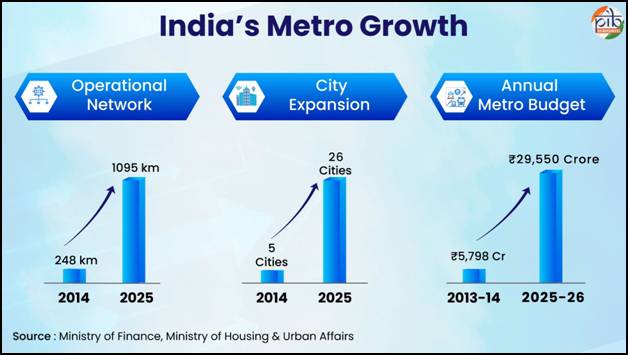
Over the past eleven years, India has witnessed a remarkable expansion of its metro rail network, making it one of the largest in the world. From just a handful of operational lines in a few cities, the network has grown to cover more than twenty urban centres, crossing the milestone of 1,000 kilometres of metro network. This expansion has transformed the way people travel in cities, offering faster, cleaner, and more reliable journeys while also easing congestion on roads.
Metro rail today stands as a symbol of progress and modern living. By reducing dependence on private vehicles, it lowers household transport costs and contributes to a healthier environment. More than just a mode of travel, metro investments have become engines of growth – supporting jobs, improving access to education and healthcare and enhancing the overall well‑being of families across India’s rapidly growing cities.
Metro Rail Expansion in India: Scale and Coverage
India’s metro journey is defined not only by its scale but also by the transformative technologies and innovations that are reshaping urban mobility. From high‑speed regional trains and underwater tunnels to eco‑friendly water metros, the country has pioneered solutions that blend safety, sustainability and modern engineering. With world‑class signalling, smart ticketing, driverless operations and energy‑efficient practices, these systems are setting new benchmarks for faster, greener and safer transport.
India’s Expanding Metro Footprint
From a limited presence in a few cities, the metro has now expanded into a nationwide network, which is among the largest in the world.
Metro services today operate in major cities such as Delhi & NCR, Mumbai, Bengaluru, Kolkata, Hyderabad, Chennai, Lucknow, Pune, Ahmedabad and many others.
About 1,095 km of metro rail lines (including 55 km of the Delhi–Meerut RRTS) are now functional across 26 cities.
India has become the third-largest operational metro network in the world reflecting its commitment to modern urban transport.
A Catalyst for Sustainable Urban Growth
The primary contribution of the metro is its ability to decouple urban mobility from carbon emissions. By providing a high-capacity, electrified alternative to internal combustion engine vehicles, metro networks significantly reduce air pollution and road congestion.
Beyond emission cuts, the metro fosters Transit-Oriented Development (TOD). This planning strategy encourages high-density, mixed-use developments around transit hubs.
Instead of sprawling horizontally — which destroys peripheral green cover and increases commute times — cities can grow vertically. This concentration of housing, offices, and retail within walking distance of stations reduces the “last-mile” reliance on private cars, creating more walkable, liveable urban cores.

Engineering Financial Resilience
Historically, the massive capital expenditure required for metro projects was seen as a fiscal burden. However, Indian metro authorities are shifting toward financial resilience through diversified revenue models.
While fare-box collection rarely covers both operational costs and debt servicing, “Non-Fare Box” revenue has become vital. This includes:
• Monetizing Real Estate: Leasing space within stations for retail and offices.
• Value Capture Financing (VCF): Tapping into the increased value of land surrounding metro corridors through special taxes or development charges.
• Advertising and Branding: Selling naming rights to stations and utilizing train exteriors for high-visibility marketing.
These strategies, coupled with Public-Private Partnerships (PPP) in cities like Hyderabad, demonstrate that metro systems can move toward self-sufficiency rather than relying solely on government subsidies.
Socio-Economic Impact
A sustainable city must also be inclusive. Metro rail democratizes the city by providing safe, reliable, and climate-controlled transport to a broad demographic. For women and the workforce in the informal sector, the metro expands the “effective labor market,” allowing people to access jobs further from home without the prohibitive cost or physical exhaustion of navigating congested roads.
Conclusion
India’s Metro Rail is no longer just about moving people from point A to point B; it is about reshaping the DNA of the Indian city. By integrating environmental consciousness with innovative financing and dense urban planning, the metro provides a blueprint for a future that is both green and growth-oriented. As more Tier-2 cities adopt “Metro Lite” or “Metro Neo” models, this catalyst for sustainable growth will be the defining feature of India’s urban century.