RIGHT ANGLE – Perils of a Regime Change in Iran
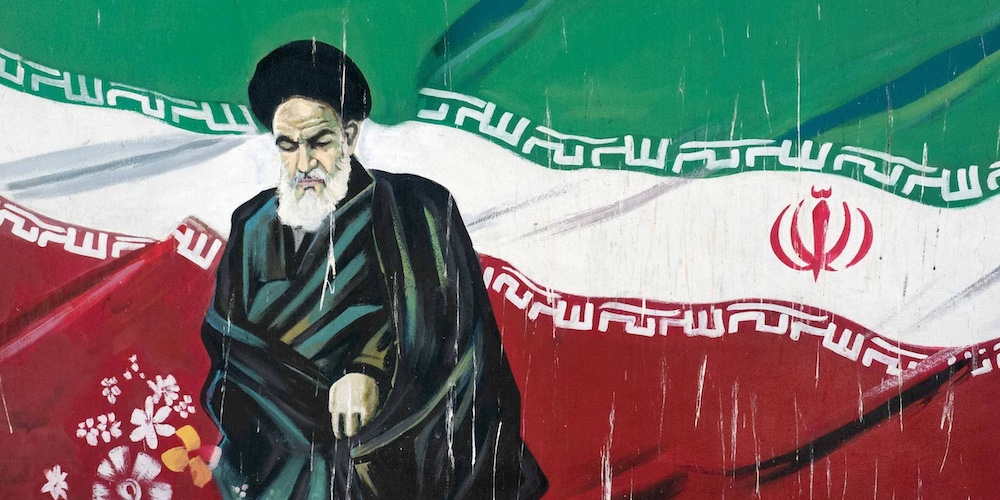
There is a growing view that despite the assassinations of Iran’s senior political and military leadership, including the Supreme Leader Ali Khamenei, air assaults alone will not be enough to tame the survivors at the senior level of the theocratic regime, particularly the Islamic Revolutionary Guard Corps (IRGC). So the attacks on Iran can continue for a month or two, and there could be the need for the involvement of US ground troops, something that US President Donald Trump is reportedly reconciled to now.
Both Trump and Israeli Prime Minister Benjamin Netanyahu have said that operations against Iran will continue to not only remove Iran’s nuclear capability and ballistic missiles, but also help the Iranian people having democracy. They share the conventional wisdom that a more democratic world is a safer world.
However, if history is any indication, then they may not necessarily achieve the above goal. A regime change through outside military intervention, per se, does not usher in democracy. Out of 28 cases of American regime change identified by political scientists Alexander Downes and Jonathan Monten, only 3 ( three ) cases ( Japan, Germany, and Panama) proved successful in building a lasting democracy.
Countries like Japan and Germany were success stories because of three additional internal factors of economic development, social and ethnic homogeneity, and a previous history of democratic government.
The wide range of liberalising reforms initiated by the US during the military occupations of Japan and West Germany beginning in 1945 succeeded in part because these countries already had industrialised economies with low levels of ethnic and linguistic diversity.
Germany, before the advent of Nazism under Adolf Hitler, had experience with democracy. Japan had limited experience with democracy before 1945, most notably during the “Taishō Democracy” period (roughly 1912–1926). This era had featured a functioning party system, expanded suffrage, and active parliamentary debate.
Besides, the sustained, well-resourced American involvement in Germany and Western Europe (e.g., the Marshall Plan) and the US guidance toward building new democratic political institutions, such as sponsoring elections, taking concrete steps to create a modern bureaucracy in Japan, proved enduring.
However, these factors have been missing in other intervened countries. Since 1953 (e.g., Iran, when the Shah rule was restored ), though the US has pursued numerous regime changes, these changes have not resulted in the ushering in of democracy but replacement of leaders with pro-Western dictatorships rather than democracies, such as in Guatemala (1954) Chile (1973), and Venezuela (2026).
After coming to power in the wake of US-backed coups, Mohammed Reza Pahlavi in Iran, Carlos Castillo Armas in Guatemala, and Pinochet in Chile established virtual dictatorships, not democracies.
Incidentally, the Venezuela model of Delcy Rodríguez is very much in the diplomatic lexicon these days. Here, President Trump targeted the removal of Nicolás Maduro to install an interim government. This approach relied on intense military coercion to oust Maduro, but not his authoritarian regime. Rather than a swift democratic transition, the approach has been characterized as a shift to “regime management,” focused on controlling the existing apparatus through a new, compliant leadership.
Delcy Rodríguez has emerged as the acting president of Venezuela. The “model” she represents is said to be a shift towards a more pragmatic, technocratic, and market-friendly version of “Chavismo,” aiming to stabilize the economy while maintaining the political structure of the United Socialist Party of Venezuela (PSUV). And all this has been permitted because these benefitted America’s economic interests, not its promotion of democratic ideals.

Then there are the cases of Afghanistan (2001), Iraq (2003), and Libya (2011), where the US and its allies intervened and succeeded in changing the regimes. Before intervening, they thought there were alternatives or opposition leaders who had the ability, on the one hand, and people’s support and confidence, on the other, to establish and nourish the democratic and accountable regimes. For instance, Ahmed Chalabi, the leader of the Iraqi National Congress and a key intelligence source in the run-up to the 2003 Iraq War, helped convince US officials that Iraqi civilians “would welcome U.S. and allied forces with parades, flag waving, and an eagerness for democratic government.” Such assurances proved to be absolutely groundless, however; but that is a different story.
Examples in Afghanistan, Iraq, and Libya also exposed some other weaknesses in the ouster of a regime through foreign interventions. One such phenomenon is the likelihood of a civil war in the country that has been intervened in because regime-change missions weaken existing state institutions and create a power vacuum, thus allowing resistance and rebel movements, including separatist insurgencies, to grow. This is particularly so when a country is heterogeneous in ethnic compositions, with conflicting ethnicities wanting either their respective representatives to be the leader or separation to have their own country.
Viewed thus, how does the situation look? And here, three factors are worth noting:
One, there is no single alternative leader who will be accepted by the Iranian people once the theocratic regime is toppled. There have three principal identified Iranian groups known in the recent three decades to have attempted a change in the Mullah-led regime in Tehran – People’s Mujahideen, also known as the Mojahedin-e-Khalq (MEK) or People’s Mojahedin Organization of Iran (PMOI), which is primarily based in exile; “the Green Movement,” which emerged during the contested 2009 presidential elections but was suppressed; and Reza Pahlavi, the son of the former Shah of Iran, who lives in exile in Washington DC. Incidentally, the first two are anti-American, and the third is seemingly not acceptable to Trump. His ability and acceptability among the Iranian people are doubtful, a reason why Trump has not thought it fit to meet the younger Shah despite his numerous requests for an appointment.
Two, Khamenei may have been killed, but the armed forces and the powerful IRGC, which was central to enforcing his rule, remain formidable. The IRGC controls vast economic and military assets. Therefore, without decoupling the military from the economy and political decision-making, systemic change is a formidable task.
Three, attacks on Iran have reportedly revived activism among Iranian Kurdish or Baloch citizens. This, in turn, could spark concerns among neighbouring states in the Gulf, Syria, and Turkey, as these ethnic groups are also present in those countries, evoking anxiety about another failing state along their periphery.
Thus, Trump has a daunting task ahead in effecting regime change in Iran. A simple “Leadership Change” without real structural reforms for an “Institutional Change” will only be a superficial change. In that case, it will lead to further instability rather than a transition to democracy.