
ECHS and CSD: Time to Reform, Perform and Transform
India celebrates its soldiers as embodiments of courage, discipline, and national honour. It is therefore a paradox — almost a moral contradiction — that once these very soldiers retire, age, and become frail, the systems created specifically for their welfare often compel them to endure procedural hardships more taxing than the ailments they suffer from. Both the Ex-Servicemen Contributory Health Scheme (ECHS) and the Canteen Stores Department (CSD) were founded with noble intent but continue to run on administrative paradigms that no longer reflect the technological capacity or economic prudence of today’s India. These systems strain both the veteran and the public exchequer, all while the nation stands on the cusp of global leadership in artificial intelligence and digital governance.
The question before us is no longer whether these systems can be modernised — they absolutely can — but why they have not been restructured when India possesses the world’s most scalable digital public infrastructure. The pressures placed on elderly, mobility-restricted veterans in accessing medicines, groceries, and essential items are not mere administrative shortcomings; they are failures of imagination, empathy, and managerial courage. Most critically, they represent vast and unnecessary financial drains that a modernised system can eliminate with ease.
The ECHS Paradox
The ECHS today functions like a relic of an administrative era long overtaken by India’s technological capabilities. The archaic cycle of NA certificates, private purchases, physical bill submissions, and months-long reimbursement delays is not an execution flaw — it is a design flaw. A decentralised stocking model spread across nearly 700 polyclinics cannot, by definition, guarantee universal availability of specialised drugs prescribed by modern super-specialists. Even the most conscientious administrative officer cannot predict demand for thousands of distinct medicines across hundreds of locations with accuracy.
This structural weakness has financial consequences that are both enormous and continuous. Medicine wastage from expiry, duplication in procurement across centres, storage overheads, manpower for stock audits, clerical teams for reimbursement processing, paper-based verification loops, and fraud-deterrence mechanisms all add layers of cost. Conservative estimates show that a digital, cashless pharmacy settlement model — similar to private health-insurance systems — would save ₹1,540 to ₹2,275 crore annually. This includes savings from:
(a) 25–30% manpower reduction after eliminating reimbursement-related clerical work.
(b) Significant warehousing and cold-chain storage savings by avoiding decentralised stockpiling.
(c) Elimination of physical NA certificates which themselves cost administrative labour to issue and verify.
(d) Reduced leakage and fraud, which currently account for 1–2% of the annual medicine budget.
(e) Massive reduction in audit cost, since digital trails eliminate the need for manual voucher-checking.
And yet, these savings pale in comparison to the human cost: elderly veterans, many with joint disabilities or chronic illnesses, undertaking multiple visits simply to access medicines that private pharmacies can provide instantly.
The rational solution has been evident for years: convert the ECHS card into an active digital authorisation tool that enables veterans to obtain prescribed medicines at any empanelled pharmacy anywhere in India. AI-driven backend engines can predict medicine demand based on prescription patterns, eliminating both shortages and overstocking. Automated settlement between ECHS and pharmacies would end the reimbursement nightmare entirely.
The technology is not futuristic — it already exists. What is lacking is the willingness to allow India’s veterans to benefit from systems the rest of the nation already enjoys.
CSD: A Cost-Heavy Model in Hi-Tech Hi-Speed Era
The Canteen Stores Department faces a similar crisis of obsolescence. Built for a mid-century world of rationing and static supply chains, it has scarcely changed its operational model in decades. CSD today operates an empire of warehouses, depots, distribution trucks, slow-moving supply chains, manual billing counters, and labour-intensive stock handling. All of this is happening in an era where India’s commercial retail ecosystem has perfected real-time stock tracking, app-based ordering, instant QR-code billing, and doorstep delivery.
This mismatch has a quantifiable cost. CSD currently maintains 34 depots, nearly 4800 URCs, and tens of thousands of staff across billing, stocking, security, freight, auditing, and administration. Even modest reforms — without touching entitlements — can yield ₹4,100 to ₹5,550 crore in annual savings, driven by:
(a) 30% manpower optimisation as physical counters shrink and automated retail partnerships expand.
(b) Elimination of bulk transport expenses through the adoption of modern retail supply chains.
(c) Retirement of warehousing assets that no longer serve a logical purpose.
(d) Collapse of shrinkage and pilferage losses, which currently drain 1–3% of turnover.
(e) Digitised central accounting, replacing thousands of manual ledger entries and reducing audit complexity.

For elderly veterans, widows, and war-disabled pensioners, such a reformed model is not merely a financial necessity but a dignified alternative to standing in queues, navigating crowded aisles, and enduring stock unpredictability.
The future of CSD must shift away from brick-and-mortar dependency to a networked, entitlement-driven retail integration model, whereby veterans can access subsidised goods in designated aisles at major supermarkets, supported by digital verification. Liquor entitlements, too, can be processed through secure digital tokens, with delivery from authorised distributors.
In simple terms, the modern retail world already does everything CSD needs to do — faster, cheaper, cleaner. The state is paying thousands of crores to replicate capabilities the private sector perfected years ago.
A Historic Opportunity!
India’s Global AI Summit gives a transformational impetus. The timing could not be more symbolic. As India hosts the first-ever Global AI Summit in New Delhi, the world’s attention is fixed on India’s capability to lead the next technological revolution. International delegates, policymakers, startup innovators, and academic leaders are witnessing India articulate its philosophy of AI for public good, digital ethics, and technology at a population scale.
In such a moment, India’s veteran-care systems stand out as glaring exceptions to the national digital success story. How can a country that runs the world’s best digital citizen platforms allow its soldiers — its most honoured citizens — to remain trapped in slow, manual, paperwork-driven systems?
Reforming ECHS and CSD using AI-driven tools would directly reflect the principles India is showcasing at the Summit:
(a) AI-driven forecasting can predict medicine consumption patterns across regions and seasons with uncanny accuracy.
(b) AI-enabled fraud detection can instantly flag suspicious claims or unusual purchase patterns.
(c) AI-based logistics optimisation can turn CSD from a depot-centric supply chain into a demand-responsive system.
(d) A national Veteran Digital Cloud, leveraging India’s DPI architecture, can unify entitlements, medical records, service history, and CSD usage.
(e) Machine learning models can identify vulnerabilities, high-risk categories of veterans, frequently unavailable items, and shortages before they arise.
The Summit, therefore, offers not merely rhetorical encouragement but a unique window for India to demonstrate to the world that technology serves human dignity first. If India chooses this moment to modernise ECHS and CSD, it will signal that digital innovation begins with honouring those who defended the nation — not with abstract concepts or elite-driven experiments.
This reform would thus be both technologically elegant and morally powerful.
A Unified, Future-Ready Veteran System
A single, unified, biometric-secured veteran smart card — integrated with AI-driven backend systems — can transform veteran welfare forever. It can validate medical consultations, authorise pharmacy pickups, enable CSD purchases, settle accounts in real time, ensure transparency, reduce administrative burden, offer home-delivery options for the elderly, and maintain compliance records without any manual intervention, making the whole system efficient, humane, and nationally honourable.
For the veteran, it means fewer journeys, shorter interactions, and dignified access to welfare. For the administration, it means reduced manpower, lower wastage, smaller audits, fewer disputes, and greater transparency. For the nation, it means honouring its soldiers not by speeches but by systems that reflect efficiency, respect, and gratitude. And for the world watching India at the AI Summit, it demonstrates that India’s digital excellence first benefits India’s own guardians.
ECHS and CSD do not need incremental patches — they require structural modernisation.
India is ready. The technology is ready. The fiscal logic is overwhelming. Only the decision now awaits the courage and vision that must now reform, perform and transform the systemic delivery for the Veterans who once served the nation in uniform.
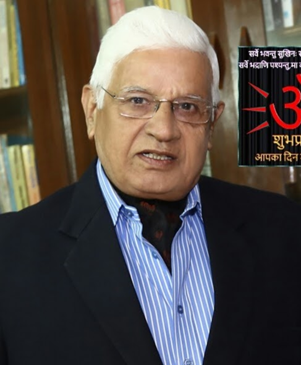
(Col Karan Kharb is an Indian Army veteran who has been an instructor at the Indian Military Academy and served in the Special Forces. Author of five best-selling books, he is associated with India’s eminent think tanks and has addressed audiences at both regional and national levels.
He managed a Rehabilitation NGO in Gujarat soon after the devastating earthquake in 2001 and was the founder-director of Jana Shikshan Sansthan (JSS),Kutch. Currently, at Arya Samaj Arun Vihar, Noida, he is supporting children.women and youths from the marginalised sections of society in pursuing their education.)


Excellent, workable solution. Remember veterans r not a waste material. Experience matters.
Well written. Highlighting existing deficiencies and prescribing AI solutions to mitigate harassment of Vetreans and Widows over 80 years age.
Keep on it.