Indian Scientists Revolutionise Heavy Manufacturing by Breakthrough in Superalloy Machining
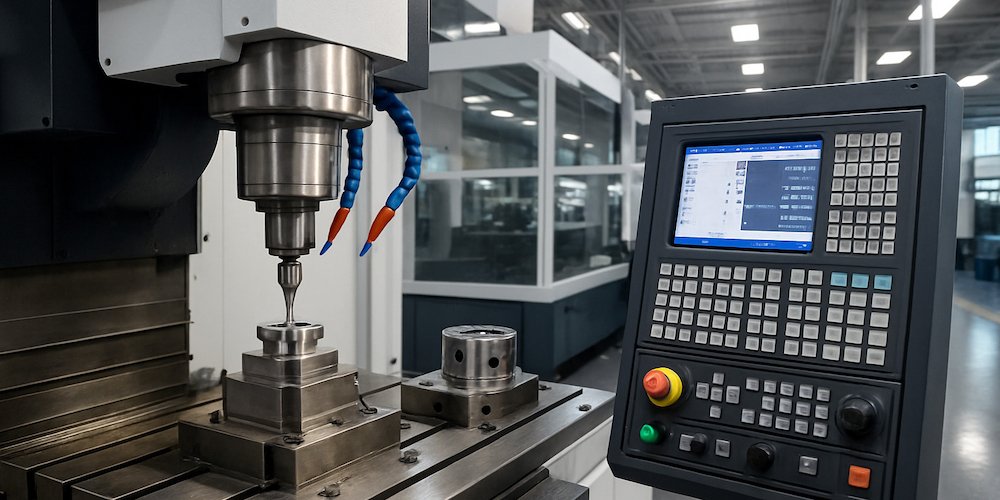
Advanced protective coatings can improve machining of critical superalloys in aerospace, energy & petrochemical sectors
Modern industrial progress relies heavily on materials capable of surviving the most punishing environments on Earth. In aerospace engineering, power generation, and petrochemical processing, components must endure extreme heat, crushing mechanical stress, and severe chemical corrosion. Nickel-based superalloys — such as Inconel 718 (IN718), Inconel 625 (IN625), and Inconel 617 (IN617) — are the undisputed champions of these sectors. However, the very properties that make these metals indispensable in operation make them notoriously difficult to shape on the factory floor. Addressing this critical manufacturing bottleneck, Indian scientists at the International Advanced Research Centre for Powder Metallurgy and New Materials (ARCI) in Hyderabad have pioneered advanced nanocomposite protective coatings that dramatically improve how these superalloys are machined.
The Challenge of Machining Superalloys
Machining superalloys for jet engine turbines, nuclear reactors, or high-pressure petrochemical valves presents a formidable engineering hurdle. Unlike conventional steels, nickel-based superalloys exhibit rapid work hardening, meaning the metal actually becomes harder and tougher as a cutting tool slices into it. Furthermore, these alloys suffer from poor thermal conductivity. Instead of dissipating into the metal chips or the surrounding air, the intense heat generated during cutting remains concentrated right at the cutting edge of the tool.
Combined with strong chemical affinity between the superalloy and standard cutting tools, this extreme thermal and mechanical stress leads to rapid tool degradation. ARCI researchers closely analyzed these failure mechanisms and found that workpiece material repeatedly adheres to the tool surface. When this stuck layer eventually breaks away, it rips microscopic fragments out of the cutting edge, causing progressive chipping, abrasion, and attrition. For manufacturers, frequent tool failure translates directly into costly machine downtime, slower production rates, and compromised surface quality.
ARCI’s Nanocomposite Surface-Engineering Breakthrough
To overcome these challenges, scientists at ARCI—an autonomous research and development institution under the Department of Science and Technology (DST)—turned to advanced surface engineering. Rather than redesigning the entire cutting tool, the team developed two specialized nanocomposite protective coatings: Titanium Aluminium Silicon Nitride (TiAlSiN) and Chromium Aluminium Silicon Nitride (CrAlSiN).
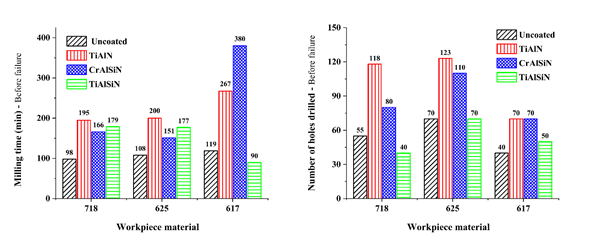
Using an in-house technique called cathodic-arc physical vapour deposition (PVD), the researchers deposited these ultra-hard, heat-resistant coatings onto standard tungsten carbide cutting tools. They then rigorously evaluated the coated tools while milling IN718, IN625, and IN617. The results were transformative. Depending on the specific combination of coating and superalloy, the nanocomposite layers extended cutting tool life by anywhere from 60 percent to over 200 percent. By acting as a thermal and chemical barrier, the coatings delayed material adhesion, minimized friction, and prevented premature chipping.
Crucially, the Hyderabad team uncovered an essential insight for industrial manufacturing: no single coating serves as a universal solution. Each superalloy interacts differently with the tool surface under high heat and pressure, meaning optimal efficiency requires matching the specific nanocomposite coating — whether titanium-based or chromium-based — to the exact alloy being machined.
Transforming Aerospace, Energy, and Petrochemicals
The practical implications of this research span India’s most strategic industrial sectors. In the aerospace sector, precision is non-negotiable. Aircraft engine components, turbine blades, and structural aerospace parts require micron-level accuracy and flawless surface integrity. Longer-lasting, sharper cutting tools ensure tighter tolerances, lower rejection rates, and faster production cycles, directly supporting indigenous defense and aviation manufacturing initiatives.
In the energy sector, particularly within thermal, nuclear, and ultra-supercritical power plants, superalloys are vital for boilers, turbines, and heat exchangers operating at extreme temperatures. By reducing the cost and time required to machine these tough components, ARCI’s coating technology lowers capital expenditure for power infrastructure and accelerates the deployment of cleaner, higher-efficiency energy systems.
Similarly, the petrochemical industry relies on corrosion-resistant superalloys like IN625 for deep-sea drilling equipment, refinery piping, and chemical reactors. Enhanced machinability enables manufacturers to fabricate complex, durable components more economically, reducing supply chain bottlenecks and enhancing operational reliability in harsh chemical environments.
Conclusion
The work conducted by scientists at ARCI Hyderabad demonstrates how targeted innovations in materials science can unlock massive downstream industrial value. By mastering the microscopic interface between cutting tools and ultra-tough superalloys, Indian researchers have provided a scalable, cost-effective blueprint for modern manufacturing. As aerospace, energy, and petrochemical industries demand ever-higher performance from their materials, these indigenous protective coatings will play a pivotal role in boosting productivity, lowering costs, and strengthening India’s self-reliance in advanced engineering.