Transformation of Military Recruitment
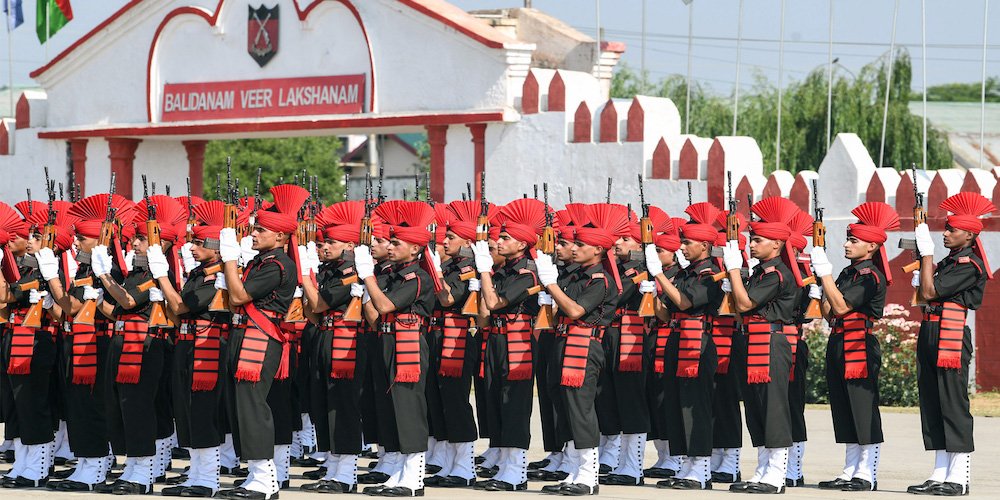
The Union Cabinet has approved a landmark revision introducing an additional two-year engagement period for the 75% of Agniveers who complete their initial four-year tenure. This elevates their potential engagement period from four to six years, accompanied by higher pay scales and expanded allowances
In June 2022, the Government of India introduced the Agnipath scheme, a radical departure from traditional military recruitment models. Under this system, young recruits — termed Agniveers — are enlisted into the Army, Navy, and Air Force for a short-term tenure of four years.
While the policy was designed to create a leaner, technologically savvy, and youthful profile for the armed forces, it immediately triggered national debate regarding the post-service future of the youth and operational consistency.
Rather than viewing the scheme as a static blueprint, the government has treated it as an evolving system. By actively introducing structural revisions, progressive policy corrections, and robust legislative safeguards, the administration has successfully turned the Agnipath vision into a highly sustainable, socially secure, and strategically brilliant model for national defense.
The primary impetus behind the adjustments to the Agniveer scheme is the need to balance fiscal health with absolute human security. To completely eliminate any sense of career uncertainty for the outgoing batches, the government has institutionalised an extensive network of mandatory quotas across premium security sectors.
The Ministry of Home Affairs codified a 10% horizontal reservation for ex-Agniveers in Constable (General Duty) posts across major Central Armed Police Forces (CAPFs) like the Border Security Force (BSF), Central Industrial Security Force (CISF), and the Central Reserve Police Force (CRPF).
Demonstrating an even deeper commitment, specific forces have radically scaled these numbers. Following an official gazette notification, the BSF dramatically raised its reservation for ex-Agniveers to 50% in constable recruitments.
Similarly, 50% of all vacancies in the Assam Rifles and a newly created dedicated Ex-Agniveer Battalion under the CRPF have been exclusively set aside for these trained professionals.
To complement these central mandates, state governments have stepped forward with structural legislation to absorb this premium talent pool. States like Uttar Pradesh, Madhya Pradesh, Uttarakhand, and Odisha have established dedicated quotas of up to 10% in their state police forces, jail wardens, and forest guard recruitments. To ensure these vacancies are easily accessible, the government has granted critical physical exemptions.
Recognising that these soldiers have already endured rigorous military conditioning, ex-Agniveers are entirely exempt from the gruelling Physical Efficiency Test (PET) when entering the CAPFs.
Furthermore, the government has provided a 3-year upper age relaxation for general applicants, which has been extended to a 5-year age relaxation for the historic first batch of graduating Agniveers.

By embedding these specific statutory privileges, the administration has successfully transformed a short-term military stint into a fast-track corridor toward a prestigious, lifelong career in internal security.
Beyond employment security, the government has refined the educational and financial architecture of the scheme. Recognising that a short-term hiatus from traditional higher education could disadvantage these young citizens, the Ministry of Education introduced customised skill-mapping and degree programmes through institutions like the Indira Gandhi National Open University (IGNOU). Agniveers now accumulate academic credits for their military training, allowing them to graduate with diplomas or degrees concurrently.
Financially, enhancements to the Seva Nidhi package — the lump-sum payout received upon exit —and softer credit lines for entrepreneurship have been prioritised. These revisions ensure that demobilised youth possess both the capital and the credentials to successfully integrate into the civilian economy, effectively addressing any initial structural friction.
Crucially, the government has executed its most profound policy evolution by directly upgrading the core engagement structure. Following recommendations from senior military leaders, the Union Cabinet approved a landmark revision introducing an additional two-year engagement period for the 75% of Agniveers who complete their initial four-year tenure.
This elevates their potential engagement period from four to six years, accompanied by higher pay scales and expanded allowances. At the end of this extended six-year window, all willing personnel get a secondary, objective opportunity to join the regular Armed Forces. This brilliant policy evolution preserves critical technical expertise in modern avionics, cybersecurity, and advanced maritime systems, ensuring that the armed forces do not suffer from a continuous drain of specialised talent.
The evolution of the Agniveer scheme represents a textbook master class in responsive, citizen-centric governance. The initial framework has given way to a more dynamic, empathetic, and ironclad model that secures the long-term aspirations of India’s youth while steadfastly holding onto the core objective of military modernisation.
Lowering the average age profile of the front-line soldier from 32 to 26 years remains a vital strategic goal, especially given the volatile geopolitical climate on India’s borders. By building direct, legally protected pathways between the defence sector, civilian administration, and central paramilitary forces, the government has fulfilled its grand promise.
In conclusion, the changes made to the Agniveer scheme underscore a shift from a rigid structural overhaul to a more holistic socio-economic framework. While the initial friction exposed the vulnerabilities of introducing sudden changes to deeply entrenched national systems, the subsequent adjustments have strengthened the policy’s viability.
The success of these reforms will ultimately be measured not just by the youthfulness of India’s battalions, but by the seamless integration and prosperity of the personnel who return to civilian life. Through continuous assessment, decisive revisions, and adaptive governance, the Agnipath scheme has successfully modernised India’s defence forces while actively empowering and securing the nation’s human capital.