India’s Cosmic Journey
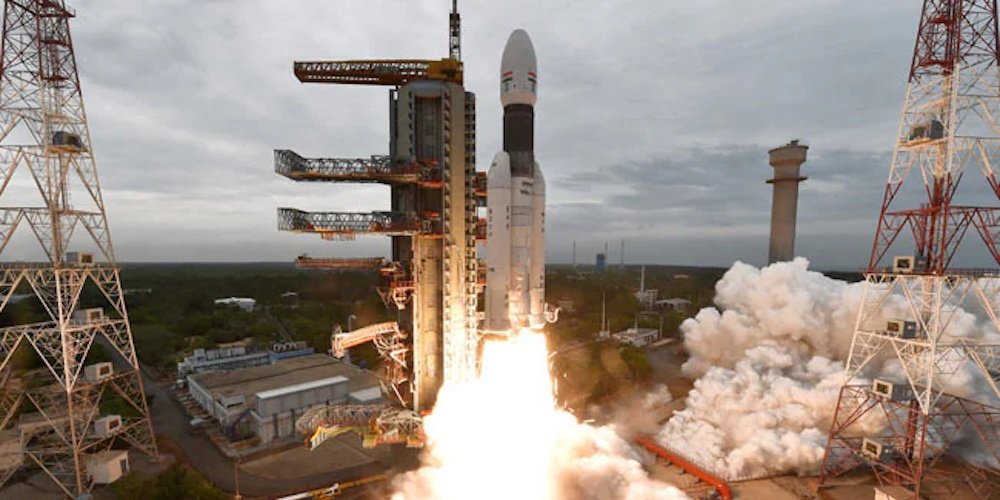
India’s space journey began in 1963 with a sounding rocket launched from Thumba, Kerala. It now looks ahead to the planned Bharatiya Antariksh Station. New technologies are driving this progress. They include reusable launch vehicles, electric, green, and nuclear propulsion, and in-orbit servicing
Through SpaDeX, India also became the fourth country to achieve autonomous docking of two spacecraft in orbit. These advances strengthen self-reliance. Meanwhile, Gaganyaan is advancing India’s human spaceflight goals
India’s journey into space is a remarkable story of transforming modest beginnings into global leadership. From transporting rocket parts on bicycles in the 1960s to launching complex interplanetary missions, the Indian Space Research Organisation (ISRO) has carved out a unique identity.
India’s space programme stands out internationally for its focus on cost-effectiveness, self-reliance, and technology aimed at societal development. Today, India is not just a participant in the global space race; it is a major pioneer redefining how humanity accesses the cosmos.
The foundation of India’s space success lies in its robust launch vehicle technology. The development of the Polar Satellite Launch Vehicle (PSLV) was a turning point, earning a reputation as a highly reliable workhorse. It achieved a historic milestone in 2017 by deploying 104 satellites in a single mission.
To carry heavier payloads, ISRO developed the Geosynchronous Satellite Launch Vehicle (GSLV) and the more powerful LVM3 (GSLV Mark III). These rockets allowed India to end its dependence on foreign launch facilities for heavy communication satellites, securing true technological autonomy. Furthermore, the recent introduction of the Small Satellite Launch Vehicle (SSLV) caters to the booming global commercial demand for launching mini and micro-satellites on demand.
Beyond launch capabilities, India has built world-class satellite constellations that directly impact daily life. The Indian Remote Sensing (IRS) satellite network is one of the largest civilian remote sensing structures in the world. It provides critical data for agricultural monitoring, water resource management, and disaster warning systems.
In communication, the INSAT and GSAT series have revolutionised telecommunications, television broadcasting, and broadband connectivity across the rural hinterlands.
Additionally, the creation of NavIC (Navigation with Indian Constellation), India’s independent regional satellite navigation system, provides highly accurate positioning data over the Indian subcontinent, reducing reliance on foreign GPS networks.

What truly brought India global recognition was its daring deep-space exploration. The Chandrayaan-1 mission in 2008 made the groundbreaking discovery of water molecules on the lunar surface. In 2013, India made history with the Mars Orbiter Mission (Mangalyaan). It became the first nation to reach Martian orbit on its maiden attempt, doing so at a fraction of the cost of Western space missions. This knack for frugality combined with high engineering precision became India’s trademark.
This trajectory reached a spectacular milestone in 2023 with Chandrayaan-3, which made India the first country to land a spacecraft near the uncharted lunar South Pole, firmly establishing its place in elite space exploration.
Following the success of its lunar missions, India expanded its scientific horizons towards solar and cosmic research. The launch of Aditya-L1 in late 2023 marked India’s first dedicated scientific mission to study the Sun, positioning a spacecraft at the Lagrange Point 1 to monitor solar activity constantly.
Concurrently, AstroSat and the X-ray Polarimeter Satellite (XPOSAT) have allowed Indian scientists to study extreme cosmic phenomena like black holes and neutron stars, contributing vital data to the global scientific community.
The current era marks a massive shift towards human spaceflight and commercialisation. The Gaganyaan programme is India’s flagship initiative to send astronauts into low Earth orbit, an effort that requires mastering critical technologies like crew escape systems, life support mechanisms, and safe ocean re-entry.
Alongside these state-led endeavors, the Indian government has fundamentally altered its space policy by opening the sector to private enterprises. The creation of IN-SPACe (Indian National Space Promotion and Authorisation Centre) and NewSpace India Limited (NSIL) has fuelled a vibrant ecosystem of private space startups.
Companies like Skyroot Aerospace and Agnikul Cosmos are now designing custom rockets and satellites, transforming India into a global commercial space hub.
India’s space programme has evolved from a tool for national development into a symbol of geopolitical and technological strength. By mastering low-cost engineering, building independent navigation, exploring distant worlds, and opening doors to private innovation, India has shown that resource constraints are no barrier to excellence.
As ISRO prepares for future challenges like a domestic space station and joint missions to Venus, India’s space technologies will continue to inspire the world, proving that the sky is no longer the limit.