India’s Green Highway Policy: Achievements and Challenges
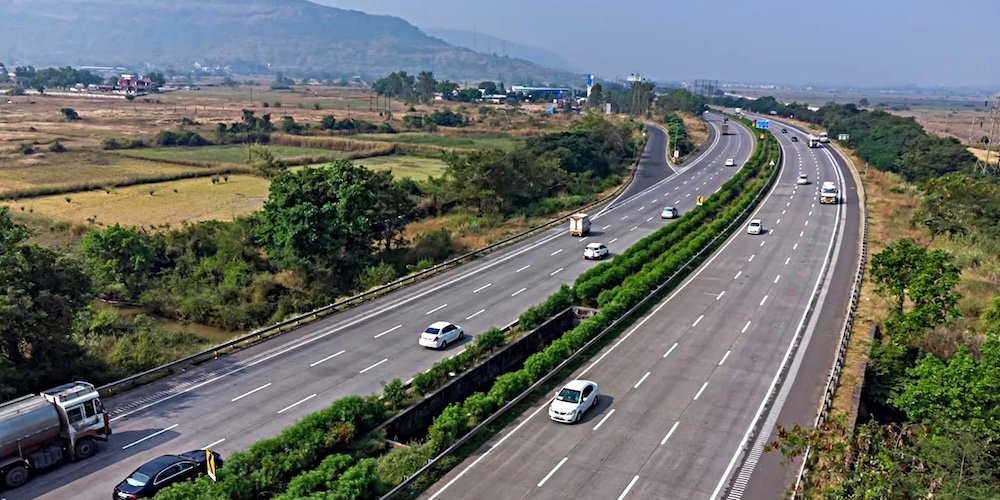
India’s green highway approach is transforming road infrastructure through plantation, climate-resilient design and resource-efficient construction. Over the last five years, more than 3.61 crore saplings have been planted across approximately 1.32 lakh km of National Highways. From Miyawaki forests to recycled construction materials and indigenous bio-bitumen technology, green practices are shaping highway development. Satellite-based monitoring through the National Highways Green Cover Index is strengthening scientific assessment of green cover. Community initiatives and pollinator corridors are also adding a wider ecological dimension
In an era defined by rapid urbanization and climate change, infrastructure development can no longer be decoupled from environmental sustainability. As one of the world’s fastest-growing major economies, India faces the dual challenge of expanding its transport networks while honoring its international climate commitments, such as achieving net-zero emissions by 2070.
Recognising that traditional road construction contributes significantly to deforestation, carbon emissions, and ecological disruption, the Ministry of Road Transport and Highways (MoRTH) launched the Green Highways (Plantation, Transplantation, Beautification, and Maintenance) Policy in September 2015.
The policy aims to transform the nation’s expanding highway network into green corridors, balancing economic mobility with ecological preservation. Over the past decade, this framework has altered India’s infrastructure landscape, yielding notable achievements alongside persistent execution challenges.
Objectives and Conceptual Framework
The core philosophy of the Green Highway Policy is to integrate environmental conservation directly into the lifecycle of highway development. Rather than viewing road construction and tree planting as sequential, isolated activities, the policy mandates that greening initiatives be embedded in the initial project design and budgeting.
Specifically, 1% of the total civil construction cost of every national highway project is set aside in a dedicated fund managed by the National Highways Authority of India (NHAI) for plantation and maintenance.
The policy prioritises the planting of indigenous, site-specific trees and shrubs that can withstand local climatic conditions, reduce soil erosion, act as natural windbreaks, and absorb vehicular emissions. Beyond carbon sequestration, the framework focuses on the aesthetic beautification of highways, reducing driver fatigue, and generating local employment opportunities through community-driven agro-forestry models.
Key Achievements
Since its inception, the Green Highway Policy has achieved institutional and ecological milestones that underscore its transformative potential:
1. Systematic Institutionalization and Funding: By mandating a 1% budgetary allocation for greening, the policy solved the chronic underfunding that historically plagued highway plantation projects. This institutionalized mechanism ensures that environmental mitigation expands concurrently with the physical road network.
2. Substantial Scale of Afforestation: Thousands of kilometers of national highways have been transformed into green corridors. Millions of saplings, including local species like Neem, Peepal, Arjun, and Gulmohar, have been planted along medians and avenues. These belts function as vital linear forests, creating microclimates that lower ambient temperatures near roads and create carbon sinks.
3. Pioneering Tree Transplantation: The policy moved India away from the blanket felling of mature trees. NHAI and private developers now deploy advanced mechanical tree transplanters. Instead of chopping down centuries-old trees for highway widening, hundreds of thousands of mature trees have been successfully uprooted and relocated, preserving established ecological blocks.

4. Socio-Economic Development: The execution of plantation and maintenance contracts relies heavily on local communities, non-governmental organisations (NGOs), self-help groups (SHGs), and private cooperative bodies. This approach has generated thousands of green jobs in rural and semi-urban areas, linking local economic well-being directly to the survival rate of the highway flora.
5. Technology-Driven Monitoring: To combat the historically low survival rates of highway plantations, MoRTH introduced digital tracking. The use of the “Harit Path” mobile app, drone monitoring, and geo-tagging allows authorities to track the growth, health, and survival rate of saplings in real time, bringing accountability to private contractors.
Persistent Challenges
Despite these clear successes, the path toward fully sustainable green corridors is obstructed by structural, environmental, and administrative hurdles:
1. Low Survival Rates of Saplings: Planting trees is considerably easier than keeping them alive. Saplings along highways face harsh conditions, including extreme heat, vehicular exhaust, and poor soil quality resulting from heavy construction compaction. In many stretches, lack of timely watering and protection from stray cattle leads to high mortality rates, necessitating continuous replanting.
2. Water Scarcity and Maintenance Logistics: Maintaining linear plantations across thousands of kilometers, often through arid or drought-prone regions, presents a massive logistical challenge. Sourcing water without depleting local groundwater tables remains a contentious issue.
3. Ecosystem Fragmentation and Wildlife Disruption: While avenue plantation helps with carbon capture, the physical expansion of highways often cuts through reserve forests and wildlife sanctuaries. Linear infrastructure disrupts migratory corridors. While the policy encourages eco-ducts and wildlife underpasses, the pace of constructing these mitigation structures frequently lags behind road construction, leading to increased human-wildlife conflict.
4. Monitoring Flaws and Bureaucratic Inertia: Despite digital tracking apps, monitoring vast, remote stretches of roads remains uneven. Auditing the quality of maintenance work performed by third-party contractors is difficult, and structural enforcement against negligent concessionaires is occasionally slow.
5. Conflicts with Utility Shifting: Highways are dynamic corridors that accommodate power lines, water pipes, and optical fiber cables. Frequent digging for utility installations or subsequent highway widening phases often destroys existing green belts, undoing years of growth and investment.
The Way Forward
To maximise the impact of the Green Highway Policy, India must transition from a volume-driven approach to an outcome-centric model. Contractor evaluations should be tied strictly to the multi-year survival rate of trees rather than the initial number of saplings planted. Integrating advanced rainwater harvesting systems along highway embankments can solve localized water scarcity for plant maintenance.
Furthermore, landscape architects and ecologists should be deeply involved in the planning phase to ensure that green belts act as genuine ecological corridors that support local biodiversity rather than just aesthetic rows of trees.
Conclusion
India’s Green Highway Policy represents a progressive leap toward sustainable infrastructure creation. By establishing a self-sustaining funding model and embracing digital monitoring, the country has successfully integrated green thinking into a historically carbon-heavy sector.
While challenges like high sapling mortality and logistical constraints persist, they are not insurmountable. Addressing these gaps through stricter enforcement, community participation, and scientific management will ensure that India’s highways serve as green arteries powering economic growth while safeguarding the environment for future generations.