India’s Semiconductor Ascent
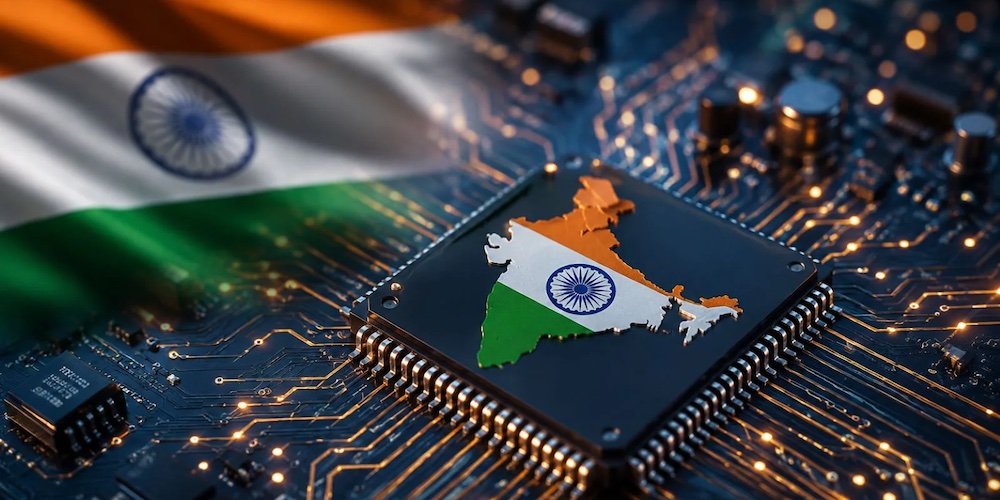
Semiconductors form the core of modern electronic systems. Building a strong semiconductor ecosystem is therefore essential for technological resilience, economic security and national self-reliance. Recognising this strategic importance, the Government of India is strengthening the semiconductor ecosystem through policy support, infrastructure and global partnerships. In this endeavour, SEMICON India 2026, themed “Silicon to Systems: Building the Ecosystem,” was inaugurated by Prime Minister Shri Narendra Modi at Yashobhoomi, New Delhi, on 17 September 2026. Being held from 17 to 19 September 2026, the SEMICON 2026 brings together global industry leaders, policymakers, investors, academia and start-ups. It provides a platform to advance India’s semiconductor ambitions and strengthen the ecosystem across the entire value chain
In the contemporary global economy, microchips are the underlying architecture of modern civilization. Often referred to as the “new oil,” semiconductors power everything from data centres and military hardware to smartphones and medical devices.
Historically dependent on technology imports, India has embarked on a strategic mission to position itself as a global semiconductor hub.
Driven by the India Semiconductor Mission (ISM), the nation is systematically addressing historical vulnerabilities to build a resilient, self-reliant ecosystem capable of altering global technology supply chains.
The primary catalyst for this shift is a profound realisation of the strategic risks inherent in supply chain concentration. The geopolitical vulnerabilities exposed during recent global disruptions underscored a stark reality: true technological sovereignty is impossible without hardware self-reliance.
For India, importing 100% of its mainstream chips represents not just a massive economic drain, but a critical security vulnerability. By establishing a domestic semiconductor ecosystem, India aims to insulate its rapidly expanding digital economy from external shocks while simultaneously capturing a share of a global market projected to surpass $1 trillion by the early 2030s.
India’s strategy relies heavily on a capital-intensive fiscal framework designed to de-risk investments for global tech giants. The cornerstone of this push is the $10 billion “Modified Programme for Development of Semiconductors and Display Manufacturing Ecosystem”.
By offering a uniform 50% fiscal support for project costs across semiconductor fabs, display fabs, and packaging facilities, the Indian government has effectively altered the financial viability of setting up operations in the country.
This aggressive policy stance has already yielded historic milestones, attracting multi-billion-dollar investments from global consortiums and domestic conglomerates to establish major fabrication units in states like Gujarat and Assam.
However, building a silicon ecosystem involves far more than constructing manufacturing plants; it requires a complex web of upstream and downstream capabilities. India is strategically playing to its greatest strength: chip design. The nation already houses roughly 20% of the world’s semiconductor design engineers, with global design houses maintaining massive R&D centres in Bengaluru, Hyderabad, and Noida.

Through the Design Linked Incentive (DLI) scheme, the government is actively nurturing domestic fabless startups, offering financial infrastructure and design support. This ensures that India is not merely an assembly point for foreign technology, but an intellectual incubator creating proprietary intellectual property (IP).
Simultaneously, India is prioritising Outsourced Semiconductor Assembly and Test (OSAT) and Advanced Packaging facilities. Because building high-end, leading-edge fabrication units takes years, OSAT facilities offer a faster path to commercial operations and integration into global supply chains. These packaging units serve as an essential middle ground, transforming raw silicon wafers into finished, market-ready microchips.
By scaling packaging infrastructure alongside design capabilities, India is building a complete, localised value chain from concept to final product.
Despite this momentum, the path to a fully mature semiconductor ecosystem presents formidable structural challenges. Fabrication units are among the most capital-intensive facilities on earth, requiring billions of dollars in continuous upgrades to prevent obsolescence.
Furthermore, manufacturing chips demands a flawless operational environment: uninterrupted, ultra-pure power supplies and millions of gallons of industrial-grade water daily. Even a microsecond voltage fluctuation can ruin an entire batch of silicon wafers. Developing this level of specialised industrial infrastructure requires sustained coordination between central and state governments.
Human capital transformation is another critical pillar. While India possesses an abundance of software and design talent, it faces a historical shortage of specialised chemical, mechanical, and process engineers required to run high-tech manufacturing cleanrooms. To bridge this talent gap, the government has overhauled academic curricula across hundreds of universities, partnering with top institutions to introduce specialized degrees in semiconductor technology. This proactive talent pipeline ensures a steady influx of skilled professionals ready to anchor the domestic industry.
The macroeconomic implications of a successful semiconductor rollout are transformative. Beyond reducing import bills, it acts as a force multiplier for secondary industries.
A thriving hardware ecosystem accelerates the localised production of electric vehicles, telecommunications equipment, consumer electronics, and defense systems.
Furthermore, as global corporations look to diversify their manufacturing footprints away from concentrated geographic zones, India presents a stable, democratic alternative, positioning itself as a reliable node in the global technology network.
India’s pursuit of a strong semiconductor ecosystem is a defining economic crusade of the decade. It is a transition from a digital services economy to a hardware manufacturing powerhouse. While infrastructure deficits and intense global competition pose real obstacles, the alignment of political will, massive fiscal incentives, design expertise, and a surging domestic market provides India with a historic window of opportunity.
By systematically turning these plans into operational realities, India is not just building factories — it is forging the silicon foundation of its future economic sovereignty.