Role of Nuclear Technology in Sustainable Energy Future
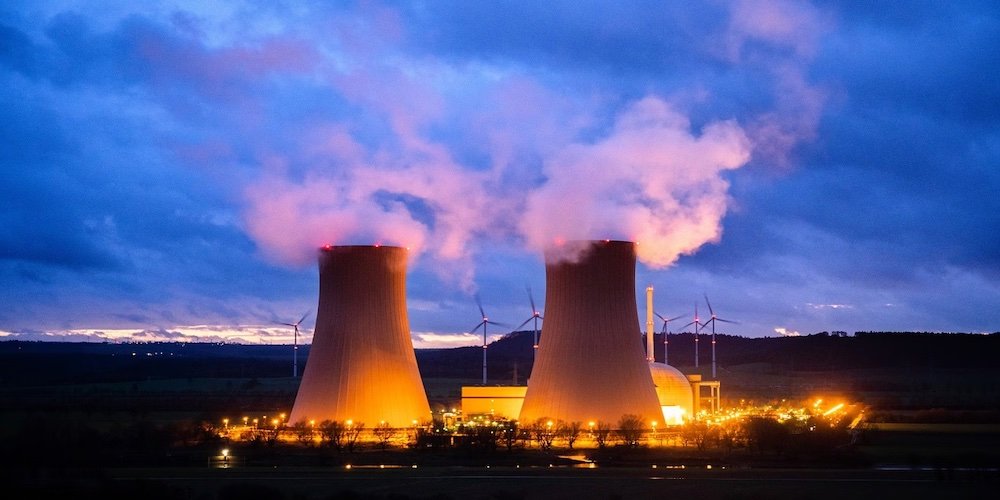
India is committed to building a secure, sustainable, and self-reliant energy future to support its journey towards Viksit Bharat. Recognising the growing demand for clean, reliable and stable baseload electricity, the Government of India has placed nuclear energy at the core of its long-term energy strategy
Nuclear technology in India represents a journey of self-reliance, strategic necessity, and scientific innovation. Developed under unique geopolitical constraints and technology denials, India’s nuclear programme has grown into a sophisticated, multi-faceted enterprise.
Today, it encompasses robust civilian power generation, strategic defence capabilities, and vital applications in healthcare, agriculture, and industry.
Guided by a visionary three-stage nuclear power programme, India continues to pioneer advanced technologies, particularly in the utilisation of its vast thorium reserves, as it balances its growing energy demands with environmental commitments.
Historical Evolution and the Philosophy of Self-Reliance
The foundations of India’s nuclear programme were laid shortly after independence in 1947, driven by the vision of physicist Dr. Homi Jehangir Bhabha and the political support of Prime Minister Jawaharlal Nehru. Dr. Bhabha recognised that for a developing nation like India to achieve rapid industrialisation and economic growth, it could not rely solely on depleting fossil fuels.
In 1948, the Atomic Energy Act was passed, establishing the Atomic Energy Commission (AEC), followed by the creation of the Department of Atomic Energy (DAE) in 1954.
Right from its inception, the Indian nuclear programme faced a severe geopolitical challenge: India had limited reserves of natural uranium but possessed roughly 25% of the world’s known thorium reserves.
This unique resource distribution led Dr. Bhabha to formulate India’s unique Three-Stage Nuclear Power Programme, a closed fuel cycle strategy designed to systematically transition from uranium to thorium.
The philosophy of self-reliance became a mandatory survival strategy following India’s peaceful nuclear explosion in 1974 (Operation Smiling Buddha) and its subsequent nuclear tests in 1998 (Operation Shakti). These events triggered stringent international sanctions, technology isolation, and embargoes by the Nuclear Suppliers Group (NSG).
Denied access to global nuclear markets and enriched uranium, Indian scientists and engineers at institutions like the Bhabha Atomic Research Centre (BARC) and the Nuclear Power Corporation of India Limited (NPCIL) were forced to innovate domestically. They successfully reverse-engineered, modified, and scaled up technologies, turning isolation into a catalyst for indigenous mastery.
The Three-Stage Nuclear Power Programme
India’s closed nuclear fuel cycle is designed to maximize energy output from minimal uranium while systematically building the inventory required to utilize thorium. Each stage serves as a stepping stone for the next:
Stage 1: Pressurised Heavy Water Reactors (PHWRs)
The first stage utilises natural uranium as fuel and heavy water as both a moderator and coolant. India chose PHWRs because they require no uranium enrichment facilities, which were heavily restricted internationally. As these reactors operate, they convert the non-fissionable Uranium-238 isotopes in natural uranium into Plutonium-239. This plutonium is extracted through spent fuel reprocessing to serve as the bedrock for the second stage. Today, indigenous 220 MW, 540 MW, and the latest 700 MW PHWRs form the backbone of India’s operational civilian fleet.
Stage 2: Fast Breeder Reactors (FBRs)
The second stage marks a crucial technological leap. It utilises Plutonium-239 extracted from Stage 1, mixed with Uranium-238, to fuel Liquid Metal-cooled Fast Breeder Reactors (LMFBRs). These reactors are called “breeders” because they produce more fissile material than they consume. As the plutonium burns, the surrounding Uranium-238 blanket transforms into more plutonium. Eventually, Thorium-232 blankets will also be introduced into these reactors to breed Uranium-233 . The flagship project for this stage is the 500 MWe Prototype Fast Breeder Reactor (PFBR) at Kalpakkam, representing one of the most complex engineering feats in modern nuclear physics.
Stage 3: Thorium-Based Advanced Heavy Water Reactors (AHWRs)
The ultimate goal of India’s nuclear roadmap is the third stage, which will deploy Advanced Heavy Water Reactors fueled by a mixture of Thorium-232 and bred Uranium-233. Once operational, this stage will unlock India’s vast coastal monazite sands — the primary source of thorium — providing energy security for centuries. BARC has already constructed and operated the KAMINI reactor, a small-scale test reactor utilizing Uranium-233, proving the fundamental physics of the third stage.

Strategic and Defence Capabilities
While civilian energy remains a primary objective, India’s nuclear technology provides a vital deterrent in a volatile geopolitical landscape. India maintains a strict “No First Use” (NFU) nuclear doctrine, positioning its strategic arsenal purely as a credible minimum deterrent against potential adversaries.
A critical milestone in India’s defence technology is the completion of its nuclear triad — the capability to launch nuclear weapons from land, air, and sea. The crowning achievement of this effort is the indigenous development of the Arihant-class nuclear-powered ballistic missile submarines (SSBNs). Designing a nuclear reactor compact enough to fit inside a submarine hull requires extraordinary engineering precision. The successful deployment of INS Arihant and subsequent vessels ensures India possesses a survivable, second-strike capability, reinforcing maritime security and strategic balance in the Indian Ocean region.
Civil Applications: Beyond Power Generation
Nuclear technology in India extends far beyond reactors and deterrents; it plays an indispensable role in daily societal welfare, particularly in healthcare, agriculture, and food preservation:
• Healthcare and Oncology: Through BARC and the Board of Radiation and Isotope Technology (BRIT), India produces a vast array of medical radioisotopes. Cobalt-60 and Iodine-131 are routinely supplied to hospitals across the country for cancer diagnosis and radiation therapy. The Tata Memorial Hospital, supported heavily by the DAE, stands as a premier center for affordable cancer care in South Asia.
• Agriculture and Mutation Breeding: Indian agricultural scientists have utilized radiation-induced mutation breeding to develop over 50 mutant crop varieties. These include high-yielding, disease-resistant, and drought-tolerant varieties of groundnuts, pulses, rice, and mustard, significantly contributing to national food security.
• Food Irradiation and Hygiene: Gamma radiation facilities are used to treat agricultural produce, extending the shelf-life of onions, potatoes, and spices, and eliminating harmful pathogens. This technology minimizes post-harvest losses and helps Indian exports meet stringent international phytosanitary standards.
• Water Desalination: Utilizing waste heat from nuclear power plants, India has developed highly efficient hybrid desalination systems. The desalination plant attached to the Kudankulam Nuclear Power Plant provides millions of liters of fresh water, demonstrating how nuclear energy can mitigate severe water scarcity.
International Integration and the Civil Nuclear Renaissance
For decades, India operated in nuclear isolation. This status shifted dramatically with the signing of the 2008 India-United States Civil Nuclear Agreement (often called the 123 Agreement). The United States and the NSG granted India a unique, historic waiver, allowing it to engage in global commercial nuclear trade despite not being a signatory to the Nuclear Non-Proliferation Treaty (NPT).
This waiver integrated India into the global mainstream. It allowed India to import high-grade uranium from countries like Kazakhstan, Canada, Russia, and Australia, alleviating chronic domestic fuel shortages that had previously caused reactors to operate below capacity. It also paved the way for international collaborations, most notably with Russia’s Rosatom, which resulted in the construction of the large-scale VVER-1000 reactors at the Kudankulam Nuclear Power Plant in Tamil Nadu.
Furthermore, India’s separation of its civilian and military nuclear facilities under International Atomic Energy Agency (IAEA) safeguards solidified its reputation as a responsible nuclear power.
Challenges and Future Horizons
Despite its remarkable achievements, India’s nuclear sector faces persistent challenges. Nuclear power currently contributes roughly 2% to 3% of India’s total electricity matrix. Accelerating this share is vital as India targets net-zero carbon emissions by 2070.
The primary hurdles include high capital costs, prolonged construction gestation periods, and stringent domestic civil liability laws that have historically made foreign technology suppliers hesitant. Public anxieties regarding safety and land acquisition — exemplified by local protests at site projects like Jaitapur — require proactive public outreach and transparent risk communication.
To overcome these roadblocks, India is actively diversifying its technological portfolio. The government has approved the fleet-mode construction of indigenous 700 MW PHWRs to standardise manufacturing, reduce costs, and accelerate deployment timelines.
Simultaneously, there is a growing interest in Small Modular Reactors (SMRs). These factory-fabricated, scalable reactors offer lower upfront capital costs and enhanced safety profiles, making them ideal for integration into heavy industries and decentralized grids.
Conclusion
Nuclear technology in India is a testament to what a nation can achieve through intellectual perseverance and clear long-term vision. From the early days of building makeshift laboratories to mastering the complexities of fast breeder reactors and constructing nuclear submarines, India has firmly established itself as a global nuclear heavy-weight. As the nation maneuvers through the dual demands of rapid economic development and urgent climate mitigation, its nuclear program stands as a clean, reliable, and technologically sovereign pillar. By bridging the gap between advanced physics and human welfare, India’s nuclear trajectory continues to illuminate a path toward sustainable growth and enduring national security.