From Sugar @ ₹60 to Ethanol: Who Benefits and Who Pays?
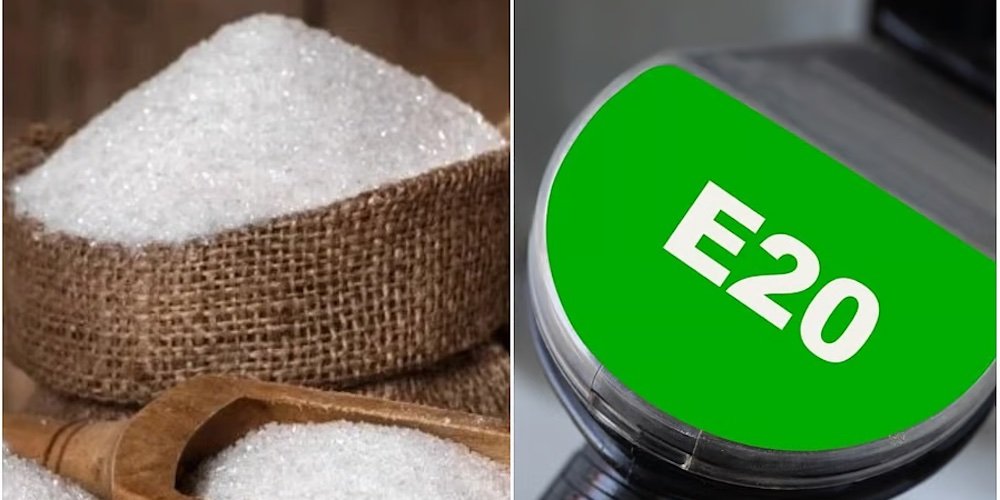
Sugar is no longer just another item on the grocery list. For the ordinary Indian consumer, it has suddenly become a burning issue. A commodity selling at around ₹47–48 per kg has moved towards ₹60 or even higher in many markets.
The government attributes the rise mainly to lower sugar production, adverse weather, increased demand, tighter stocks and other market factors. These explanations deserve examination. But there is another important question:
What role has India’s rapidly expanding ethanol played in the availability of sugar?
This is not an argument against ethanol. Ethanol can help reduce India’s dependence on imported crude oil, save foreign exchange and provide an additional market for sugarcane farmers.
But every policy has a cost.
Ethanol: The Other Side of the Sugar Story
India is one of the world’s largest producers of sugarcane and sugar. But sugarcane is increasingly being diverted towards ethanol production for blending with petrol.
The government’s objective is understandable. But when sugar production falls because of adverse weather, should the same level of diversion towards ethanol continue?
This leads to a fundamental question:
Was the government sufficiently prepared for the impact of its ethanol policy on domestic sugar availability?
Could ethanol diversion have been adjusted temporarily? Could export decisions have been calibrated more carefully? Could action have been taken earlier to prevent a sudden increase in retail prices?
The real test of governance is anticipation — not merely reaction.
Are We Solving One Import Problem by Creating Another?
The argument for ethanol is that it reduces India’s petroleum import bill.
Fair enough.
But if sugar availability falls, prices rise and India subsequently has to import sugar to maintain domestic supplies, we must ask
Energy security + food security + consumer affordability.
One cannot be pursued at the expense of the others.
Was the situation anticipated ?
If production estimates were showing a significant decline in sugar output, and if domestic stocks were coming under pressure, was the government able to anticipate the consequences sufficiently early?
Who Benefits and Who Pays?
The ethanol programme can benefit sugarcane farmers, sugar mills, ethanol producers and the country through reduced dependence on imported fossil fuel.
But who ultimately pays?
The consumer may pay through:
• Higher sugar prices
• Lower fuel mileage, because ethanol contains less energy per litre than petrol
• Potential additional maintenance costs in vehicles not designed for higher ethanol blends
• Compatibility issues, particularly with some older vehicles

Therefore, another question deserves an answer:
If ethanol reduces the country’s petroleum-import bill, should the ordinary consumer have to bear a higher effective cost through sugar prices, fuel consumption or vehicle maintenance?
And most importantly:
Who is receiving the greatest economic benefit from the ethanol policy — farmers, sugar mills, ethanol producers or other stakeholders?
What About Ethanol Imports?
There is another irony.
India’s ethanol programme is intended partly to reduce dependence on imported petroleum, yet ethanol imports have also taken place, including substantial imports from the United States.
The government has clarified that there is no policy commitment to import US ethanol for the petrol-blending programme. That clarification should be acknowledged.
But the public deserves transparency:
If India has developed such a large domestic ethanol industry, why are ethanol imports necessary at all, and for what purposes?
The Sugar Import Paradox
India is one of the world’s largest sugar producers. Yet if domestic production and stocks become insufficient and sugar imports are required to control prices, the public deserves a clear explanation.
How did we reach this position?
Was it weather? Lower production? Exports? Increased consumption? Ethanol diversion? Or a combination of these factors?
The government should publish transparent data showing the relative contribution of each.
India needs energy security.
Ethanol can contribute to these objectives.
But policy success cannot be measured by petrol-blending percentages alone. It must also consider food prices, consumer affordability and the overall economic cost to the country.
A sensible policy could be flexible:
In years of surplus sugar production, greater diversion towards ethanol may be appropriate. In years of shortage, protecting domestic sugar availability should take priority.
The issue is not Sugar versus Ethanol.
It is about getting the balance right.
Energy security is important. Food security is equally important. Consumer affordability cannot be ignored.
So when sugar moves from ₹48 to around ₹60 per kg, the citizen has every right to ask:
Was this situation anticipated?
Could the government have acted earlier?
Who benefits from the ethanol policy
And ultimately — who pays?
And finally:
If India has to import sugar because domestic supplies are insufficient, are we solving one import problem by creating another?
These are not anti-government questions.
They are questions of accountability, advance planning and sound economic policy.
[Opinion strictly personal]