
Behind the Resentment of the “Goras” against “Deshis” in America
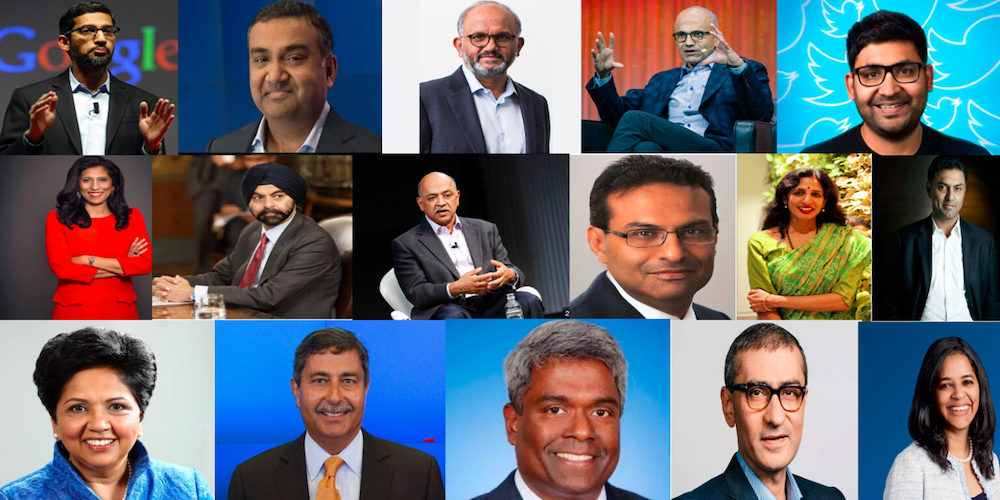
Increasingly but unfortunately, the tension between certain MAGA hardliners and the Indian diaspora in the United States has been in recent headlines. The phenomenon reveals a complex interplay of economic competition, changing political dynamics, and cultural anxieties
The underlying friction right-wing white and black Americans against the Indian-Americans is rarely expressed as overt jealousy; instead, it manifests as systemic skepticism toward high-skilled immigration and multiculturalism.
The perception of an elite, highly educated immigrant group occupying top tiers of corporate and political power triggers a defensive reaction from populist movements that feel left behind by globalized economic shifts.
Indian-Americans hold an unprecedented number of top leadership roles across major global corporations, steering a combined market value of trillions of dollars. Their presence is highly visible in technology, cybersecurity, manufacturing, and consumer goods.
The most prominent, top-ranking Indian-American business leaders are categorized below by their respective industries:
Big Tech & Platform Giants
Satya Nadella (Chairman & CEO, Microsoft): Credited with transforming Microsoft into a cloud and artificial intelligence behemoth, driving its valuation past $3 trillion.
Sundar Pichai (CEO, Alphabet and Google): Manages Google’s sprawling core products, including Search, Android, Maps, and Alphabet’s rapidly growing AI infrastructure.
Shantanu Narayen (Chairman & CEO, Adobe): One of the longest-serving tech CEOs, famous for shifting Adobe from traditional boxed software to a highly lucrative creative cloud subscription model.
Arvind Krishna (Chairman & CEO, IBM): A deep-tech researcher leading IBM’s modern pivot toward enterprise artificial intelligence and hybrid cloud computing.
Neal Mohan (CEO, YouTube): Commands the world’s largest digital video and streaming platform, balancing the creator economy with massive advertiser partnerships.
Cybersecurity & Enterprise Infrastructure
Nikesh Arora (Chairman & CEO, Palo Alto Networks): Leads one of the world’s most valuable cybersecurity firms, executing aggressive platform consolidation during a massive boom in digital threats.
Jay Chaudhry (Founder & CEO, Zscaler): Built Zscaler into a cloud security giant; he ranks among the wealthiest Indian immigrants in the country.
Jayshree Ullal (President & CEO, Arista Networks): A highly influential billionaire businesswoman driving cloud and AI networking hardware to compete directly with Cisco.
Sanjay Mehrotra (CEO, Micron Technology): Heads the memory-chip titan, which has seen its valuation surge amid intense AI hardware demand.
Industrial, Logistics, & Consumer Goods
Raj Subramaniam (CEO, FedEx): Oversees the massive global logistics and transportation network.
Shailesh Jejurikar (CEO, Procter & Gamble): Made history as the first Indian-American to lead the 187-year-old consumer goods giant.
Vimal Kapur (CEO, Honeywell): Heads the diversified industrial giant focusing on aerospace, digital automation, and sustainability technologies.
Revathi Advaithi (CEO, Flex Ltd.): Commands a global manufacturing and supply chain infrastructure powerhouse supporting top worldwide brands.
Healthcare & Finance
Reshma Kewalramani (CEO, Vertex Pharmaceuticals): One of the few physician-CEOs leading a major biotech company, specializing in breakthroughs for genetic and rare diseases.
Vasant Narasimhan (CEO, Novartis): Leads the global pharmaceutical conglomerate, bridging medical advancements with AI-driven drug discovery.
Ajay Banga (President, The World Bank): Former CEO of Mastercard who now commands international economic development from the helm of the World Bank.

The Backlash Against Indian-Origin Appointees
The influx of prominent Indian-Americans into the upper echelons of the Republican political establishment has sparked a significant ideological divide within the MAGA movement.
• The Sriram Krishnan Controversy: When Donald Trump selected Silicon Valley entrepreneur Sriram Krishnan as an AI policy advisor, it triggered fierce resistance from far-right influencers. Right-wing firebrand Laura Loomer targeted Krishnan on social media, launching xenophobic attacks that claimed highly skilled immigrants lacked fundamental Western standards of civilization.
• Targeting of Second Lady Usha Vance: Despite being married to Vice President JD Vance, Second Lady Usha Vance has frequently faced identity-based vitriol from the nativist wing of the party. Far-right commentator Nick Fuentes and his followers (known as “Groypers”) targeted her Hindu heritage and ethnicity using derogatory racial slurs, prompting public denunciations from within the GOP.
• Vivek Ramaswamy’s Faith Confrontations: During his political campaigns, tech entrepreneur Vivek Ramaswamy has repeatedly been cornered at conservative town halls regarding his Hindu faith. At a notable event in Montana, right-wing questioners bluntly accused him of “masquerading as a Christian,” arguing that a non-Christian immigrant could not truly represent the core values of the conservative movement.
Economic and Educational Success
The Indian-American community is statistically one of the most successful immigrant groups in the United States.
• Income Levels: The median household income for Indian-Americans is roughly double the national average.
• Education: Over 70% of Indian-American adults hold a college degree, far exceeding the baseline population.
• Corporate Leadership: Indian diaspora members frequently occupy CEO positions at top Fortune 500 tech firms.
This rapid upward mobility fuels a sense of economic displacement among working-class factions within the populist right. Hardliners often view high-skilled immigration frameworks, like the H-1B visa program, as an economic system that favors foreign-born professionals over native-born workers.
Political Integration and Influence
The diaspora’s rapid transition from economic integration to political prominence has altered the American leadership landscape.
• Bi-Partisan Representation: Indian-Americans hold high-ranking offices across the political spectrum, from progressive Democrats to prominent conservative presidential contenders.
• Voting Power: The demographic is highly politically active, with growing influence in key swing states.
For immigration hardliners, this political rise challenges the traditional cultural and demographic hegemony. While conservative MAGA factions welcome Indian-Americans who align with right-wing populism, anxiety remains regarding the diaspora’s broader impact on American voting patterns and policy directions.
Cultural Identity and Patriotism
A core pillar of MAGA populism is “America First” nationalism, which often demands assimilation into a specific view of American cultural identity.
• Transnational Ties: Many Indian-Americans maintain strong cultural, familial, and economic ties to India.
• Dual Identity: The ability to balance a proud ethnic heritage with American citizenship is sometimes viewed with skepticism by hardliners.
Populist critics occasionally misinterpret these enduring cultural connections as a lack of patriotism or a sign of divided loyalty. This suspicion generates friction, as the diaspora’s success demonstrates that multiculturalism and high-level civic contribution can coexist without abandoning one’s roots.
The Dynamics of Resentment
The underlying friction is rarely expressed as overt jealousy; instead, it manifests as systemic skepticism toward high-skilled immigration and multiculturalism. The perception of an elite, highly educated immigrant group occupying top tiers of corporate and political power triggers a defensive reaction from populist movements that feel left behind by globalized economic shifts.


In an otherwise well catalogued article explaining the hostile attitude of Americans (especially the MAGA conservatives) against the successful Indian diaspora community, the author should also have touched upon how a hate India (or, hate Hindu) campaign in the US is engineered and orchestrated by the Islamist forces. A deeper study and analysis of the activities of the myriad Islamist organizations, their resources, network and the capacity to influence US public opinion and policy decisions show that they are way ahead of any Indian (or, Hindu) organizations. Behind the cloak of so called progressivism, Leftism or Democratic Socialism, they are very successful in not only maligning the successful achievers of Indian origin but they systematically raise stumbling blocks in the way of Indians’ success. So much so that some US Hindu lawmakers like Pramila Jaypal or Ro Khanna also speak their language. Whereas Islamists in any Western country are divided among themselves along sect or cult lines, they are united in their enmity against the Indians and the Hindus.