Modi and the Indian Middle Class
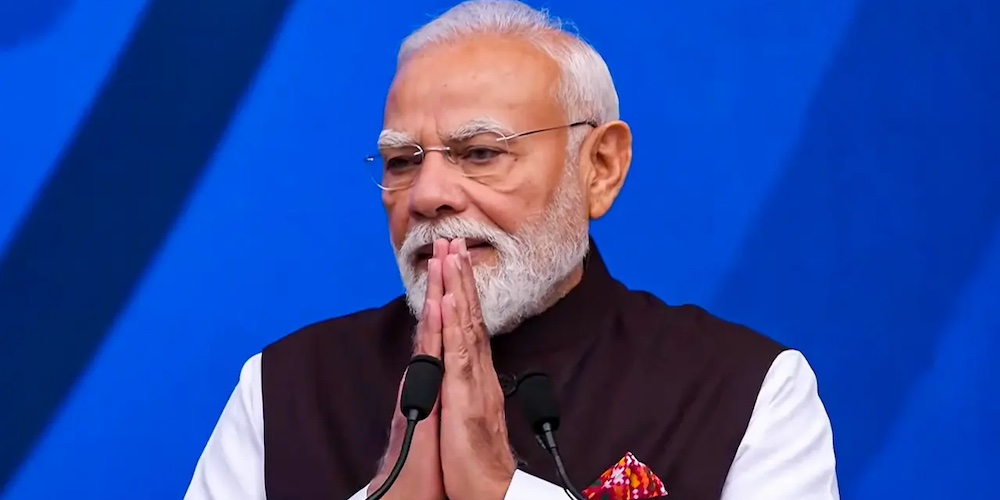
O n June 15, Prime Minister Narendra Modi highlighted the government’s efforts to enhance Ease of Living for the middle class and said that it is the privilege of the Government to work towards fulfilling the aspirations of the middle class. He noted that the middle class has contributed to nation-building in countless ways.
He said that over the last decade, governance has increasingly focused on improving the quality of life of ordinary citizens, adding that the Government’s efforts are aimed at ensuring easier access to opportunities, better infrastructure, improved public services, affordable healthcare, quality education, cleaner cities and reduced burdens in everyday life.
In a series of X posts, the Prime Minister said;
“A Government for the middle class…..
It is the NDA Government’s privilege to be working towards fulfilling the aspirations of our middle class. They have contributed to nation-building in countless ways.
Over the last decade, governance has increasingly focused on improving the quality of life of ordinary citizens. Our efforts are about easier access to opportunities, better infrastructure, improved public services, affordable healthcare, quality education, cleaner cities and reduced burdens in everyday life”.
The relationship between Prime Minister Narendra Modi’s administration and the Indian middle class represents one of the most dynamic political and economic partnerships in contemporary India. Over more than a decade in office, the government has consistently positioned this demographic not merely as a tax-paying base, but as the primary engine driving the vision of a developed nation (Viksit Bharat). By shifting the policy focus toward structural modernization, digital enablement, and targeted financial reliefs, the administration has sought to address the historical grievances of an aspirational populace. However, this partnership remains a complex narrative of structural empowerment balanced against persistent macroeconomic anxieties.
At the core of the government’s engagement with the middle class is a series of fundamental fiscal and structural reforms aimed at improving the “Ease of Living.” For decades, the Indian middle class felt disproportionately burdened by rigid direct tax structures and volatile market prices. The Modi administration has systematically countered this perception by overhauling the tax architecture. The introduction of the New Tax Regime, coupled with consecutive budget enhancements, has effectively pushed the tax-free income threshold for salaried individuals to ₹12.75 lakh. Simultaneously, the consolidation of indirect taxes into the Goods and Services Tax (GST) rationalized everyday consumer spending, yielding significant annual household savings on daily necessities. These fiscal adjustments have coincided with a broader macroeconomic shift, during which India’s per capita income doubled, reflecting an expanding, more resilient consumer base.

Furthermore, targeted structural interventions have brought unprecedented transparency and security to major lifecycle investments. For the average middle-class family, purchasing a home or managing a medical emergency represents a significant vulnerability. The implementation of the Real Estate (Regulation and Development) Act (RERA) established legal accountability in a historically chaotic housing sector, protecting millions of homebuyers from fraudulent delays. In healthcare, the expansion of schemes like Ayushman Bharat provided a vital safety net, protecting emerging middle-class families from slipping back into financial vulnerability due to catastrophic medical costs.
Despite these clear developmental milestones, the relationship is not without its systemic strains. Critics and macroeconomic analysts frequently point out that the salaried middle class continues to bear a heavy share of the nation’s direct tax burden. While physical and digital infrastructure has improved immensely, families still grapple with the high costs of quality private education and healthcare, alongside sticky retail inflation in urban hubs. Additionally, generating high-quality, formal employment opportunities for a rapidly growing pool of skilled, educated youth remains an ongoing challenge for the domestic economy.
In conclusion, the intersection of Narendra Modi’s governance and the Indian middle class is defined by a transition from systemic neglect to institutional empowerment. Through digital innovation, tax restructuring, and infrastructural modernization, the government has successfully delivered tangible daily conveniences and enhanced the standard of living. While economic challenges such as inflation and job creation require continuous policy recalibration, the middle class remains firmly anchored as both the primary beneficiary and the chief architect of India’s ongoing economic transformation.