IMMIGRANTS & “CIVILISATIONAL DECLINE” IN THE WEST
ASikh youth murders a White student in Britain. Political far-right and anti-immigration activists respond with Nazi salutes and abuse of the immigrants, in general. He is promptly arrested, tried and convicted to imprisonment for life.
Across the Atlantic, United States Vice President J D Vance blames it on “civilizational decline and the failure to stop the mass invasion of migrants”.
Sensing that Vance is pushing the immigration issue, currently high on both British and American agendas, to please his boss, Donald Trump, and the MAGA constituency, British Prime Minister Keir Starmer’s office shows good sense, and condemns Vance.
Is the so-called “civilizational decline” going to be stopped by promoting the political far-right and the Nazi political culture, of which MAGA is partly this century’s by-product?
If immigrants are such a drag on the Western world’s ‘civilisation’, has Mr Vance noted the latest American study that shows that nearly 60% of Unicorns in his country are founded and led by Indians who made the US their home in relatively better times?
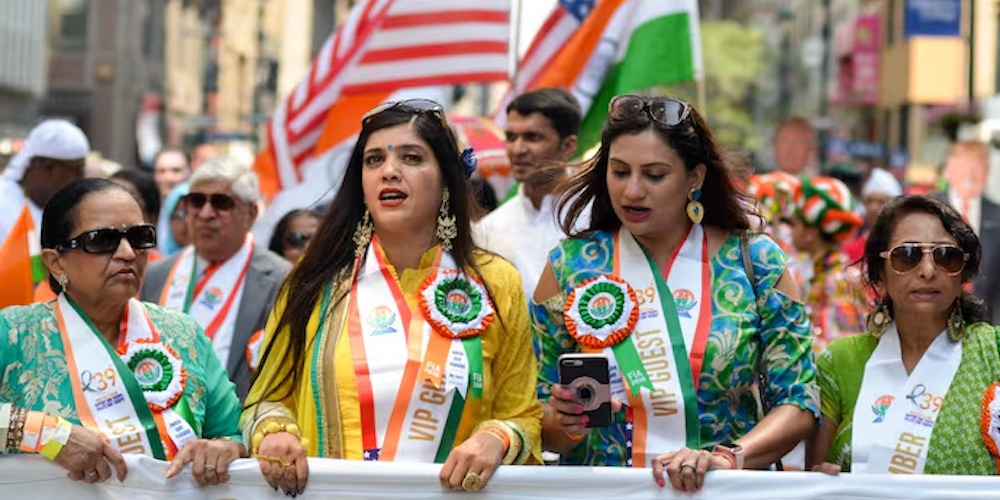
This Sunday morning, singling out the Indian migrants, of course, the legal ones, I stress their contribution to public life in their chosen homes.
======
The news of Tushar Kumar, 23, becoming Britain’s youngest Indian-origin Mayor, and his mother, Parveen Rani, also elected in counties north of London, has revived memories of 1987 when I interviewed Gordhan Parmar, the first Asian Mayor of Leicester and his wife, “lady Mayoress” Lalitaben.
The Parmars received me ceremonially, she donning a Banarasi silk saree. Both wore black gold-rimmed gowns and golden regalia handed down to the city’s civic hall 800 years ago. He was popular as ‘Gordon’, and she was the city’s most active social worker.
That was also the year when, after a long gap, Goa-born Keith Vaz was elected to the House of Commons. The pioneering Indians elected to the British Parliament when India was ruled from Britain were three Parsis: Dadabhai Naoroji, the “Grand Old Man of India” (1892), a journalist and politician Sir Mancherjee Bhownaggree (1895) and a communist Shapurji Saklatvala (1924-1929), who was a grandson of Jamshedji Tata, the founder of India’s Tata industrial and commercial empire.
Dalip Singh Saund was the first Indian-American to serve in the United States House of Representatives from 1957 to 1963.
In this century, from the short-term British Prime Minister Rishi Sunak, Minister Priti Patel and now Tushar — what makes Indians abroad join public life and contest elections?
There are also related questions, like how far should those living in India seek credit and be thrilled about their being “of Indian origin”? And more importantly, what can be expected from them when they deal with or visit India?

Being proud is one thing, but to seek credit is quite another. They owe no debt to India. A vast majority of them, spread worldwide, have never seen India. The ones who come want to nurture family links or business, or to perform the last rites of their elders in Varanasi, Sidhpur or Haridwar. It is essentially family and culture.
On the other hand, we do celebrate the few who return and stay on. But they soon become our ‘competitors’, with ‘attitudes’ that we dislike.
Whatever their links with India, the reality is that they, or their ancestors, made another land their home. Hence, it is only fair that they remain loyal to their chosen home(s), especially when they are posted to India.
Thus, Niki Haley spoke from the American standpoint when she visited Delhi. Or Britain’s Priti Patel was forthright about illegal migration from India. Former US Vice President Kamala Harris, despite her African and Indian connections, will speak only for America if she contests again and wins the American presidency.
In recent years, many countries have posted Indian-origin officials as diplomats or as business representatives in India. The Caribbean countries where Indians migrated in large numbers send Indians as diplomats.
Atul Keshap and Richard Verma were US ambassadors; Nadir Patel (originally from Surat) was Canada’s High Commissioner. Peter Verghese and Harinder Gill were Australia’s high commissioners.
Broadly speaking, Indians abroad seek elected offices to secure political representation, advocate for their communities’ interests, and influence host-country policies, including foreign relations with India. The desire to break barriers, challenge stereotypes, and leverage their growing economic and educational successes also drives their political ambitions.
In countries with substantial Indian-origin populations, diaspora politicians mobilise voters and help shape the domestic political landscape. First and second-generation immigrants often run for office to ensure their specific civic, cultural, and socio-economic concerns are addressed by local governments.
High levels of education, professional attainment, and wealth accumulation give the diaspora the resources and confidence needed to mount effective, well-funded political campaigns.
Mohamed Irfaan Ali is President of Guyana, which is among the nations with a significant Indian population. Chandrikapersad Santokhi is Suriname’s President. Tharman Shanmugaratnam is Singapore’s President. Wavel Ramkalawan is President of Seychelles and Christine Carla Kangaloo is President of Trinidad and Tobago. In recent years, Leo Varadkar was Ireland’s prime minister. Antonio Costa was Portugal’s prime minister for nine years and is now President of the European Council.
In Mauritius, whose current President is Dharam Gokhool, the Ramgoolam and Jugnauth families have alternately ruled as prime ministers. Pravind Jugnauth is the current premier.
There are over 35.4 million people in the global Indian diaspora, making it the world’s largest overseas diaspora. This figure comprises roughly 15.8 million Non-Resident Indians (NRIs) and 19.5 million Persons of Indian Origin (PIOs) spread across more than 200 countries.
Many Indian-origin figures have held elected offices as governors, federal and provincial legislators and civic officials. A list of the past and the present would be endless. Overall, the global footprint of Indian-origin politicians spans from national leadership to local mayoralties and is quite impressive.