How India’s Exam System Bleeds Merit — and How to Seal the Wound

“A nation that cannot protect the integrity of its examinations cannot protect the future of its youth.”
In the summer of 2024, India witnessed one of its most jarring institutional failures — the NEET-UG paper leak scandal. Over 24 lakh aspirants, who had spent years and their families’ life savings preparing for a single three-hour test, found that the question paper had already been circulating in certain cities the night before the exam. What followed was not merely a legal controversy — it was a civilisational wound. Students wept on national television. Parents who had mortgaged their homes to fund coaching felt cheated. And somewhere in the shadows, the paper leak mafia celebrated another successful transaction.
This was not an isolated incident. It was a symptom of a system that has been rotting from within for decades.
The Anatomy of a Paper Leak
To understand why paper leaks keep happening, one must trace the journey of a question paper from its conception to the examination hall. At every stage, human hands are involved — and where human hands are involved, corruption finds a way.
(a) Stage 1 — Paper Setting: Senior academics and subject experts are invited to secluded locations to set question papers. Despite NDAs and confiscation of phones, the human memory cannot be sealed. Experts sometimes collude with coaching centres, sharing patterns, predictive sets, or outright questions in exchange for large sums.
(b) Stage 2 — Printing and Packaging: The paper is printed at designated government-approved security presses. Workers, supervisors, and logistical staff at these presses become nodes of vulnerability. A single photograph, a single memorised question, a single photocopy smuggled out inside a shoe is enough.
(c) Stage 3 — Transportation: Sealed question paper packets travel across thousands of kilometres under police escort. Consignments pass through dozens of hands — drivers, escorts, district officials, warehouse managers. Several times packets have been found tampered with and resealed. In some documented cases, entire boxes were replaced.
(d) Stage 4 — Storage and District Distribution: Papers arrive at district examination centres days before the exam. Local education officers, strongroom custodians, and administrative staff become custodians of the nation’s merit. Bribery at this stage is both easiest and most catastrophic.
(e) Stage 5 — The Exam Hall: Invigilators, centre superintendents, and even some candidates with sophisticated micro-devices complete the last mile of the leak chain. In some states, impersonation rings operate openly, with professional “solvers” sitting exams for cash.
(f) The Paper Leak Mafia: Behind all this is an organised, well-funded criminal network. It is not opportunistic — it is industrial. It operates through WhatsApp groups, encrypted apps, and physical couriers. It has vertical integration: it infiltrates the setting committee, bribes print workers, pays transporters, and has franchise arrangements with coaching institutes that sell guaranteed “Guess” papers as premium packages. It is, in every economic sense, a parallel examination industry worth hundreds of crores annually.
The Scale of the Crisis
The numbers tell a grim story. Between 2015 and 2024, question papers for over 70 competitive examinations were leaked across India, according to investigative reports in national media. These include NEET, JEE, UPSC prelims papers in certain states, even SSC examinations, state PSC papers, police recruitment exams, and railway recruitment boards as well. The students who suffer are invariably from modest backgrounds — first-generation college aspirants who had no “backup plan!”
The sociological damage is immense. Each leak erodes faith in Meritocracy. When a system designed to be a great equaliser becomes a tool of the privileged and the corrupt, it does not merely deny opportunity to deserving students — it poisons their belief in the Republic itself.
Why Incremental Fixes Have Failed
The government’s response has typically followed a predictable template: suspend officials, set up inquiry committees, announce tighter protocols, prosecute a few scapegoats, and promise reform. None of it has worked because none of it addresses the root cause. The root cause is structural, not incidental. As long as a question paper exists in physical form, and as long as human beings handle it at any point before it reaches the candidate’s hand, the leak chain cannot be fully broken.
Adding more police escorts to an already corrupted transport chain only makes corruption a little more expensive, not impossible. Installing CCTV in strongrooms only shifts the breach to the printing press. Replacing printing contractors only relocates the vulnerability. The system is not leaking at one point — it is porous at every point where human discretion operates.
The AI Solution: A Paradigm Shift, Not a Patch
India has, in the last decade, demonstrated remarkable technological capability. It has built the world’s largest biometric identity system (Aadhaar), conducted real-time digital payments at a scale no other nation has matched (UPI), and launched cost-efficient space missions. It is not a technological challenge to build a leak-proof examination architecture. It is a question of political will. Here is a blueprint for a fully AI-driven, human-touch-free examination system:
1. The Dynamic Question Paper Generation Engine
Today, AI systems can be trained on the entire syllabus of any examination — every concept, sub-topic, difficulty gradient, and cognitive level defined by the curriculum. An AI engine, trained on this corpus and calibrated by subject-matter experts only once at the design stage, can generate a fresh, unique question paper autonomously.
Imagine the critical innovation: the question paper is generated just 15 minutes before the scheduled examination time; not set a year in advance by human academics. Question papers are not printed weeks before in a government press. The same could be generated by a machine, at exam time, from a secured and encrypted syllabus database. There is simply nothing to leak beforehand because the paper does not exist beforehand.
The engine can be designed to maintain rigorous standards — ensuring appropriate difficulty distribution, balanced topic coverage, elimination of ambiguous phrasing, and compliance with the official exam blueprint. Multiple AI models can cross-verify the generated paper for quality in the remaining minutes.
2. Localised Computer-Controlled Printing at the Exam Centre
Each examination centre should be equipped with a secure, network-isolated printing terminal — a tamper-proof machine connected via encrypted, one-way data push to the central AI generation system. Five minutes before the exam begins, the freshly generated question paper is pushed to these terminals and printed locally.
The terminals are designed with zero human override capability during transmission. They operate on a closed circuit. The printed papers emerge directly into the exam hall — no storage, no transit, no human interception window anywhere in the entire process. The paper appears in physical form for the first time in the examination room itself.
No strongroom. No district official. No transport convoy. No advance printing! The entire leakage infrastructure of the paper mafia becomes irrelevant overnight.

3. Biometric and AI-Proctored Examination Halls
Entry to examination centres is controlled entirely through biometric verification — fingerprint, iris scan, and facial recognition cross-matched against the registered candidate database in real time. If implemented, such an electronic system will render impersonation computationally impossible as well.
Inside the hall, AI-powered surveillance cameras monitor candidates continuously — tracking eye movement, body language, and any attempt to use devices. The system can detect anomalies without requiring invigilators to interpret intent, reducing human bias and human bribery.
Mobile signal jammers, Faraday-cage construction of exam halls, and on-body metal detector gates eliminate device-based cheating at the infrastructure level.
4. Digital Answer Submission and AI-Assisted Evaluation
For objective examinations, candidates respond on tamper-proof digital terminals. Answers are encrypted and transmitted in real time to a central server. There is no physical answer sheet to lose, manipulate, or miscount.
For subjective examinations, handwritten answers are scanned and digitised instantly. AI-assisted evaluation tools — already mature in developed nations — can provide preliminary scoring, flag inconsistencies, and assist human evaluators who review only flagged responses, reducing the surface area for result manipulation.
5. Blockchain-Secured Result Compilation
The final results are compiled on a blockchain ledger — immutable, transparent, and publicly auditable. Every score is a permanent, tamper-proof record. Such a system will render result manipulation — another rampant fraud in India’s examination ecosystem — mathematically impossible. Candidates, parents, and courts can independently verify any result in the chain.
Addressing the Counterarguments
What about the digital divide? Rural candidates lack computer access.
The proposal does not require candidates to own computers. It requires examination centres to have secure terminals — a far smaller infrastructure challenge. India has already demonstrated with voting machines (EVMs) that secure digital hardware can be deployed to the most remote panchayats across the country. The same model applies here.
Some brains may argue: AI-generated papers may have quality issues! AI question paper generation technology has advanced dramatically. With proper training data, quality guardrails, and a validation layer, AI-generated papers can meet — and exceed — the consistency standards of papers set by committees prone to error and leakage. Initial hybrid models can have human expert sign-off on the AI’s generation framework without ever seeing individual papers.
What about cyber threats and hacking? A closed-circuit, air-gapped printing system cannot be hacked remotely. The generation engine operates on a secured government cloud with military-grade encryption. Distributed architecture ensures that compromising one terminal does not affect others. The risk profile of this system is orders of magnitude lower than the current system, where bribery requires no technical expertise.
The Question of ‘Political Will’
Technology is not the bottleneck. The paper leak mafia is not a technological adversary — it is a political one. It survives because it is protected. Coaching institutes that sell leaked papers are often run by politically connected individuals. Examination boards are populated by bureaucrats who benefit from opacity. Reforms threaten vested interests that have operated comfortably for generations. This is precisely why the solution must be structural and irreversible — not a policy guideline that the next government can dilute, but a technological architecture that removes human discretion from the process entirely. You cannot bribe a machine. You cannot persuade an algorithm. You cannot slip a question paper under a server’s door.
A dedicated National Examination Technology Authority (NETA), modelled on UIDAI’s technical independence, should be constituted by an Act of Parliament to own, operate, and continuously upgrade this infrastructure for all central competitive examinations, with state-level adoption mandated within a defined timeline.
Conclusion: Merit is Non-Negotiable
India is at an inflection point. With the largest youth population in the world, its competitive examinations are not merely selection tests — they are the primary instrument of social mobility for hundreds of millions of families. When those examinations are corrupted, it is not just a few lakh students who lose. An entire generation’s faith in the fairness of their republic is damaged.
The technology to fix these flaws exists. The expertise to deploy it exists. India possesses both. What India’s leaders must now find is the moral clarity to strip the paper leak mafia of its oxygen — permanently — by building a system where the very concept of a “leaked paper” becomes a historical relic, as quaint and impossible as leaking a question paper that has not yet been created.
The future of India’s meritocracy cannot wait for the next scandal, the next committee, or the next FIR. It must be built now, in silicon and code, beyond the reach of corruption.
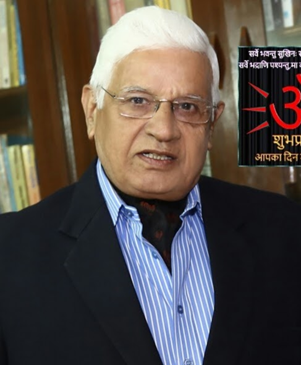
(Col Karan Kharb is an Indian Army veteran who has been an instructor at the Indian Military Academy and served in the Special Forces, where he participated in multiple high-risk operations with noteworthy success. Author of five best-selling books, he is associated with India’s eminent think tanks and has addressed audiences at both regional and national levels.
He managed a Rehabilitation NGO in Gujarat soon after the devastating earthquake in 2001 and was the founder-director of Jana Shikshan Sansthan (JSS), Kutch. Currently, at Arya Samaj Arun Vihar, Noida, he is supporting children. women and youths from the marginalised sections of society in pursuing their education.)