Politicians Can’t Be Allowed To Judge Judicial Competence: Delhi HC
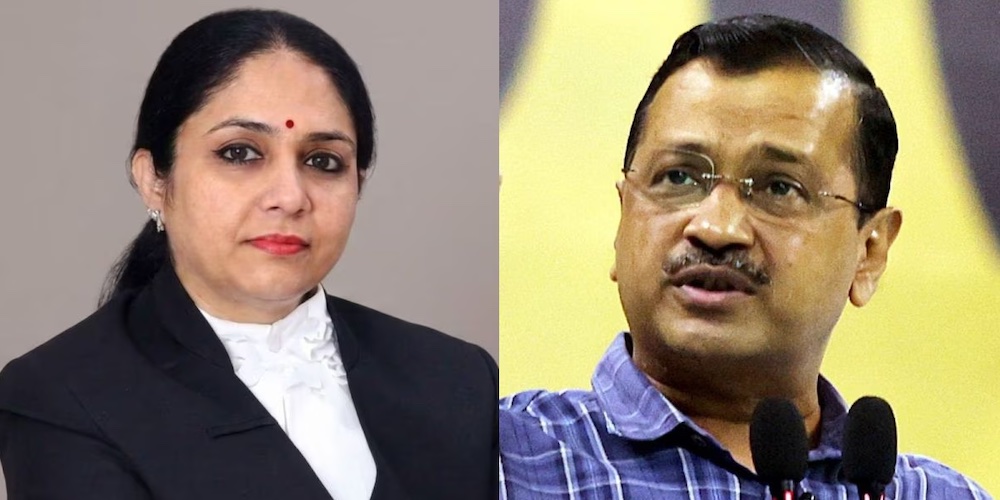
It is definitely a matter of paramount significance that while sending a very loud and unequivocal message to “all politicians in particular” and to the ‘people in general’, the Single Judge Bench of the Delhi High Court comprising of Hon’ble Dr Justice Swarana Kanta Sharma in a most learned, laudable, landmark, logical and latest judgment titled CBI vs Kuldeep Singh & Ors in CRL.REV.P. 134/2026 & CRL.M.A. 6853/2026 and cited in Neutral Citation No.: 2026:DHC:3291 that was reserved on 13.04.2026 and then pronounced and uploaded on 20.04.2026 rejected the application that had been filed by Aam Aadmi Party (AAP) supremo Arvind Kejriwal and other accused who had sought recusal of Hon’ble Dr Justice Swarana Kanta Sharma from hearing the liquor policy case. We need to note that the Bench observed explicitly that merely because her children are central government panel counsel, it cannot be presumed that she carries any bias against Kejriwal. It was also made crystal clear by the Bench that politician cannot be permitted to judge judicial competence.
It merits mentioning that the main matter has now been listed on April 29 and 30, for CBI’s submissions. The Court will hear the respondents thereafter. It is high time and “all politicians in particular” and ‘people in general’ would do well to always pay heed to what has been directed by the Single Judge Bench of the Delhi High Court in this leading case and desist from judging judicial competence of Judges. Not only just this, I would humbly suggest that even Judges of High Court and Supreme Court must emulate what Hon’ble Dr Justice Swarana Kanta Sharma has done in this leading case as it is increasingly and most alarmingly becoming a growing trend to recuse at the drop of a hat which is a matter of utmost concern and cannot be allowed to be encouraged any longer as it culminates in huge wastage of time most unnecessarily!
At the very outset, this brief, brilliant, bold and balanced judgment authored by the Single Judge Bench of the Delhi High Court comprising of Hon’ble Dr Justice Swarana Kanta Sharma sets the ball in motion by first and foremost putting forth in para 1 that, “While I began to pen this judgment in the quiet aftermath of end of arguments, the Courtroom had fallen silent, the voices of arguments had faded, the echoes of accusations no longer filled the courtroom or my ears, what remained was the quiet weight of responsibility of being a Judge, who has taken oath on the Constitution of India i.e. Bharat, to uphold the purity and dignity of the judicial system, with one persistent question – ‘Should I recuse?’”
As we see, the Bench then observes in para 2 that, “It was also that moment, when I realized that my silence as a judge itself is being put to test – and now the question is no longer about the case, but about the judge and fairness of the process and institution itself.”
As things stands, the Bench then puts across in para 3 that, “While in my entire life, as in the lives of many of my brother and sister judges across this country, the cases put up before us for adjudication test our knowledge, intellect and experience, at times before few of us, a litigant through a case, tests the institution’s resilience itself. This case belongs to the latter category.”
To be sure, the Bench then specifies in para 4 stating that, “The challenge before me was not that I had to adjudicate difficult questions of law or fact, but I was drawn to adjudicate a recusal application against myself. However, it is not for the first time that such an application has been filed before the same judge seeking recusal by a litigant. Therefore, in that sense, it is not an extraordinary situation for a judge. In the past, before this High Court itself, there have been multiple occasions when applications for recusal have been filed before the same judge, which have been heard and decided by them.”
Quite rationally, the Bench points out in para 5 that, “The issue before me was clear – as to whether I should recuse from hearing the present case. I was thus faced with a situation where my impartiality and dignity had been challenged, and the natural instinct would have been to recuse without hearing the application seeking recusal, which would have been the easier path of withdrawing and stepping aside. However, for the sake of the institution, I decided to adjudicate the recusal application, for it throws questions not only at me, but also at the institution itself. It also weighed in my mind that all my brother and sister Judges and the judges of District Courts of Delhi, who are part of this institution, may be affected by the outcome of this application since it may be cited as a precedent and many other litigants may take a similar path.”
I most strongly feel that it is not just the courts of Delhi who may be affected but courts all over India may be affected as it can be cited as precedent which definitely would not have been a healthy precedent. If recusal was done as prayed, this too would have set a very bad precedent and this would have impacted most courts in Delhi and even to some extent courts in other parts of the country. So the Bench definitely took the most commendable stand on this of not allowing the recusal petition!
Notably, the Bench clearly stated in para 6 that, “Equally was it clear to me that I had to decide it totally undisturbed and unaffected by the accusations and insinuations, in a fair manner, as objectively as it is required of a judge, and to test the recusal applications purely on the basis of jurisprudence of recusal laid down till date in our country, for that is what I have been trained to do as a Judge and what I have lived in the last 34 years of my judicial career.”
Do note, the Bench notes in para 9 that, “What made the task more challenging was that, during arguments, contrary stands were taken. All the applicants, at the beginning of arguments on recusal and some in the pleadings as well, submitted before this Court that they have complete respect for this Court as an individual judge and they do not doubt integrity of any kind or fairness of this Court. However, the applicants still want the case to be transferred, not because I am biased, but because they have apprehension in their mind that I may be biased.”
Do also note, the Bench then notes in para 10 that, “I am fully conscious of the fact that today, I am not to judge the litigant, but the litigant has put me and this institution on trial, and it will be dealt with as it should be, not only on my behalf but on behalf of the institution of judiciary itself. To reiterate, though choosing the path of recusal – without even hearing the application for recusal – would have been quiet, comfortable, uncontroversial and easy, but a reputation once surrendered to accusation of bias, if not dealt with, will not be easy to re-claim.” Absolutely right!
Do further note, the Bench then notes in para 11 that, “Therefore, I choose the path to resolve the controversy thrown at me where my integrity has been put to test. The strength of judicial institution lies in strong resolve to respond appropriately to such accusations, fearlessly and unhesitatingly. It is with this resolve that I begin writing my judgment and deal with every accusation hurled at me in an objective manner, without being affected by any of it.”
Truth be told, the Bench mentions in para 53 that, “One of the major grounds on which recusal has been sought is the order dated 09.03.2026 passed by this Court. In fact, applicant Sh. Arvind Kejriwal, while addressing the Court in person, repeatedly referred to the said order and stated that upon seeing the order dated 09.03.2026, it gave rise to an apprehension in his mind that he would not get justice from this Court.”

While citing a recent and relevant case law, the Bench specifies in para 54 stating that, “At the outset, this Court is of the view that an order passed in a petition, on the very first date of hearing, cannot by itself become a ground for seeking recusal of the Court on the premise that such order, merely because it records certain prima facie observations, creates an apprehension of bias in the mind of the opposite party. In Neelam Manmohan Attavar v. Manmohan Attavar: (2021) 3 SCC 727, the Hon’ble Supreme Court observed that merely because an earlier order of the Court may not have been in favour of the applicant cannot be a ground for seeking recusal, and that a litigant cannot be permitted to browbeat the Court by seeking a Bench of his choice.”
While continuing in the same vein, the Bench points out in para 55 that, “The remedy for a litigant, who is aggrieved by an order, lies in challenging the same before the higher court. It is also noteworthy that applicant Sh. Arvind Kejriwal herein has already challenged the order dated 09.03.2026 by way of a Special Leave Petition, bearing Diary No. 15911/2026, before the Hon’ble Supreme Court, which was filed on 14.03.2026. Some other respondents as well have also challenged the said order. However, these petitions have remained pending in defects for more than a month.”
Adding clarity to it, the Bench also mentions in para 56 that, “Be that as it may, the objections raised against the order dated 09.03.2026 are now being considered one by one by this Court.”
It cannot be glossed over that the Bench clarifies in para 188 stating that, “It must be mentioned here, that the relatives of this Court, whose empanelment has been referred to by the applicant Sh. Arvind Kejriwal, have no connection whatsoever with the dispute in question. They have neither dealt with nor assisted in any matter relating to the present Delhi Excise Policy case at any stage before any Court, nor have they been involved in these proceedings in any capacity. They have no proximity to the lis, nor can they be perceived as having any bearing on the outcome of the present case. They have no pecuniary interest, advisory role, or any stake in the issue involved in the lis. They are neither directly nor indirectly concerned with, or connected to, the subject matter of the present proceedings.”
Adding more to it, the Bench observes in para 189 that, “Therefore, even in such a situation, if the line of reasoning given by the applicant Sh. Arvind Kejriwal was to be accepted, it would mean that only because relatives of this Court are empanelled on a Central Government panel, this Court should never hear any matter in which the Union of India is a party, or where the Solicitor General appears on behalf of the Union or any of its departments etc.”
Most rationally, the Bench makes it indubitably clear in para 190 holding that, “It should also mean that a Judge whose family members are empanelled as panel counsel for the Government would be disqualified from hearing any matter where the Government is a party. Thousands of cases before constitutional courts involve the Union Government or the State Government in one form or another. Similarly, in criminal cases, the State is invariably a party to the lis. By that logic, even if a relative is empanelled by the State Government on the civil side, or say as a prosecutor before the Trial Court, the Judge would be expected never to sit on the criminal roster in the High Court at all, since the same Government also appears through the State in all criminal proceedings. A litigant could then conveniently argue that the Court would have a conflict of interest merely because the State is a party to the proceedings, or because a Standing Counsel or Law Officer representing the Government is appearing before it. Such a proposition is neither supported by law nor by reason or any rationale or practice followed in the High Court, and cannot be accepted as a valid ground for alleging bias or seeking recusal of a court of law.”
Most remarkably, the Bench points out in para 203 that, “There is no doubt that Justice should not only be done but seen to be done, however, this Court also unhesitatingly, adds to it, that justice should not only be done but it should also be seen that it cannot be manipulated, intimidated or bend pressure of any kind especially a powerful person of the society. It is to ensure that not only one litigant’s trust in the Judiciary is maintained, but the trust of the entire community and the country is not shaken by mere insinuations and accusations amplified by arguments in the Court and social media. Justice should not only be done but also be seen to be done, without being clouded or intimidated by unfounded perceptions.”
It would be instructive to note that the Bench hastens to add in para 212 noting that, “I, today, for nearly thirty-four years, have sat on this side of the Bench – listening more than speaking, deciding more than reacting. Faces have changed, causes have changed, times have changed, but the oath has remained constant. It has asked for little, and demanded everything: patience in provocation, silence in criticism, and faith in the process even when it is questioned.”
It would be worthwhile to note that the Bench notes in para 213 that, “This Court has already undergone every test that the law and the constitutional framework requires before assuming judicial office – first as a Judicial officer, and eventually being elevated to the Delhi High Court. The Judicial Career expanding over 34 years has tested me on touchstone of not only legal issues but also on ethical parameters expected of a judge, as any other judge on the Bench with variable judicial and legal experience and law degree.”
Plainly speaking, the Bench observes in para 214 that, “However, it now appears that Judges would have to pass an additional test put forth by litigants seeking recusal to prove that they are fit to hear their cases.”
It is also worth noting that the Bench notes in para 215 that, “According to the line of argument of applicant Sh. Arvind Kejriwal, the pre-qualification for any Judge to hear his matter would be that – firstly, the Judge should not have attended any programme organised by Akhil Bharatiya Adhivakta Parishad, a body of lawyers, since he personally disagrees with its ideology, or any other such public engagement with lawyers whose ideology he may not agree with; and secondly, that no member of the Judge’s family should have been empanelled by the Central Government on any of its panels. Nevertheless, he has not clarified what his position would be with respect to those Judges who themselves had earlier appeared for Governments, were on Government panels, or served as law officers or senior counsel for the Government before being elevated to the Bench.”

Be it noted, the Bench notes in para 221 that, “Judges are bound by the discipline of their office and ordinarily speak only through their orders and judgments. If such applications and applicants are entertained, and judges bow down to such vilification and sustained, systematic attacks on them, it would not merely be an attack on an individual Judge but on the institution itself. Today it may be this Court; tomorrow it may be another. Such a malaise would travel not only to the higher courts but also to the District Courts.”
Most significantly, the Bench encapsulates in para 224 what constitutes the cornerstone of this notable judgment postulating precisely that, “A recusal would also lead the public to believe that judges are aligned to a particular political party or ideology, though their oath commands them to remain neutral adjudicators. This Court, by penning a recusal, cannot allow courts to turn into battlegrounds where the judge’s ideology and competence are questioned by litigants, instead of the judge neutrally adjudicating upon the criminality of the acts of a litigant or the parties, as the case may be.”
Equally significant is that the Bench then further adds in para 225 propounding that, “Further, if this Court were to pen a recusal, it would open the doors for powerful litigants to attack judges, their families, and even their attendance at certain functions, making it a routine tool for forum shopping by giving it legality through such recusal. If a litigant wishes to go hunting – first for the judge deciding his case, and then for the Bench he prefers to appear before – it would not only delay the delivery of justice but would also place the other side, which may not have similar resources, at a serious disadvantage.”
Most remarkably, the Bench holds in para 236 that, “Before I conclude, I must record that a courtroom cannot be a theatre of perception. It is a space where doubt must answer to reason. I may add that the reputation of a Judge, including mine, cannot be so fragile that it would yield, without proof or material, to insinuations. That reputation has been built by this Court not in a day, but after adjudication of case after case, year after year, while remaining under the scrutiny of the open Court and subject to correction within the hierarchical system of the judiciary by higher Courts.”
Most sensibly, the Bench notes in para 237 that, “In case this Court withdraws from this case in the absence of any demonstrable cause, as is required under the law of recusal, it would be attaching weight to allegations which carry none. The judicial office and Judges cannot be left vulnerable, since the reputation of a Judge and of the system is not a personal asset or shield of one Judge who is part of the system, but an institutional asset.”
It was also clarified in para 249 by the Bench stating that, “Recusal has to stem from law and not narrative.”
While setting a right precedent which deserves to be emulated, the Bench underscores in para 250 maintaining that, “I understand that it is a defining moment in my judicial life and that this order would decide, as to whether I will stand my ground in performing my duty, or allow myself to be moved or unsettled by the ground beneath my feet being sought to be shaken by accusations thrown at me.”
Most righteously, the Bench observes in para 251 that, “If the grounds raised in these applications were to be accepted as valid grounds for disqualification of a Judge from hearing a case, the qualifications for judicial office itself would have to be redrawn, suggesting absence of a family, absence of past associations, and complete absence of social or official engagement with the Bar. The Constitution, fortunately, does not prescribe such solitude as a qualification to be a Judge.”
Most commendably, the Bench underscores in para 253 holding that, “The easier path of recusal would have offered a quiet exit, avoided discomfort, and closed the matter without confronting the allegations, suggestions, and insinuations. However, this Court knows that the office of a Judge demands restraint and silence. Yet, such restraint and silence must not cause injury to the institution itself. Every unproven and unfounded accusation of bias or partiality is not merely a question put to an individual Judge, but also casts aspersions upon the collective integrity of the institution of the judiciary. It is for this reason that this Court has decided to speak through this judgment, not to defend myself, but to defend that collective trust.”
For clarity, the Bench clarifies in para 254 stating that, “This Court is conscious of the constitutional office it holds and the discipline it demands. It has no personal interest, direct or indirect, in the outcome of the matter. The allegations levelled, the grounds raised, and the associations referred to, as discussed above, were neither proximate nor relevant to the issue in question.”
Quite significantly, the Bench also made it indubitably clear in para 256 pointing out that, “The powerful and the powerless are equal before this Court. There may be a political figure as one of the respondents/applicants before it; however, the law remains completely indifferent to the status of a litigant. The Courts stand firm in their duty to treat all litigants equally.”
Objectively speaking, the Bench mandates in para 262 holding that, “Justice lies not in yielding under pressure, but in doing justice objectively while enduring that pressure. This is, has been, and will remain the solemn trust, quiet strength, and unwavering resolve of this Court, i.e., to remain faithful to its oath, to not choose the easier path of recusal, but to walk the path shown by the Constitution, unhesitatingly, fearlessly, and by adjudicating without fear or favour, and state in clear terms – that I will not recuse.”
Resultantly, the Bench then holds and directs in para 263 that, “In view thereof, the applications filed by the applicants are accordingly dismissed.”
Quite clearly, the Bench points out in para 264 that, “That said, despite the fact that I have decided not to recuse, this Court shall proceed to hear and decide the main petition on its merits, totally uninfluenced and unaffected by these recusal applications, and the contents thereof. The adjudication will be solely guided by the applicable law and all the settled principles governing impartial adjudication.”
As we see, the Bench reiterates in para 265 that, “The observations made in this order were only for the purpose of deciding the present applications. The Court carries no bitterness against any applicant for moving applications for recusal since they were exercising their right, as per law.”
Finally, the Bench then concludes by directing and holding in para 266 that, “The judgment be uploaded on the website forthwith.”