INDIA’S “WHY-NOT-ME” MOMENT
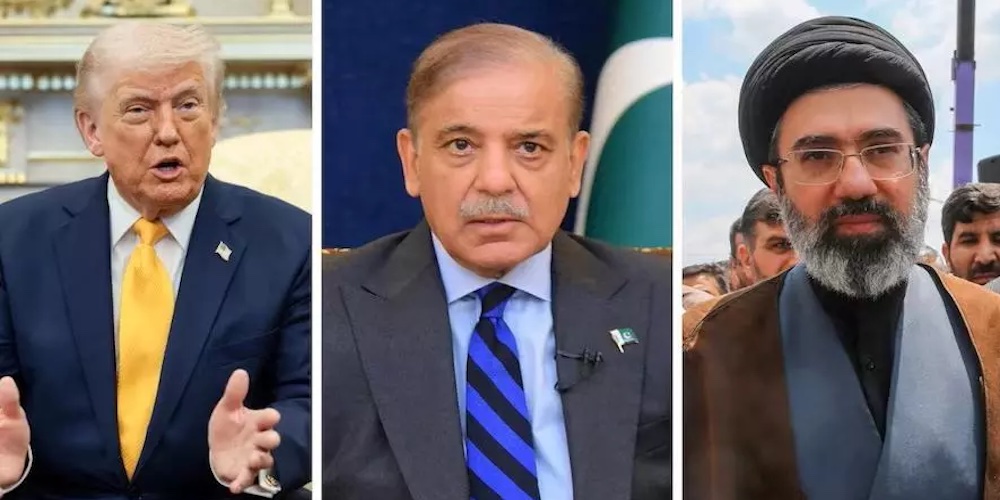
A little-known Hindi language TV channel last week showed its anchor tearing his hair, actually, before the camera and audiences, yelling, ” Why India was ‘ignored’ especially by US President Donald Trump, for the role of mediator in the Gulf war. Why Pakistan, he asked.
His anger shows the low level to which some of the TV channels have gone to get eyeballs. But worse, it betrays a misplaced sense of hurt.
Some Indians believe that India has a right to mediate in this conflict when others were also ‘ignored’. Of the many reasons, Trump, it turns out, leaned on Pakistan, and through it to China, without whom Iran wouldn’t have relented.
Pakistan has a border with Iran and is a dominant Muslim nation, the only nuclear power. It also oversees Iranian consular and commercial interests in the US. An Iranian diplomat has been functioning in the Pakistani embassy in Washington for US-Iran consultations since the two do not have embassy-level relations. India did not fit in.
Many in India are upset that Pakistan has emerged as a key driver in global diplomacy, seeking to keep talks going and sustain an uneasy ceasefire that will end on April 22, even as the blockade of the Hormuz Strait continues. It promises to be a prolonged conflict.
The fact, if unpalatable to some, is that Pakistan has made the best of this opportunity. By the weekend, the military chief, Field Marshal Asim Munir, returned from Tehran, and Prime Minister Shehbaz Sharif was back from Turkiye.
Consulting the Gulf leaders and keeping the US firmly in the loop, Islamabad is the likely venue for the second round of talks. But it has also sent troops and fighter jets to Saudi Arabia under its recent defence treaty with the Gulf biggie and its major benefactor.
Pakistan’s role becomes more crucial with China, its biggest ally, pursuing its own quiet diplomacy. So, you have a resolute Pakistan, an Iran blocking the Strait of Hormuz and testing everyone’s nerves, and an America, which has laid a larger blockade, afraid to escalate, despite Trump’s assertions and show of military might.
As things stand, the world economies that have suffered from the oil crunch must patiently await who blinks first and who grabs the fig leaf of a victory. Iran has suffered most, but is ready for more. But Trump cannot afford a longer stand-off, which he did not expect from Iran, because come November, he must win the elections to stay in control when the opposition to war is building up at the public and political levels, and so is inflation at home. If he loses that control, he becomes a “lame duck” president for his remaining presidential term.

Whatever the outcome of the talks, the strategic landscape has already been altered. Trump’s failed war has weakened the credibility of US military threats. Washington can still brandish force, but after a costly and futile conflict, such warnings no longer carry the same weight. A weary world is moving away, some of it, at least, closer to arch-rival China. Why, even India purchased Russian oil paying in yuan.
A new reality now shapes US-Iran diplomacy: with Europe keeping out and China quietly entering the game, the US can no longer dictate terms. It must sue for peace, without appearing to be, and plan an exit. Besides the domestic woes, Trump’s biggest challenge is how to ‘control’ an Israel that is angry at being excluded and getting its frustration out on the Palestinians in Gaza.
As things stand, there is no clear victory. That makes talk inevitable. Any agreement would require genuine compromise – patient, disciplined diplomacy that tolerates ambiguity, qualities rarely associated with Trump. He must stop berating the Europeans with threats to quit NATO. Moreover, he must stop attacking the Pope and stop projecting himself as Jesus.
All of this argues for tempered expectations. There is little reason to believe a second round would end differently, or that it would not again leave Iran positioned to disrupt the global economy. Although devastated, Tehran feels confident that its deterrence has been restored.
The more plausible outcome is a new, non-negotiated status quo – one not codified through formal agreement but sustained by mutual constraint. The US would stay out of the war; Iran would continue to exert control over traffic through the Strait of Hormuz; Israel and Iran would continue a low-level conflict. No need to declare: A full-scale US-Iran war would be, for the moment, averted. Until another sordid day.
So long as both sides cling to a narrative of victory, a fragile equilibrium – absent full-scale war – may yet endure. And the world may survive greater misery.
Even if the conflict ends, the economic misery will be prolonged for all. Global financial institutions are readying for the worst. For instance, the World Bank has readied support funds of up to $100bn (£74bn) – more than for the Covid lockdowns – to help economically poorer countries deal with rising energy and food costs.
Meanwhile, India can play its role, if not as a mediator or peacemaker for now. Trump called PM Modi to reassure him that “we all love you”, and Modi responded with his plea to keep the Hormuz “open and secure.” Who can disagree with both these sentiments?