A Hyperactive Trump
Amidst the explosions across the Gulf region, and death and debris they are causing, including a girls’ school where 115 have been killed, I notice a familiar name this Sunday morning. Ali Larijani, the head of Iran’s National Security Council, whom I had interviewed for The Times of India two decades back.
I recall his somewhat halting English, spoken at the end of a long day, tiring for me at least. Noticing, perhaps, from my face the difficulty he thought I may be facing in comprehending him, he readily agreed to “speak slowly”. I perked up and thanked him.
He was visiting New Delhi, and the context was the United States offering India a civil nuclear deal, despite serious reservations then being expressed in the US, among the Europeans, by the IAEA, and by India’s Left parties.
“If India needs and gets it, we are happy for India,” he said.
Other contents of the interview do not matter today. A colleague whose view I respect called it “a good one.”
Larijani’s name figures this morning as Iran is under attack by the US and Israel. The tectonic development has numbed, alarmed and silenced the world community. It shows no sign of ending soon because everyone fears that the initial “shock and awe” could escalate the conflict into something uncontrollable.
Of Iran’s allies, Russia, already involved in Ukraine, has condemned it. But there is silence in Beijing.
Leaving the details and analyses to more knowledgeable people, I return to Larijani.
Al Jazeera news network quotes Harlan Ullman, the chairman of the Killowen Group, a former US Navy officer: “If Khamenei is killed, others could emerge in his place, including Ali Larijani, the head of the country’s National Security Council.
“If Ali Larijani is still alive, he is a very formidable enemy,” Ullman said, referring to him as the designated Khamenei successor.
My other thought, although confined to the US and India, ends with the question: Is Trump’s America at war with the world? And where will this global conquest lead?”
Perhaps it explains why the Gulf is exploding.
Here it goes, for whatever it is worth this morning ……
This is the tale of two events in two cities far apart, but having global relevance, not just for India and the United States.
Last weekend, India hosted a summit on the impact of Artificial Intelligence (AI) and how best to use this new invention for the greater global good, not just for a few rich nations. French President Emmanuel Macron and Brazil’s Silva de Lulla attended. Notable attendees from the technology industry included Sundar Pichai (Google), Sam Altman (OpenAI), Dario Amodei (Anthropic), Demis Hassabis (Google DeepMind), and Mukesh Ambani (Reliance Industries).
United Nations Secretary-General Antonio Gutteres was there. So were representatives from multilateral institutions, including Sangbu Kim of the World Bank. Prime Minister Modi’s initiative was applauded.

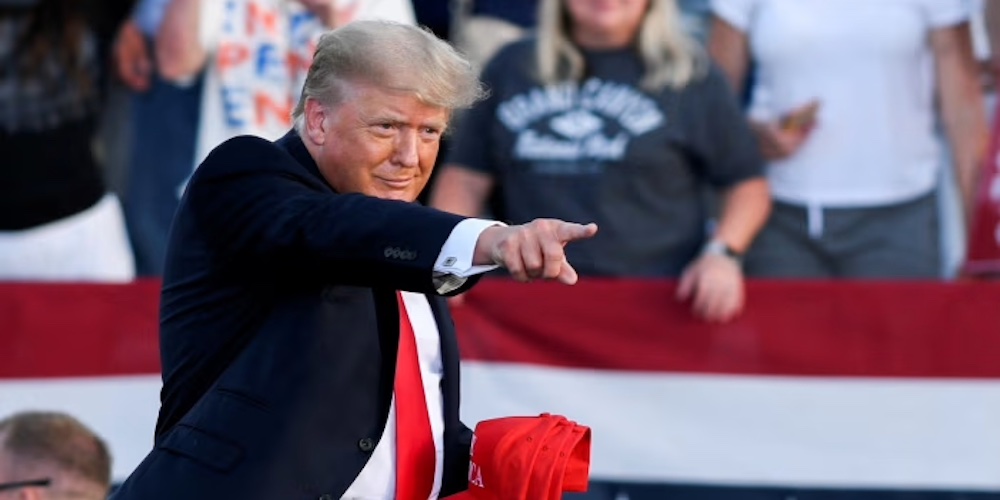
The same weekend saw US President Donald Trump in Washington, railing against just anyone he perceived as a critic and adversary. They included Indian Americans, but more importantly, the US Supreme Court judges who had declared illegal and unconstitutional the tariff regime that the Trump administration has prescribed for nations across the world.
Trump’s language was intemperate even by his own known standards. Abuse in public discourse is not alien to the US citizenry, and thanks to the media, to the world. But he used unprintable words for the judges who, by a six-to-three verdict, shot down the tariff regime and, through it, numerous deals the US has reached with individual nations.
The printable ones among the invectives included ‘fools’ and ‘lapdogs’, and the targets included some conservative judges who had ruled along with the liberals whom Trump obviously detests. Such distinctions are commonly made and discussed in the US and the Western world.
Unsurprisingly, Trump’s special target was Neil Katyal, the chief attorney of the organisation that had petitioned the highest court. And Katyal is of Indian origin! He also attacked numerous Indian-led tech-start-ups and ventures that, being tariff-hit, have joined the collective petition that Katyal represented before the apex court.
Trump’s abuse-laced attack was relentless when prominent Indian Americans were in New Delhi performing a kind of tech-knowledge ‘homecoming’ amidst their role in the US, India and elsewhere. Nadella of Microsoft welcomed Asha Sharma, the newest entrant to the hall of fame of Indian tech-achievers in the US. Applauding was Sundar Pichai of Alphabet, who was received with a big hug by the French President.
The contrast between the two events cannot be missed. In Washington, Trump was alleging ‘foreign influence’ against his tariff regimes, calling the judgment “anti-American”. In response, Katyal hailed the American system that had enabled him, the son of a migrant, to go right up to America’s highest court to appeal against the most powerful American.
Katyal succeeded in convincing the court that Trump had exceeded his presidential power. He had wilfully imposed prohibitive tariffs on the nations, small and big. Katyal said he could tell the highest court, on behalf of the American people: “Hey, this President is acting illegally. You might be the most powerful man in the world. But you still can’t break the Constitution. He also clarified that it was not against Trump, but on the law of the land; that he was working to ‘preserve’ the American Constitution. Accepting his argument, “The Framers did not vest any part of the taxing power in the Executive Branch,” Chief Justice John Roberts wrote.
How did the tariff-hit world react to this contrast? Relieved, yet confused. Trump doubled down, re-imposing the tariff at ten per cent and raising it to 15 per cent, flat, across the world. It is not a secret that the US would have to reimburse USD 130 billion already received as tariffs.
How do you deal with the world’s largest economy using trade as a weapon? How do you deal with a businessman bent on making his country, already the richest, richer?
While this economic aggression, using a trade component as a weapon, is unrelenting, Trump has readied more, through a military conflict, against Iran. His well-publicised options, reported but not denied, include eliminating Iran’s top leaders, while continuing negotiations. The world has witnessed, with few protests and no challenge of any sort, which is unlikely, the change of regime in Venezuela. No surprises left. Or, are there more in store?
Is Trump’s America at war with the world? And where will this global conquest lead?