Self-Reliance in Pulses
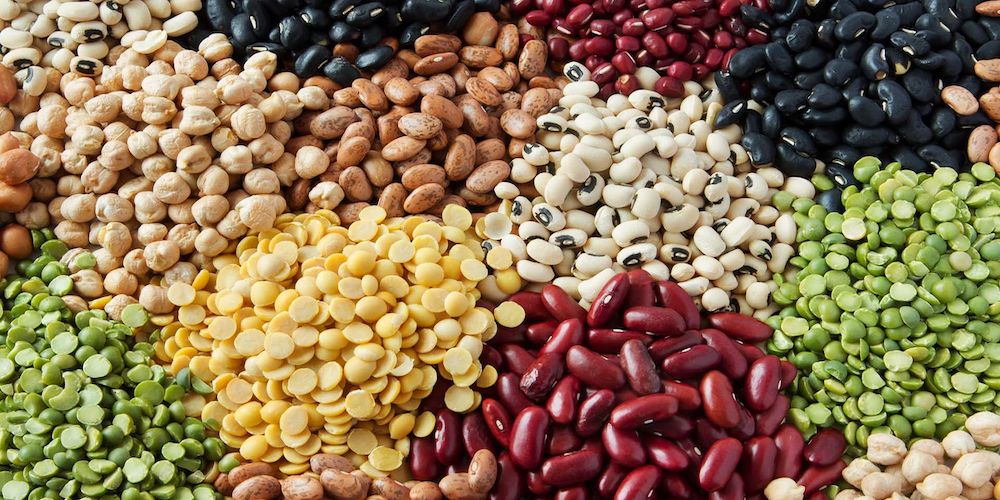
Helping pulse farmers in the country is a major national priority, as the country is the world’s largest producer and consumer of pulses, but still faces a significant supply gap. Efforts are focused on achieving self-sufficiency (Aatmanirbharta) by 2030–31 through a combination of financial support, technology, and market reforms.
The Indian government is supporting pulse farmers through the “Mission for Aatmanirbharta in Pulses” (2025–2030), a ₹11,440 crore initiative aiming to boost production to 350 lakh tonnes by 2030–31. Key support includes guaranteed 100% procurement of Tur, Urad, and Masoor at MSP, free high-yield seed kits, and advanced technology adoption, benefiting nearly 2 crore farmers.
Key Support Initiatives for Pulse Farmers
• Mission for Aatmanirbharta in Pulses (2025-2031): Focused on reducing import dependence, increasing domestic production of Tur, Urad, and Masoor, and promoting self-reliance.
• Assured Procurement: NAFED and NCCF will perform 100% procurement of, Tur, Urad, and Masoor at Minimum Support Price (MSP) for four years.
• Input Support & Quality Seeds: Distribution of 88 lakh free seed kits and 126 lakh quintals of certified seeds. Assistance is provided for nutrients, rhizobium, sprinkler sets, and plant protection chemicals.
• Technological & Financial Support:
o “One Block–One Seed Village” initiatives to boost local production.
o Subsidies for farm mechanisation.
o Use of the SAATHI Portal for data-driven monitoring and early warnings.
o Promotion of climate-resilient, short-duration, and pest-resistant varieties.
• Price Stabilisation: Import duties are monitored to protect domestic prices, such as the 10% duty on chickpeas and masur to keep prices near MSP.
• Infrastructure & Extension: Cluster-based farming approaches to enhance productivity in 111 high-potential districts.
These measures are designed to enhance farmer income, improve soil health (as pulses are nitrogen-fixing), and provide sustainable, climate-resilient agricultural practices.
Incidentally, Union Minister Shivraj Singh Chouhan has issued directions to make MSP Procurement more robust, transparent and timely.
In an extensive review meeting last week of the National Agricultural Cooperative Marketing Federation of India Ltd (NAFED), he focused on procurement arrangements for pulses and oilseeds, ensuring that farmers receive the full benefit of the Minimum Support Price (MSP), and on the effective implementation of related government schemes.
Detailed deliberations were held on the progress of procurement operations under the Price Support Scheme (PSS) and the Price Stabilisation Fund (PSF).

The Union Agriculture Minister reviewed the status of ongoing purchases, assessed operational challenges, and explored ways to make the procurement system more efficient and farmer-centric. He directed officials to further strengthen MSP procurement and make it more transparent, robust and time-bound so that farmers receive fair prices for their produce without delay.
The minister emphasised that procurement centres must be adequately equipped and well managed to prevent inconvenience to farmers. He underlined the need for smooth and hassle-free operations at procurement centres, including timely payments, proper infrastructure and clear communication regarding procurement schedules and procedures. Ensuring farmers’ trust in the government procurement system, he said, remains a top priority.
Special emphasis was laid on boosting the production and procurement of key pulses such as ‘tur’ (arhar), ‘urad’ and ‘masoor’. Strategies to enhance output and procurement of these crops were discussed, given their importance for nutritional security and for reducing dependence on imports. Deliberations were also held on the proposed six-year ‘Self-Reliance in Pulses Mission’, aimed at increasing domestic production and ensuring assured procurement at MSP.
Under the proposed mission, discussions focused on measures such as improving agronomic practices, ensuring the availability of high-quality seeds, providing technical support to farmers, and strengthening marketing and procurement mechanisms. The mission seeks to make India self-reliant (Atmanirbhar) in pulses production, reduce import dependence, stabilise domestic prices and ensure a sustained rise in farmers’ income.
Chouhan reiterated the government’s commitment to freeing farmers from dependence on middlemen by directly linking them with the government procurement system. He instructed officials to strengthen coordination with state governments to ensure smooth and uniform implementation of procurement operations. Emphasis was also placed on improving procurement and storage infrastructure to ensure safe and efficient handling of produce purchased at MSP.
Highlighting the importance of a responsive procurement mechanism, Chouhan said effective procurement and adequate storage are essential for market stability. These measures help reduce price volatility and protect the interests of both farmers and consumers. He directed that procurement planning should be proactive and aligned with production estimates to ensure timely purchases during peak arrival periods.
The meeting also reviewed NAFED’s role in procurement and market price stabilisation. The Minister stressed that NAFED must function with greater efficiency, accountability and transparency, particularly in large-scale MSP operations, and called for continuous monitoring and swift resolution of field-level issues.
Senior officials from the Ministry attended the meeting, including Secretary Devesh Chaturvedi, Additional Secretary Pramod Kumar Mehrada, Additional Secretary Maninder Kaur Dwivedi, Managing Director of NAFED Deepak Agrawal, and other senior officers. Officials briefed the Minister on procurement progress, challenges and steps being taken to improve the efficiency of MSP-based operations.