Sunny Days Ahead of Media/Entertainment Business
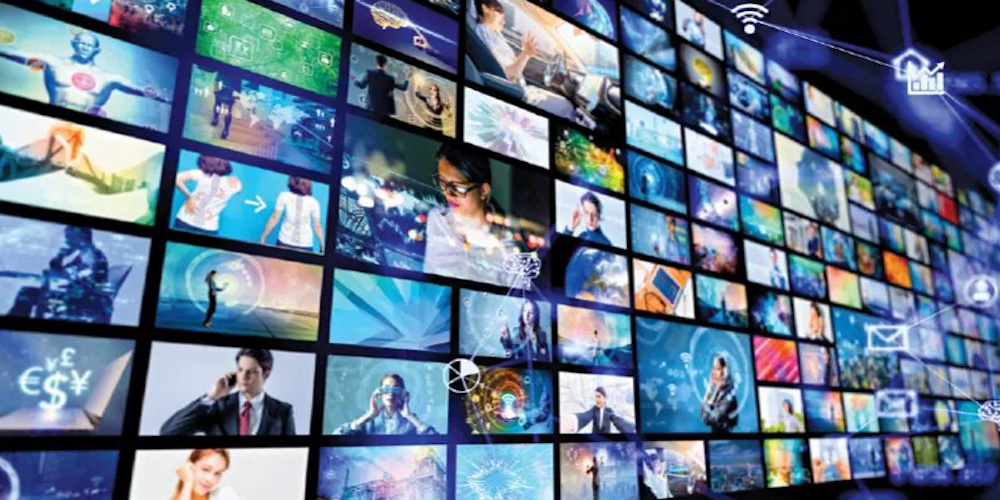
India’s Media and Entertainment (M&E) industry is a “sunrise sector” currently undergoing a historic structural shift as digital media officially overtook television in 2024 to become the largest segment. Valued at approximately ₹2.5 trillion (US$30 billion) in 2024, the sector is projected to reach ₹3.1 trillion (US$36 billion) by 2027, growing at a CAGR of roughly 7–10%.
Globally, creative industries have moved from cultural margins to economic mainstream. Across countries, they contribute between 0.5 and over 7 percent of GDP, with live entertainment generating strong spillovers across tourism and urban services. Within this global transformation, India’s creative economy is emerging as a major pillar of growth, employment, and value creation.
The creative economy includes industries where value is generated primarily from creativity, culture, technology, and intellectual property. It includes media and entertainment, animation and visual effects, gaming, live cultural experiences, and digital content platforms that operate across borders at scale. These are not peripheral cultural pursuits. They are technology-intensive, globally tradeable sectors embedded within modern services economies and international value chains.
India at Scale
• The media and entertainment sector was valued at approximately ₹2.5 trillion in 2024.
• Digital media accounts for around one-third of sector revenues, reshaping production and distribution models.
• High-growth segments are scaling rapidly:
o Animation and visual effects: ~₹103 billion
o Gaming: ~₹232 billion
o Live entertainment: ~₹100 billion+
• The sector supports over 10 million livelihoods, directly and indirectly.
• Annual output stands at approximately ₹3 lakh crore.
This trajectory reflects more than sectoral expansion. It signals the consolidation of creativity as a strategic capability, linking economic growth with global influence in an increasingly platform-driven world. This trajectory reflects more than sectoral expansion. It signals the consolidation of creativity as a strategic capability, linking economic growth with global influence in an increasingly platform-driven world.

Key Market Segments & Performance
• Digital Media & OTT: Now the industry leader, contributing 32% of total revenue. India is the world’s fastest-growing OTT market, with paid video subscriptions reaching 111 million across 47 million households in 2024.
• Television: Despite losing its top spot, TV remains a massive pillar with a reach of 210 million households. While linear TV advertising has seen slight declines, Connected TV (CTV) is booming, expected to reach 40–50 million smart TVs by 2025.
• Filmed Entertainment: India remains the world’s largest film producer by volume (1,600+ films in 2024). A major trend is the rise of “Pan-Indian” films and the dominance of regional cinema (Malayalam, Telugu, Gujarati), which outperformed Hindi releases in 2025.
AVGC-XR: Engines of Digital Creativity and Innovation
Animation, Visual Effects, Gaming, Comics and Extended Reality, collectively referred to as AVGC-XR, represent the most technology-driven frontier of the creative economy. Behind every blockbuster visual effect, immersive game world, or interactive digital experience is a generation of artists, coders, designers, and engineers working at the intersection of imagination and advanced computing. These industries combine creative talent with real-time rendering, immersive design, and digital production tools that now power global film, streaming platforms, advertising campaigns, and virtual production pipelines.
Gaming has evolved into a mainstream digital medium woven into daily life, while animation and VFX shape the visual language of global entertainment. Together, these sectors convert creativity into scalable intellectual property, positioning AVGC-XR and gaming at the heart of the next phase of the global creative economy.
Overall, one can say that across classrooms, coding labs, film sets, concert arenas, and digital platforms, a new creative ecosystem is coming together. What connects these spaces is not just talent, but purpose. Institutions are being strengthened, markets are being organised, and creators are being connected to capital and global audiences. Policy is no longer separate from practice; it is shaping the conditions that allow imagination to become livelihoods, enterprises, and international partnerships.
The impact is already visible. Young artists are entering global production pipelines. Startups are building intellectual property that reaches audiences beyond borders. Cities are hosting events that attract international circuits. Creative industries are becoming channels through which India creates jobs, exports services, and strengthens its global presence.
Continued investment in skills, platforms, and institutions will determine how effectively creativity turns into lasting economic strength. As global competition increasingly moves through culture, content, and digital ecosystems, India is positioning its creative economy not as a side sector, but as a strategic capability. In doing so, it is ensuring that imagination is not only expressed, but organised — and that creativity becomes a steady driver of growth and global engagement in the decade ahead.