Feeling the easterly wind with cautious optimism
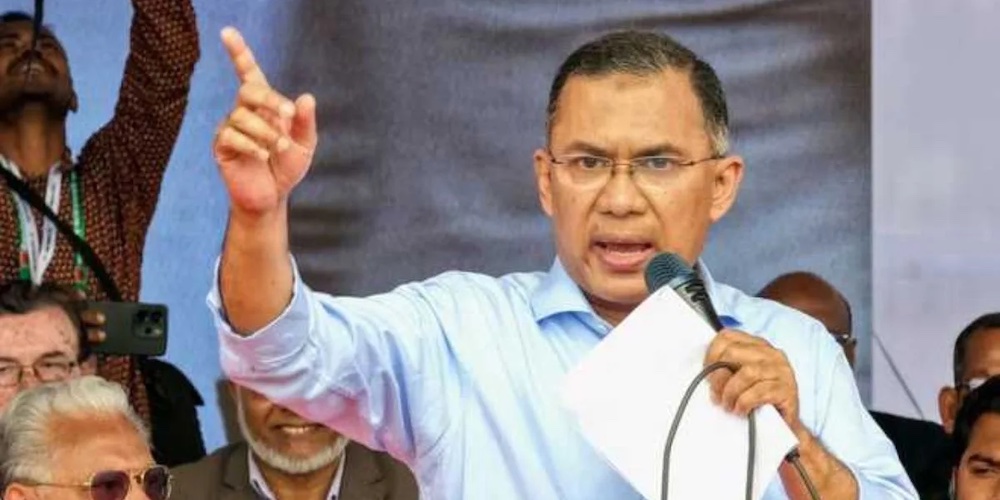
An election provides the best antidote for people. In India’s neighbourhood, Myanmar indicate no change in the military dominance over the civilian. But those held after mass protests in Sri Lanka and Nepal have restored a measure of stability.
In Bangladesh, elections have always determined the course in Bangladesh. The February 12 polls follow that pattern. Twenty months of turmoil have ended with a decisive electoral mandate.
This has also sent positive vibes for its people and for the region. With power gained, the task is now to reconcile conflicting forces and gain stability.
To begin a journey that raises cautious hope, the winner, Tarique Rahman, was sworn into office by President Shahanuddin Ahmed. Elected by the previous parliament, Ahmed is the only survivor of the political wreckage caused by the ouster of the Sheikh Hasina regime and fulfilled a constitutional necessity.
Raising cautious hope is that the winner, Tarique Rahman, called for an end to what he called the politics of vengeance and for adherence to the rule of law. To the extent he succeeds, it will help curb, if not end, the bloodshed and acrimony that preceded and followed the ouster of the longest-serving Prime Minister, Sheikh Hasina, in August 2024.
The decisive win and outreach received a conciliatory response from Sajib Wazed, Hasina’s American-based son. He wished Tarique well, adding, “We will talk to him.”
Assuming Tarique may respond likewise, this is truly commendable. A volatile people, Bangladeshis generally follow the winner-takes-all norm. Yet, the future is uncertain for the Awami League, the largest and oldest party, which was barred from contesting the polls.
Hasina’s exile in India has complicated bilateral ties. Tarique-led Bangladesh Nationalist Party’s Secretary General, Mirza Fakhrul Islam Alamgir, now a minister, said this would not “deter” Bangladesh from pursuing its ‘broader’ relations with India.
The irritant may persist since India is unlikely to jettison Hasina, convicted and sentenced to death in her home country. She cannot return home. No other country, so far, is ready to host her. How this is resolved will need to be seen.
With a mixed message for India from the election, PM Modi has invited Rahman to visit India with family, hoping to end the chill in bilateral relations. Such a visit is unlikely to take place soon, to allow the anti-India discourse unleashed during the interim regime, which was a factor during the electioneering.
Respecting the sensitivities of those in power in Dhaka, Delhi used to shun the opposition. Correcting this past mistake, Foreign Secretary Vikram Misri met the Jamaat-e-Islami’s Amir, now the main opposition. The Jamaat’s genes are anti-India, though. With these two steps, India has taken the best possible steps.
The development of the two neighbours is closely linked, and they need each other. India crucially requires ensuring security in and better access to its northeast. And although memories of the “shared history” of the 1971 liberation have dimmed with time, they will not be fully discarded. Tarique’s father, President Ziaur Rahman, was a liberation war hero and had lent a ‘nationalist’ ethos to the BNP.
Uncertain, though, is whether, as it had happened under Tarique’s mother, Khaleda Zia, the new regime will return to allowing camps for the Islamists and insurgents from India and permit the rise of Islamist militancy during 2001-2006.

Such fears are not misplaced, as the elections indicate the rise of the Islamists. Jamaat-e-Islami, banned for many years and revived last year, has won an unprecedented 78 seats, a fourth of the total. The Bangladesh Jamaat is the successor of the one in Pakistan that had actively opposed the 1971 freedom movement. As in Pakistan, Bangladesh’s Islamists enjoy social acceptance, but have never before gained such electoral success.
This must raise concerns in India’s east and in the northeast. Mohammed Yunus’ parting gift before he stepped down was showing Bangladesh’s readiness to “guard 7 sisters” — India’s 7 north-eastern states. Given its location and size, India is and shall remain a factor, and India-bashing will continue by many, either for domestic compulsions or to please the mentors abroad.
The rise of radical Islam is risky even for Bangladesh, which, very much an Islamic nation, thanks to its pride in culture and the Bengali language that embraces both Tagore and Qazi Nazrul Islam, has traditionally followed moderate Islam. It remains to be seen how this evolves amidst Jamaat’s rise.
Tarique is the first elected male leader after 35 years of political rivalry between Hasina and Khaleda. In political terms, the election marks the rise of the “Zia dynasty” at the expense of the Sheikhs’, ending decades of rivalry. In ideological terms, BNP, the Centre-Right, and Jamaat and Islamists of the Far-Right cornered the votes of the Centre-Left Awami League, more towards the BNP. Only ‘nationalism’ divides the two big winners.
Adding to the complexity is the victory of six student leaders who had led protests against the Hasina government. Differences have developed over the “July Charter” through which the students want to perpetuate their role in Hasina’s ouster. Yunus promoted them and their National Citizens’ Party.
A referendum seeking political and constitutional ‘reforms’, proposing adding more power to the president’s office at the prime minister’s expense, was held simultaneously with the elections. Over 60 per cent voted ‘for’ reforms. But the BNP refused to take the oath to enforce them. Its differences with Jamaat-backed students could escalate and cause political instability.
During the election campaign, Tarique had sounded conciliatory on foreign policy. “Neither Delhi, nor Pindi”, he said of India and Pakistan, maintaining that his policy would not be “country-specific”. Enforcing it in the government will be challenging.
He has arrived with much Western goodwill, but can neither ignore the Gulf, being a Muslim nation, nor can he ignore China, the largest economic and defence partner. China is ready to take up big projects, like the Teesta river development that India could not.
To uplift an economy in trouble, China and the Gulf can help, and so will America and Europe. But there is no bypassing India. The same is equally true for India, which should adopt a cautious and long-term approach and some sagacity. Politics crept into many economic areas, like the Adani Power Company deal.
Sharing a 4,000 km border, issues are bound to crop up. There are sensitivities on both sides that need mature management. Time starts now.
This essay can best be ended by recording a missed opportunity for both. In 2005-06, at then-Prime Minister Manmohan Singh’s request, Tata Group chief Ratan Tata travelled to Dhaka with industry and infrastructure proposals worth USD 3 billion. Bangladesh hesitated and then gave them up as ‘risky’. Will Tarique act better and faster, since economic relations are the best way to promote good-neighbourly relations?