END OF AN ERA & A “MOTHER-IN-LAW DEAL”
For many of my generation who witnessed the birth of Bangladesh — from far, near or from a vantage point — an era has ended—the nostalgia of 1971 — of the grim events that led to it through that year’s conflict. And a victory that was as diplomatic as it was military, which caused geopolitical tumult and added a nation to the world map, shall always remain. Fifty-five years on, Facebook for one, continues to have posts recording, and re-living what happened, or did not or should have happened.
I have always said there will never be another 1971. And lest it be forgotten in the current times, there will never be another Indira Gandhi. The daughter of a Hindu, married to a Parsi, led a poverty-stricken nation to victory. Her team included a Sikh foreign minister and a Dalit defence minister. A Parsi general, a Brahmo Air Force Chief, and a Sikh Army Commander led the military campaign in the east to a victory planned by a Jew. I am only elaborating on what TIME magazine said.
In Jaisalmer in Rajasthan, I missed the historic surrender in Dhaka (then Dacca) by hundreds of miles. But fate and work took me to Bangladesh, to witness and write about another round of the tumult, of the assassination of its founding leader, Sheikh Mujibur Rahman.
“It was the best of times, it was the worst of times”, as Charles Dickens said. I learnt in those two years what I would have taken ten years anywhere else. So, it is nostalgia-plus.
Not a politician, diplomat or soldier, a journalist, however, does not live on it. The task is to march on and watch people move on in their lives, as individuals and as nations, for whom time never stands still. Not for me, having witnessed 1971, then 1975. And from a distance, now.
It certainly is the end of an era. Old equations have changed, and may change again. The geography of two neighbouring nations is constant, but geopolitics is not. Not directly affected by them, this scribe can afford to move on, with nostalgia intact, but without bitterness and with good wishes to all.
It is a transactional world, after all, and what better way is there than to record a “Mother-in-Law Deal?
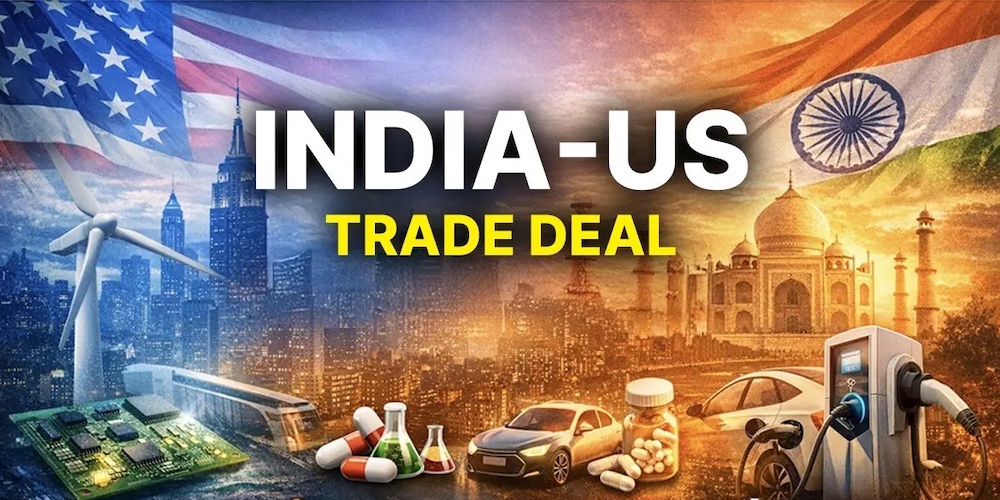
If India’s free trade agreement with the European Union (EU) has been called the “Mother of All Deals”, what would be the one with the United States? Given the role, good or otherwise, the mother-in-law plays in Indian families, should it not be called the “mother-in-law deal?
Many, in India at least, would approve, since President Donald Trump pressured, berated, even insulted, his “great friend”, PM Modi and India, an ally. They note that before Trump introduced the typical businessman’s term ‘deal’, trade agreements had more respectful terms to describe economic relations between two or more countries.
The mother-in-law description seems appropriate, also because the Europeans, wary of Trump’s disruptions — peace in Ukraine relying on Trump’s perceived pro-Russia formulae, his eying Greenland, and berating how the Europeans govern themselves, concluded the FTA with India, which had been under prolonged negotiations. And India, called an unreliable ally by many officers in Trump’s team and his MAGA supporters, grabbed it. It feted the EU leaders as Chief Guests at the Republic Day celebrations. The jubilations in New Delhi and in the European capitals must have invoked the jealous “MIL Sentiment” in Trump.
Whatever the merits of the deal, for India, the US and both, one must note that Modi fought through a diplomatic “Chakravyuha” with an ally several times stronger, without India having the clout China has. His hurdles included personal bonhomie with a man who returned to the White House with a radically changed worldview and a disruptive global plan of action. Repeatedly, Modi had to dodge meeting Trump at international meetings to avoid being cornered.

Last May’s brief Indo-Pak conflict derailed what could have been a trade-and-commerce bargaining arena. It was further complicated by Trump switching his affection to Pakistan, upstaging India in the South Asian region. Tactically, Pakistan did better than India by pandering to Trump’s Nobel Prize ego and offering his family lucrative business.
Holding his ground, Modi fielded NSA Ajit Doval to plain-speak to Washington. India valued its strategic autonomy and, Doval told the Americans, it was even ready to sit out Trump’s three more years in the US presidency. Assuming that this report, made public after Trump’s February 7 tariff announcement, is true, the deal took four more months to be announced.
The prolonged hiatus in bilateral ties and the deal’s announcement ended in part with the arrival of Sergio Gor as the new ambassador. American analysts have said that he was hurriedly dispatched to get the relationship back on track, and because of his political clout, the White House—including Trump — didn’t stand in the way.
They also said Trump has been running too fast. With high tariffs contributing to rising food inflation in the US, Trump might also have domestic political compulsions.
Granting that a trade deal is a give-and-take exercise, the delay amidst acrimony has triggered numerous misgivings in India, and they will not die easily. Even before the lists became public, credible Indian economists warned about the US reneging on the term and saw room for future arm-twisting. Such is the trust level, but none admit it.
It has raised a political storm. Parliament is rendered ineffective. There is a sharp divide between the farmers’ bodies, who observed a strike on February 12, and corporations and bodies engaged in trade in farm products. The latter have hailed the deal and commended the government.
One of the biggest irritants that had bedevilled the deal for months, Russian oil, is finally out, and American-controlled and traded Venezuelan oil is in. While India and even Russia may claim otherwise, the largest Indian oil importer has switched. Trump has ordered a team to monitor India’s oil trade. He can reimpose heavy tariffs if India is found buying Russian oil “directly or indirectly.”
Now, some comments on the pact’s nuts and bolts. There is a clear preoccupation with the elite on both sides: Indian diamonds for Americans and dry fruits for Indians. The agreement covers wines and spirits. Harley-Davidsons, for which Trump had campaigned earlier, each worth a million rupees, will ply on the narrow city streets, driven by rich Indian youths.
More flights both ways, yes. But dry fruits? To tell the truth about the Indian reality, Rajiv Gandhi was pressured to import California almonds way back in 1987. And pistachios have since entered, at best, only upper-middle-class homes. Millions of Indians still can’t afford them. Yet, these imports rose 34%, touching $1.3 billion by November 2025. Duty concessions under the agreement will accelerate this trend.
While the government has repeatedly maintained that the Indian agricultural sector would remain unaffected, the details show that this is only partially true. It opens India’s market to select US farm products through duty cuts and import facilitation, while excluding staples like wheat, rice and dairy.
The US aims to export goods worth $100 billion annually to India. Bilateral trade currently stands at around $130 billion, with India enjoying a surplus of nearly $40 billion. Harvir Singh, editor-in-chief of “RuralVoice.in”, a prominent portal on farming, says Washington’s objective is to narrow, and eventually eliminate, this imbalance, potentially pushing total trade to $200 billion.
He cautions that “in an era of geopolitical uncertainty, over-reliance on a single trading partner carries risks. India already sends more than 20% of its exports to the US. China, by contrast, has gradually reduced its dependence on the American market. That diversification explains why Beijing was eventually able to force compromises when the US imposed reciprocal tariffs.”