Casteist Politics, Egalitarian Aspirations, and the Role of Hindutva
Caste in post-1947 India has evolved significantly from its rigid form in 18th- and 19th-century society, when atrocities and casteism were rampant. Research by historian Meenakshi Jain reveals that this ossification of castes — leading to severe oppression — stemmed from British colonial policies designed to fragment Hindu society and secure unchallenged rule.
The Congress party viewed caste oppression primarily as a class issue, believing economic and educational affirmative action would render caste obsolete. They were partly right: caste’s social grip weakened considerably. Yet they erred in two ways. They were partly wrong because they failed to anticipate caste’s emergence as a potent tool for political mobilisation. Congress did not leverage caste for a winning social coalition. It forged an alliance of Dalits, Brahmins, and Muslims that sustained its hegemony until the mid-1960s. Interestingly, this combination did not have caste as the basis. The top Congress leadership came from Brahmins.It had a historical commitment to address the serious deprivations of Dalits.It used Muslim insecurity to project itself as their saviour.
Marxists similarly subsumed caste under class analysis. Exceptions like Sharad Patil of the CPIM and Gail Omvedt, who blended Ambedkarite and Marxist frameworks, were rare; most communist ideologues dismissed caste’s independent role.
Lohiaites pioneered caste’s politicisation, serving as vehicles for intermediate castes. Their influence, however, remained confined to Uttar Pradesh and Bihar, where these castes boasted substantial numbers and a robust middle class.

Affirmative action for SCs, STs, and OBCs has birthed a diversified middle class with two key outcomes. Socially, it has diluted caste hierarchies. Politically, this new middle class adopts a national lens on issues—evident in phenomena like SP voters in Uttar Pradesh supporting BJP in national polls while backing SP locally. This trend spans the country.
Caste oppression historically thrived in regions dominated by upper- or intermediate-caste landed gentry. Land reforms, educational access for marginalised groups, and urbanisation have rendered caste socially irrelevant. Yet all political parties’ cynical exploitation of caste for electoral gains has revived it as “casteist politics.” This breeds both persistent discrimination and reverse casteism in universities and elsewhere.
Such politics cannot eradicate the caste system; it entrenches and fragments society, pitting groups against one another to the detriment of Hindu society and the nation at large.
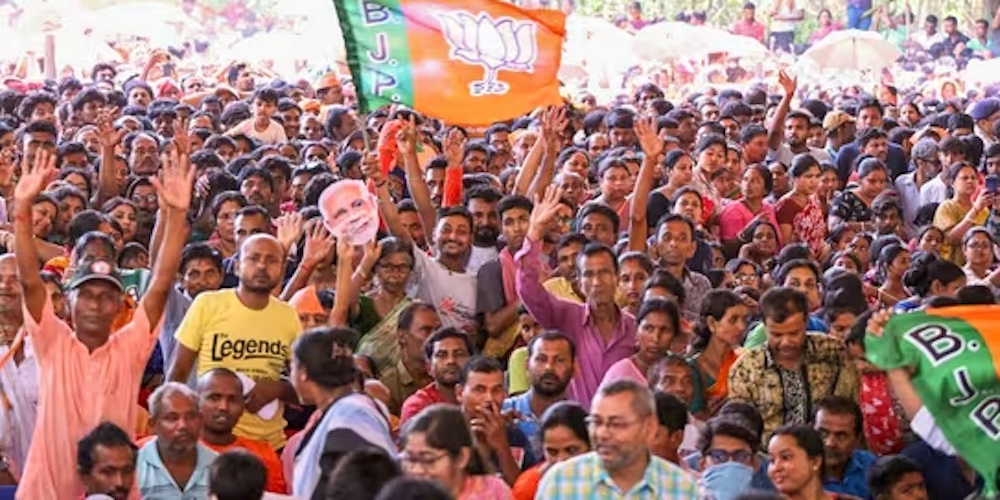
Historical models offer a better path. Sree Narayana Guru combated caste oppression by fostering unity across levels. Veer Savarkar early recognized caste equity’s necessity for Hindu samaj cohesion. The BJP, too, harnessed Mandal politics alongside Hindutva to empower marginalized castes and unify Hindu society—essential for a cohesive nation.
The current BJP leadership’s dalliance with petty caste politics — whether for woke validation or short-term gains — betrays the legacies of saints like Adi Shankara and Sree Narayana Guru, as well as the party’s own five-decade record of social integration.