Historic Verdict
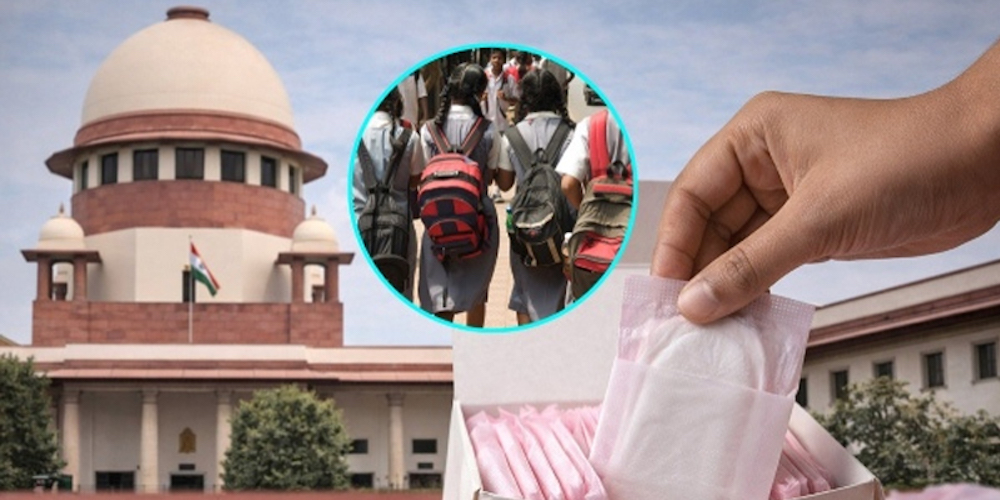
SC Issues Slew Of Directions To Ensure Menstrual Hygiene Facilities To Girl Students In Schools Across India
While holding that the right to menstrual health is a part of the right to life under Article 21 of the Constitution, the Supreme Court in a most learned, landmark, logical, laudable and latest judgment titled Dr Jaya Thakur vs Government of India & Ors in Writ Petition (C) No. 1000 of 2022 and cited in Neutral Citation No.: 2026 INSC 97 that was pronounced just recently on January 30, 2026 in the exercise of its original civil jurisdiction has directed all the States and Union Territories to put in place Menstrual Hygiene Management (MHM) measures, including gender-segregated toilets and free sanitary napkins, in all governments as well as private schools. It must be noted that the Bench of Apex Court comprising of Hon’ble Mr Justice JB Pardiwala and Hon’ble Mr Justice R Mahadevan while issuing a slew of most pragmatic, progressive and pertinent directions asked the Centre, States and UTs to ensure compliance within three months. It must be laid bare that this most commendable judgment came on a PIL that had been filed by a petitioner named Jaya Thakur, through Advocate Varun Thakur, seeking directions to the Centre, States and Union Territories to ensure the provision of free sanitary napkins for girls studying in Classes 6 to 12, separate toilet facilities and to undertake awareness programmes.
It merits noting that while citing provisions of the Right to Education Act, the Apex Court also warned of stringent consequences for non-compliance, including the de-recognition of private schools and holding State Governments directly accountable for failures in public institutions. This is primarily because as is pointed out in para 113 of this robust judgment that, “Further, when schools fail in providing appropriate disposal facilities, girls would be forced to carry used menstrual products with them, or dispose of them in unsafe or undignified ways. The fear of being ridiculed lingers and creates a disincentive to attend school during this time. The lack of awareness and education regarding menstruation exacerbates these barriers by fostering stigma and silence within school spaces. Where menstruation is not openly acknowledged or discussed, girls are less likely to seek support from teachers or peers.” It merits just no reiteration that this further leads to an increased drop out from schools and this recent judgment will definitely go a long way in ensuring that girls don’t drop out from schools if implemented strictly in schools!
Most commendably, the Apex Court Bench while issuing a slew of most pragmatic, progressive and pertinent directions strictly asked the Centre, States and UTs to ensure compliance within three months encapsulates in para 173-175 what constitutes the cornerstone of this notable judgment postulating precisely that, “173. Having exhaustively discussed the constitutional and the statutory framework as regards the issue at hand we find it appropriate to direct the following:
(I) As regards the “toilet and washing facilities”, we direct that:-
(i) All States and Union Territories shall ensure that every school, whether Government-run or privately managed, in both urban and rural areas, is provided with the functional, gender-segregated toilets with usable water connectivity.
(ii) All the existing and newly constructed toilets in schools shall be designed, constructed, and maintained so as to ensure privacy and accessibility, including by catering to the needs of children with disabilities.
(iii) All school toilets shall be equipped with functional hand-washing facilities, with soap and water available at all times.
(II) As regards the “availability of menstrual absorbents”, we direct that:-
(i) All States and Union Territories shall ensure that every school, whether Government-run or privately managed, in both urban and rural areas, provides oxo-biodegradable sanitary napkins manufactured in compliance with the ASTM D-6954 standards free of cost. Such sanitary napkins shall be made readily accessible to girl students, preferably within the toilet premises through sanitary napkin vending machines, or, where such installation is not immediately feasible, at a designated place or with a designated authority within the school.
(ii) All States and Union Territories shall ensure that every school, whether Government-run or privately managed, in both urban and rural areas, establish Menstrual Hygiene Management (MHM) corners. Such MHM corners shall be equipped with, including but not limited to, spare innerwear, spare uniforms, disposable bags, and other necessary materials to address menstruation-related exigencies.
(III) As regards the “disposal of sanitary waste”, we direct that:-
(i) All States and Union Territories shall ensure that every school, whether Government-run or privately managed, in both urban and rural areas, is equipped with a safe, hygienic, and environmentally compliant mechanism for the disposal of sanitary napkins, in accordance with the latest Solid Waste Management Rules.
(ii) Each toilet unit shall be equipped with a covered waste bin for the collection of sanitary material, and cleanliness and regular maintenance of such bins shall be ensured at all times.

(IV) As regards the “awareness and training about menstrual health and puberty”, we direct that:-
(i) The National Council of Educational Research and Training (NCERT) and the State Council of Educational Research and Training (SCERT) shall incorporate gender-responsive curricula, more particularly, on menstruation, puberty, and other related health concerns (PCOS, PCOD, etc.), with a view to break stigma and taboo associated with menstrual health and hygiene.
(ii) All teachers, whether male or female, shall be adequately trained and sensitized on menstrual hygiene, including appropriate ways of supporting and assisting menstruating students.
(iii) Information regarding the availability of Jan Aushadhi Suvidha Oxo-Biodegradable Sanitary Napkin shall be widely disseminated through advertisement in social media, print media, radio advertisement, TV advertisement, cinema advertisement, and outdoor publicity like bus queue shelter branding, bus branding, auto wrapping, wall paintings.
(iv) The child helpline set up by the National Commission for Protection of Child Rights in furtherance of Rule 26 of the RTE Rules be disseminated forthwith through social media, print media, radio advertisement, TV advertisement, cinema advertisement, etc.
174. The District Education Officer (DEO) is directed to conduct periodic inspections, preferably once in a year, of school infrastructure, particularly with regard to toilet and washing facilities, availability of menstrual absorbents, sanitary waste disposal mechanisms and training / awareness measures undertaken by the concerned school. Whilst conducting such periodic inspections, the DEO must mandatorily obtain anonymous feedback in the form of a tailored survey from the students themselves and ensure that any further action taken pursuant to such a periodic inspection gives due regard to the responses received from such a survey.
175. The aforementioned action taken by the DEO must be in accordance with Section 18 of the RTE Act read with Rule 16 of the RTE Rules. Additionally, for the purpose of ensuring that transparency and accountability is fixed on part of both the DEO and the concerned school respectively, the DEO must annex a copy of the report of the periodic inspection and a copy of the consolidated responses received from the student survey along with the notice which is to be issued under Rule 16(1)(a) of the RTE Rules.”
It is worth noting that the Bench notes in para 176 that, “The National Commission for Protection of Child Rights (NCPCR), or, as the case may be, the State Commission for Protection of Child Rights (SCPCR), is requested to oversee the implementation of the aforesaid directions. In case of non-compliance, the NCPCR and SCPCR shall take necessary steps as provided under Sections 15 and 24 of the Commissions for Protection of Child Rights Act, 2005, respectively. Section 15 of the said Act vests the Commissions with the power to recommend that the concerned Government or authority take appropriate action. Thus, the powers of the DEO and the concerned Commission are not overlapping.”
For sake of clarity, the Bench then clarifies in para 177 observing that, “We do not say for a moment that the steps taken by the States at present be discontinued in view of the aforesaid directions. These directions, along with the Union’s Menstrual Hygiene Policy for School Girls, shall operate as mandatory standards in addition to the steps being taken by the States through its policies, schemes, programmes etc.”
Further, the Bench then directs and holds in para 178 that, “Considering the nature of the case, the Union will have to satisfy us on substantial compliance. In this regard, we, therefore, issue a continuing mandamus. The Union shall also ensure upon the compliance of our directions and guidelines in all States. It will be for the Union to also apprise us on the compliance by all the States.”
Notably, the Bench then furthermore mandates in para 179 directing and holding that, “The Union of India and all the States and Union Territories respectively shall ensure that the aforesaid directions are strictly complied with within a period of three months from the date of the pronouncement of this judgment.”
Most remarkably, the Bench on a parting note then hastens to add in para 180 noting that, “Before we part, we would like to say something on the issue we have addressed. This pronouncement is not just for the stakeholders of the legal system, it is also meant to be for the classroom where girls hesitate to ask for help, it is for the teachers who want to help but are restrained due to lack of resources, and it is for the parents who may not realize the impact of their silence, and for the society to establish that progress is measured how we protect the most vulnerable. We wish to communicate to every girl child, who might have become a victim of absenteeism because her body was perceived as a burden, that the fault is not hers. These words must travel beyond the courtroom, law review reports, and reach the everyday conscience of society at large.”
What’s more, the Bench then also further directs and holds in para 181 that, “The Registry shall forward one copy each of this judgment to the following:-
(i) All the High Courts;
(ii) All State Governments/Union Territories through Secretary, Ministry of Health and Family Welfare, Government of India;
(iii) Secretary, Ministry of Education, Government of India;
(iv) Secretary, Ministry of Drinking Water and Sanitation, Government of India;
(v) Secretary, Ministry of Women and Child Development, Government of India.”
Finally, the Bench then concludes by aptly directing and holding in para 182 that, “We treat this matter as part heard. The Registry shall notify this matter after three months alongwith the compliance report on behalf of the States and Union Territories before this very Bench.”
In sum, it is most heartening to note that the Apex Court in this latest judgment has made it crystal clear that access to menstrual hygiene is an integral part of a girl child’s right to life, dignity, health and education. The top court has also issued a comprehensive set of mandatory directions to all States as discussed hereinabove which have to be complied by the States and Union Territories. It is most gladdening to see that the top court noted that, “A period should end a sentence – not a girl’s education” and plainly held that the government bears a positive obligation under Article 21 of the Constitution to protect the right to health, particularly the menstrual health of girl children. Very rightly so!