Sporting Boycotts Rarely Succeed
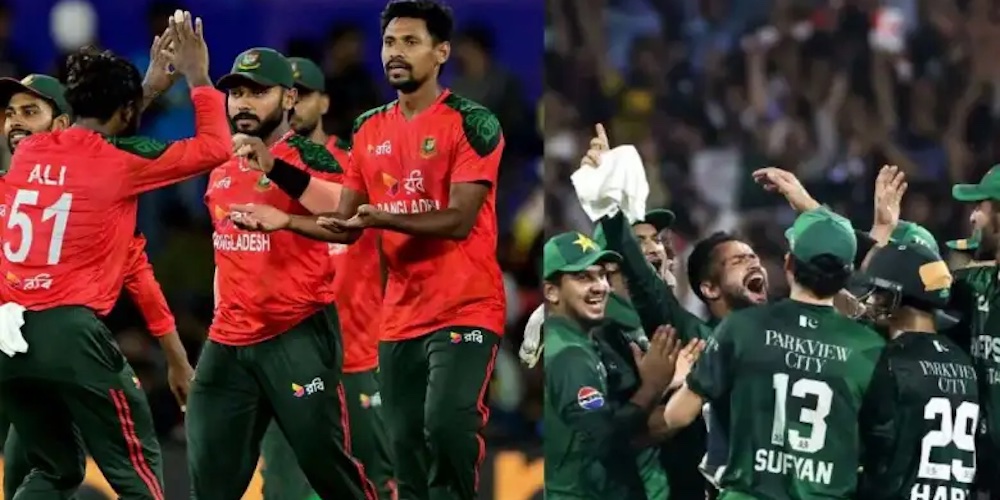
The recent Bangladeshi decision to withdraw from the 2026 T20 World Cup has led to considerable discussion in India about the future of the game. The actual fact is that sporting boycotts happen all the time and they have a mixed record.
Background
The 1976, 1980, and 1984 Olympics faced boycotts by various nations but all three megaevents took place and were sporting and media successes. The 1980 Moscow Olympics was reviled by the western press but even the boycott by the United States and some of the western nations did not lead to a cancellation of the mega event.
More effective was the sporting boycott of South Africa which took about twenty years to properly implement. In the early 1960s, African activists successfully worked to have apartheid South Africa banned from the International Olympic Committee. Later, grassroots movements in England (1970) and Australia (1971) led to the cancellation of the South African cricket team’s tour of these countries. International rugby took longer to toe the line and it was only after a disastrous tour of New Zealand by the Springboks, which tore apart the nation, that the South Africans were banned from the global game.
While the boycott of South Africa was valid on moral grounds, few other boycotts have had an impact on the international sporting system. Boycotts did not diminish the Montreal, Moscow, and Los Angeles Olympic games and the latter two met with condemnation by some of the athletes in the countries that were staying away from the megaevent. So what does this say about the Bangladeshi boycott of the World Cup?
The Bangladesh Boycott
Bangladesh’s problem is that it neither has the star power nor the financial power where its withdrawal will have an impact on the tournament. The four teams with star power are India, Australia, South Africa, and England. Financial power rests primarily with India as even Cricket Australia in October 2025 reported a $7.34 million loss despite a financially successful tour by India in the 2024-2025 season.
In terms of finances, the Bangladesh board cannot have a long term dispute with the super-rich BCCI because without game time against the Indian cricket team Dhaka would not get sufficient revenues. Next year’s Asia Cup in Bangladesh will, therefore, be a flop if India does not participate. After all, India provides eighty percent of the ad revenues in global cricket making it the most lucrative market for the game.

Worse, a Bangladesh team that does not participate will not be able to show off its new players to the scouts of the various domestic T20 leagues around the world. A player who performs well in the World Cup will find employers in the American, West Indian, Dubai, England, and Australia leagues. More importantly, a good performance would have led to being selected for the richest tournament of all — the IPL.
Implications for India
For India, a Bangladeshi or even a Pakistani boycott matters little since the television viewership will be very high for the super 8 part of the tournament and for games between the other powerhouses of international cricket. Even for an India-USA game fans will attend in large numbers or tune in to show their support for the Indian team. Consequently, the tournament will reap a healthy profit and Scotland will be grateful that its cricketing coffers were filled because of the Bangladeshi pull-out. Similarly, if Pakistan withdraws, the Ugandan cricket team will get a large paycheck for having played in the tournament.
At a cricketing level, one needs to remember that T20 tournaments do produce major upsets, like the USA beating Pakistan in the last T20 World Cup, and one should hope that such a surprising outcome comes in at least one of the games in the tournament.
In the long term, however, India cannot exclude Pakistan and Bangladesh from megaevents on Indian soil since New Delhi is hosting the 2030 Commonwealth Games and has aspirations to host the 2036 Olympics. Both Pakistan and Bangladesh are members of the Commonwealth and the Games, while smaller in scope than the Olympics, have plenty of events where both countries will qualify to participate. Expect Pakistanis and Bangladeshis to compete in the track and field events. They will also participate in Cricket, Table Tennis, Hockey, Para-Athletics, Weightlifting, and Boxing. The two countries will also participate in Badminton, Squash, and Kabaddi.
The problem for the Indian sporting administrators is that while in a World Cup you can move games for a single team to another country, it would be impossible to move 10-12 events to another nation in order to accommodate these two nations. Doing so would mean that the megaevent lost all meaning as did the value for Ahmedabad of being the host city.
The advantage for India is that it has four years to figure out how to accommodate the Bangladeshis and Pakistanis and allow them to participate in different events on Indian soil. To not do so would mean that India is unlikely to be awarded more prestigious megaevents like the football World Cup or the Olympics. For a country that seeks greater sporting glory this would be unacceptable.