Controlling the Seas
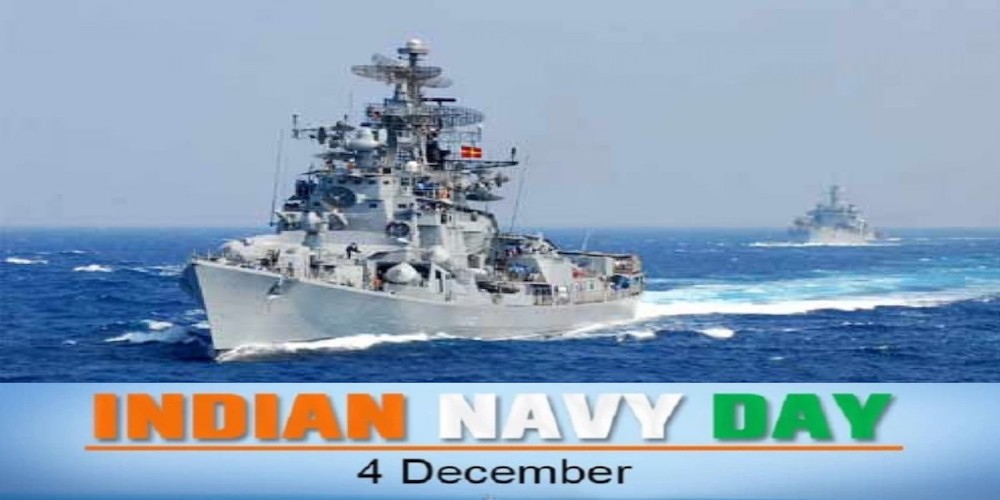
As the Indian Navy celebrates the “Navy Day” on December 4, it deserves plaudits for its multi-decade initiative towards indigenous fabrication, infrastructure development, strategic alliances, capability enhancement, and doctrinal progression. It is a force that exemplifies Make in India well before the slogan was officially adopted, serving as a catalyst that elevates domestic design bureaus, public-sector shipyards, and private industrial ecosystems to unprecedented levels of innovation in technology.
One says this with all the more appreciation in the immediate aftermath of the delivery of Taragiri, the fourth ship of Nilgiri Class (Project 17A) and the third built by Mazagon Dock Shipbuilding Ltd (MDL) on 28 th November 2025 at Mazagon Dock Shipbuilding Ltd (MDL), Mumbai. Designed by the Warship Design Bureau (WDB) and overseen by the Warship Overseeing Team (Mumbai), P17A frigates reflect a generational leap in indigenous ship design, stealth, survivability, and combat capability.
Driven by the philosophy of Integrated Construction, the ship was built and delivered in envisaged timelines.Its potent weapon and sensors suite comprises BrahMos SSM, MFSTAR and MRSAM complex, 76mm SRGM, and a combination of 30 mm and 12.7 mm close-in weapon systems, along with rockets and torpedoes for anti-submarine warfare.
Incidentally, Taragiri is the fourth P17A ship to be delivered to the Indian Navy in the last 11 months. The experience gained from construction of first two P17A ships have enabled the build period of Taragiri to be compressed to 81 months, in comparison to 93 months taken for First of the Class (Nilgiri). The remaining three ships of Project 17A (one in MDL and two in GRSE) are planned to be delivered progressively by Aug 2026.
Delivery of Taragiri showcases the design, ship construction and engineering prowess of the nation, and reflects IN’s unrelenting focus on Aatmanirbharta in both ship design and shipbuilding. With an indigenisation content of 75%, the project has involved over 200 MSMEs and has enabled employment generation of approximately 4,000 personnel directly and more than 10,000 personnel indirectly.
But then, one has to recognise that the Indian Navy has many serious challenges to confront. We are witnessing, for instance, debates among the strategic elites on whether the Indian Navy should shift its doctrine from a traditional “sea control” strategy, which focuses on aircraft carriers, to a “sea denial” strategy, which uses submarines to prevent adversaries from using the sea. This is due to the news that Pakistan is set to receive eight advanced Hangor-class diesel-electric submarines from China under a US$5 billion deal, with the first likely to be commissioned in the first half of 2026.
Equipped with Air Independent Propulsion (AIP) and new sensors, these new submarines will have an advantage over India’s Kalvari-class or Scorpene-class submarines. Because, AIP submarines are capable of longer submerged operations because they require less frequent snorkelling.
The Indian Navy currently possesses 17 active submarines, comprising one nuclear-powered SSBN ( Sub-Surface Ballistic Nuclear) and 16 conventional diesel-electric submarines. Out of these, many are more than two decades old.
With China and Pakistan modernising their naval forces and China already deploying more submarines in the Indian Ocean Region (IOR)and providing them to Pakistan, it is a matter of urgency for India to have more modern submarines. None can argue against this.
All told, submarines are crucial to maintain a strategic balance in the Indo-Pacific to counter the naval power of China and Pakistan. A stronger submarine fleet is considered vital for securing the Indian Ocean and its trade routes, given India’s long coastlines, economic interests and energy security.
Experts do say that India needs at least 24 modern submarines. In that sense, it is good to know that India seems to be in favour of building six new advanced submarines under Project 75 in partnership with Germany’s ThyssenKrupp Marine Systems (TKMS). These will have AIP technology, which will allow them to stay underwater for nearly three weeks without surfacing.
Project 75 India aims at building powerful submarines inside the country with help from global technology partners. Under this project, India has already built six Scorpene-class submarines by collaborating with France . Now the new six with AIP technology will be built with German cooperation.
However, all said and done, the question still remains whether the submarine- dominated sea denial strategy should be given precedence over the traditional sea-control strategy that the Indian Navy continues to believe in. Whereas sea control aims at dominating large areas of the sea, by using carrier battle groups and their associated aircraft, missiles, and surface ships, sea denial is to prevent an adversary from using the sea, often by using submarines and other anti-access/area-denial (A2/AD) capabilities.

Submarines are considered essential tools for a sea denial strategy due to their stealth capabilities and difficulty in detection, especially within the Indian Ocean’s challenging acoustic environment.
Sea-denial is essentially a defensive strategy that can be practised in the nation’s “near seas” that China is turning to control. Its proponents say that it is more cost-effective than building careers, given the resource constraints. They advocate for prioritising submarines and land-based anti-ship missiles over expensive, vulnerable capital ships like aircraft carriers.
Here, the Indian Air Force can also help from the coastal regions and the island territories like Andaman Nicobars, so runs their argument. It is all the more so as India is developing its strategic tri-service base in the Andaman and Nicobar Islands, which overlooks the critical Malacca Strait, not only to project power but also enforce sea denial at key choke points.
Besides, the development of advanced systems like the Supersonic Missile-assisted Release of Torpedo (SMART) enhances India’s layered maritime denial capabilities, allowing shore-based forces to neutralize threats rapidly.
However, for the Indian Navy both sea control and sea denial are needed. For it, the two are not mutually exclusive and that both are necessary for a comprehensive maritime strategy. In any case, the world expects India to behave as a great naval power in the Indo-Pacific. And with our resolve to emerge as a developed country by 2047, India cannot be seen to forgo sea control that emphasises power-projection in the Indo-Pacific as a whole. India cannot be seen as ceding any strategic space here.
Sea denial, on the other hand, is essentially defensive in nature; it is limited to protecting core interests. It implies that India is a weak country and that it only leverages home turf advantage (bases and shorter supply lines) to deny adversaries any space for manoeuvre.
Besides, sea-denial is relevant in war-time or war-like situations whereas sea control is equally relevant in peace time. Its benign presence in far off areas through carriers in peace time serves diplomatic interests and conveys strategic signals. If China is doing that by entering the Indian Ocean, India can do the same in the South China Sea by refusing to accept it as a “Chinese lake”.
The role of naval power in peacetime is also relevant during natural disasters and mass evacuations from the conflict zones. After all, India has now a great reputation as the “First Responder” and “Preferred Security Partner” in the IOR for its role in providing immediate assistance during a wide spectrum of situations, including humanitarian assistance, disaster relief, counter-piracy operations, and other security challenges.
The Indian Navy is often the first on the scene during natural disasters in the region. Notable examples include providing fresh drinking water to the Maldives during an acute water crisis in 2014, extensive operations during the 2004 Tsunami by deploying 14 vessels to assist neighboring countries like Sri Lanka, and deploying ships for “Mission SAGAR” during the COVID-19 pandemic to deliver food and medical aid to 15 countries.
The Indian Navy has actively worked to ensure peace and stability in the IOR by combating non-traditional security threats such as conducting anti-piracy patrols in the Gulf of Aden since 2008, escorting thousands of ships and thwarting numerous piracy attempts, carrying out anti-smuggling and anti-trafficking operations and undertaking search and rescue (SAR) missions for missing vessels or aircraft.
In fact, as I write this, India has launched ‘Operation Sagar Bandhu’, a Humanitarian Assistance and Disaster Relief (HADR) operation to assist Sri Lanka in its hour of crisis due to “Cyclone Ditwah”. INS Vikrant, our second carrier, has been sent with the first tranche of relief materials.
Viewed thus, the Indian Navy is rightly pursuing a balanced approach, enhancing its sea denial tools as a hedge against China’s growing power while maintaining the aspirations and capabilities for broader sea control within the IOR. Sea denial is a subset of that larger goal through sea control. In fact, sea denial requires a very high level of sea control in many a case.